Overview
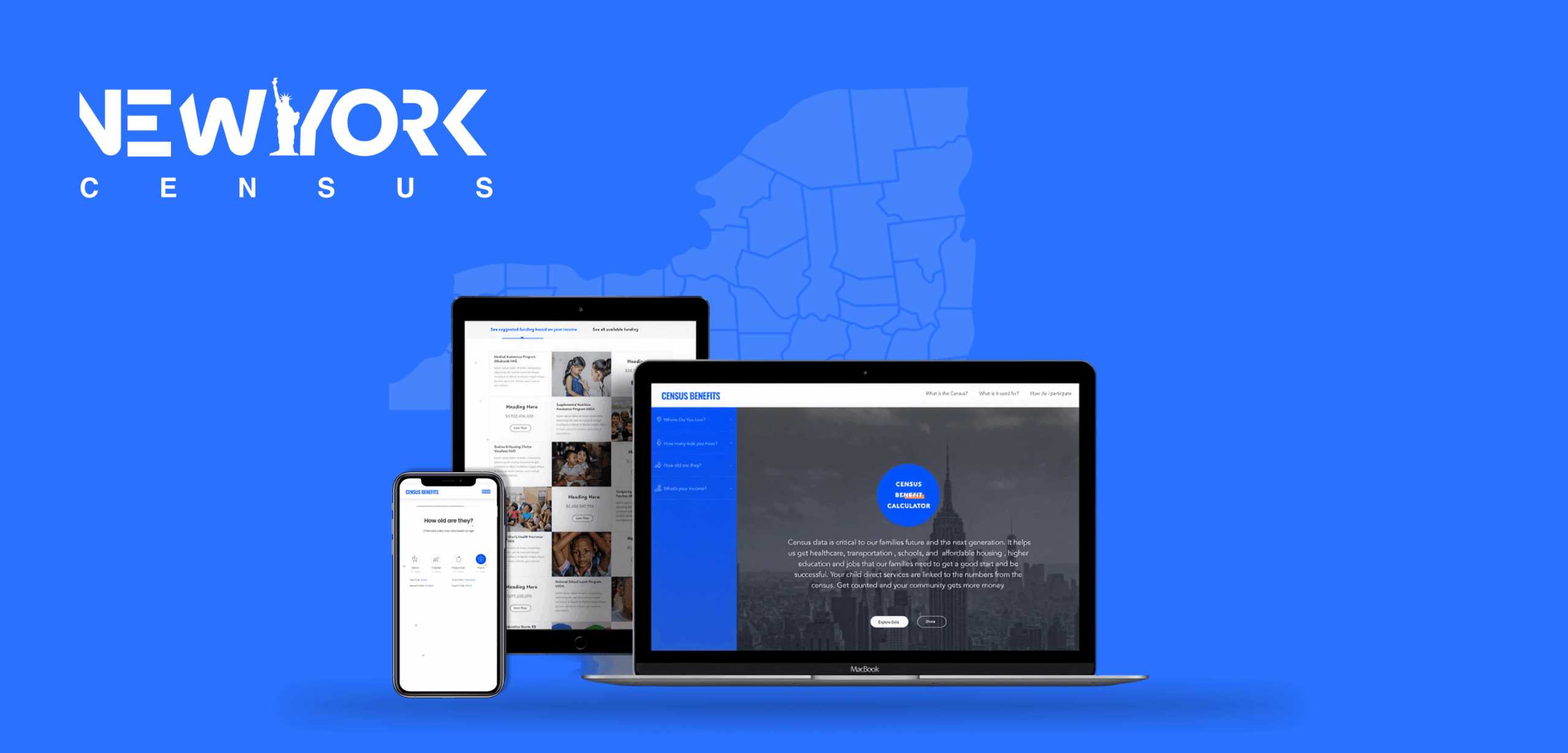
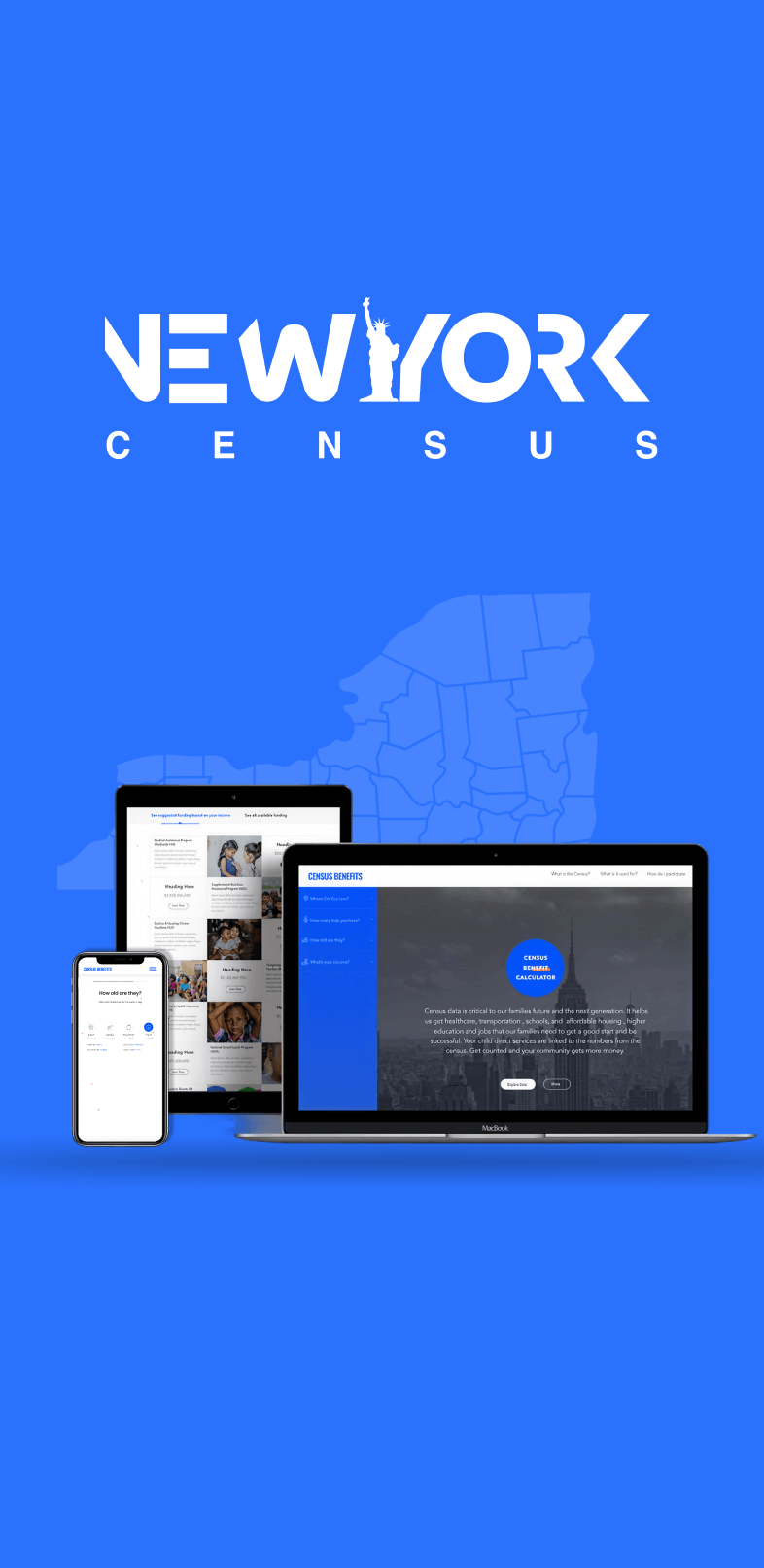
The Census Benefit Calculator is a personalized web application designed to help immigrant parents understand how their participation in the census directly affects their families’ access to essential services. This project aimed to address the information gaps in immigrant communities and the distrust of the government. By linking federal funding allocation to tangible benefits, such as school lunches, healthcare, and housing assistance, we helped immigrant families recognize the direct value of participating in the census. This personalized web application empowered advocacy groups and census field workers to illustrate the real-world impact of being counted, potentially influencing millions of immigrant families across New York City.
Research & Design
Ethnographic research methods · Experience design · Theory of Change · Community-centered design · Civic design systems · Inclusive UI & UX · Field testing
- Duration: August - December 2019
- Partners: ABNY, Queens Library, Color of Change, Census Bureau
- Team: Fas Lebbie, Vaidehi Supatkar
Confidentiality: All research participants’ names and information have been anonymized while preserving the authenticity of their experiences and concerns.

WHAT I BROUGHT
I leveraged ethnographic research methods and a community partnership to conduct interviews with 20 immigrant families, building trust through partnerships with advocacy organizations.
I designed a web app—a multilingual benefit calculator that integrates with the public federal system—while tackling digital equity barriers for underserved users.
I aligned federal, nonprofit, and community partners around a unified vision—delivering a tool that reframed Census participation through practical value and trust-building, not just compliance.
Problem Context
The U.S. Census is America’s most inclusive civic activity, covering every person in every household regardless of citizenship status. The data collected affects our nation’s ability to ensure equal representation and access to resources. Census results determine the allocation of over $800 billion annually in federal assistance, affecting schools, housing, healthcare, and infrastructure.
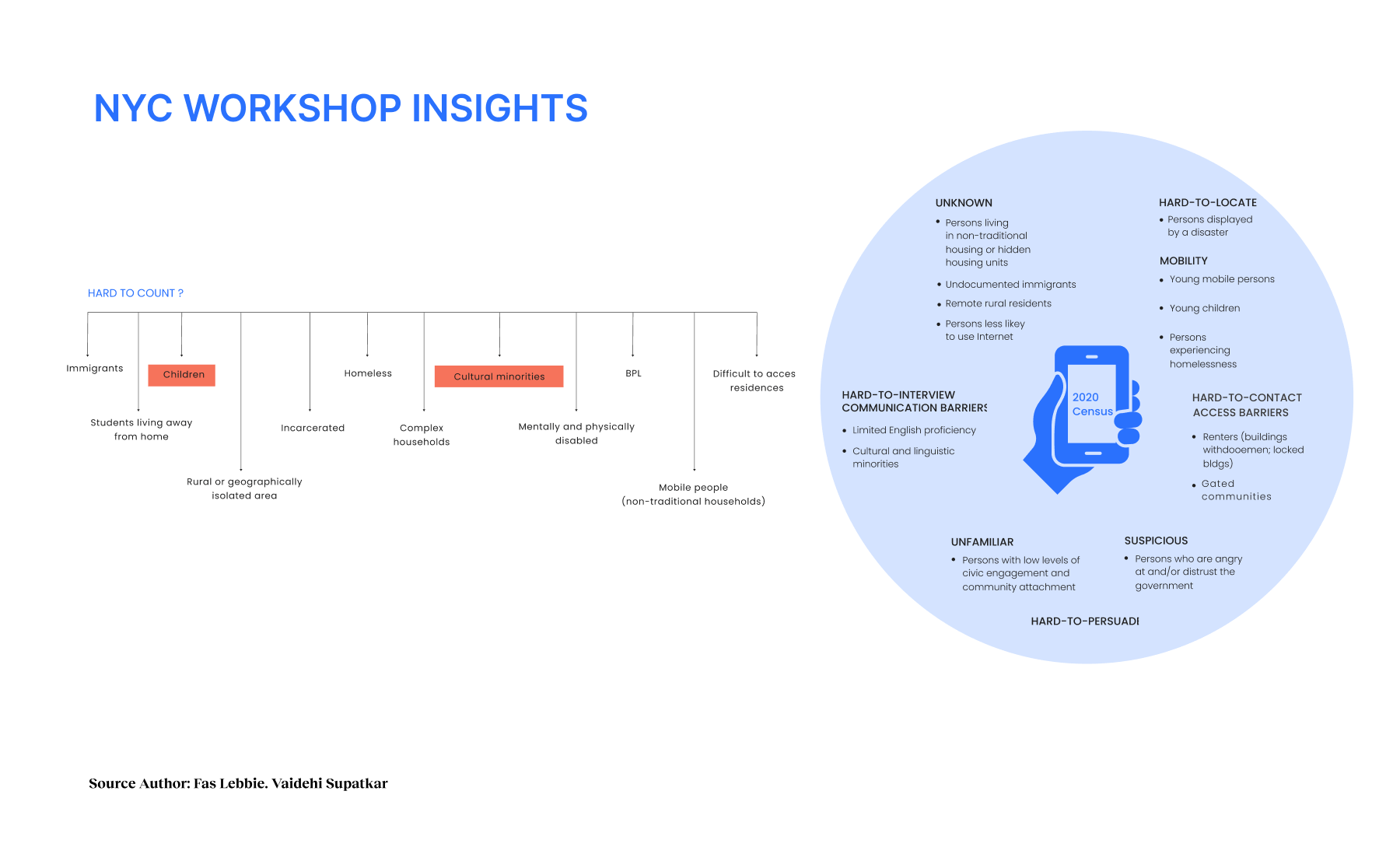
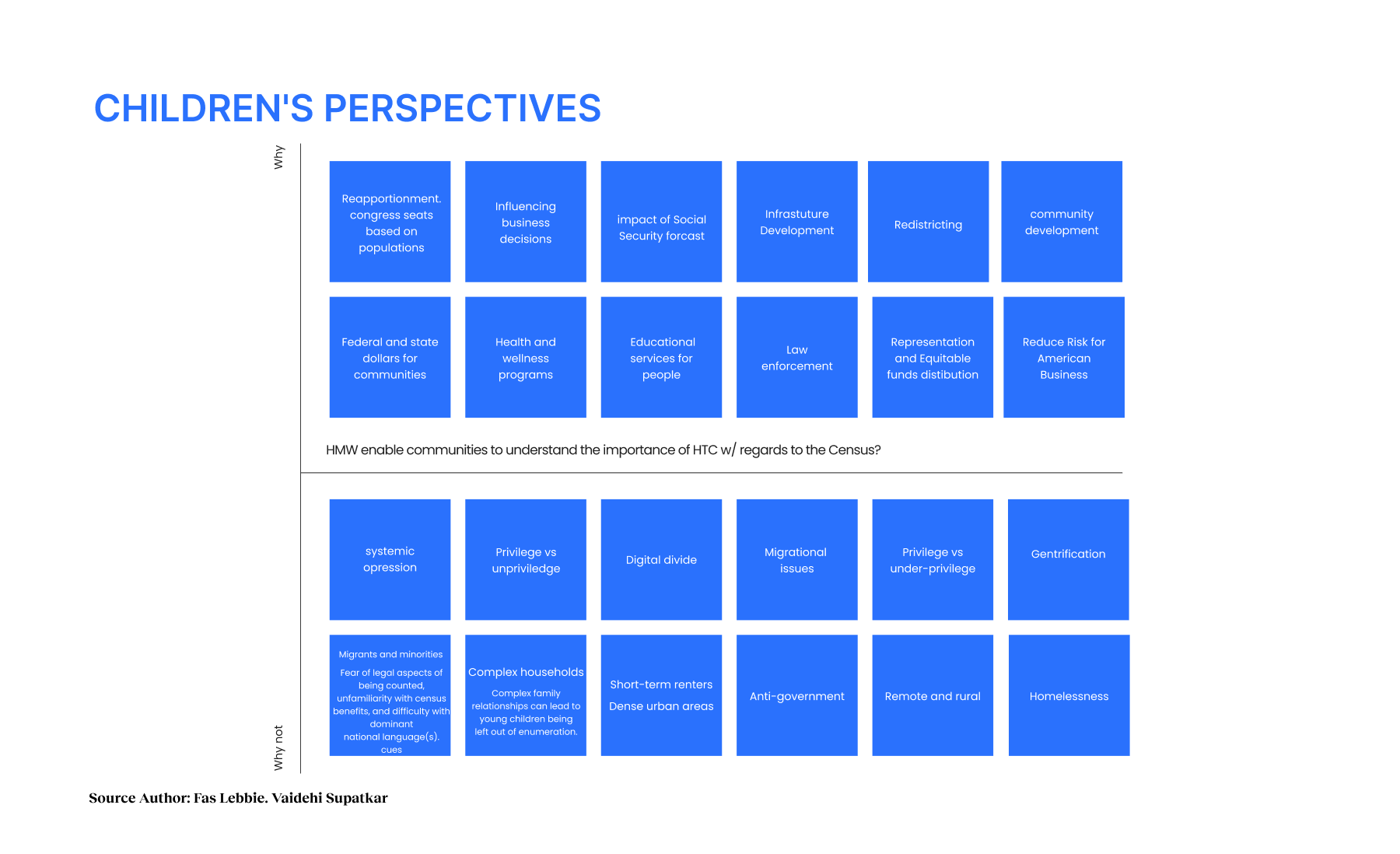
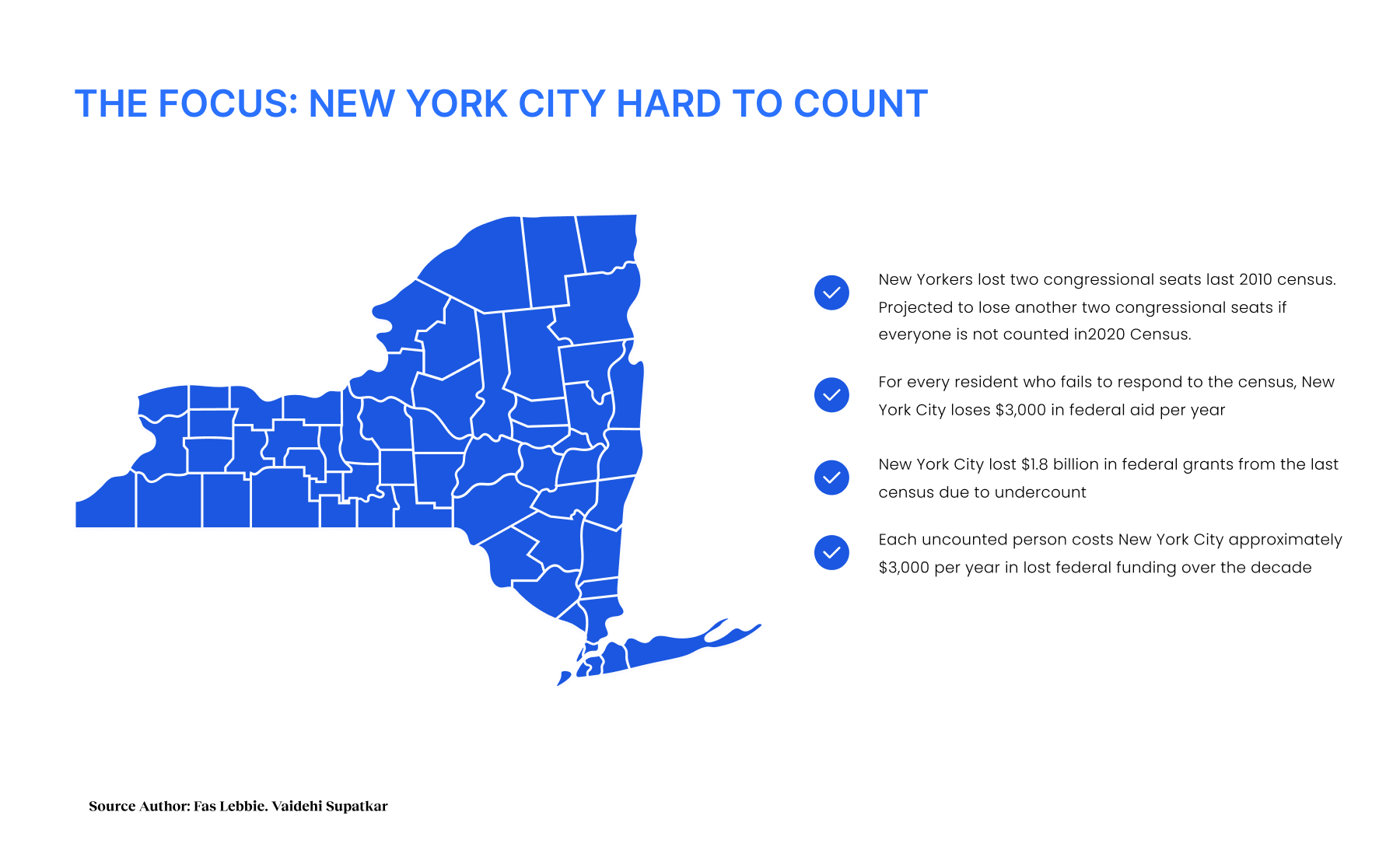
However, the 2020 Census faced challenges. New York City lost $1.8 billion in federal grants from the 2010 Census due to significant undercounting, equivalent to $3,000 lost per uncounted resident annually. If undercounting persisted, the city was projected to lose two more congressional seats. Vulnerable hard-to-count populations include immigrants with limited English proficiency, people of color, undocumented residents, and families with young children.
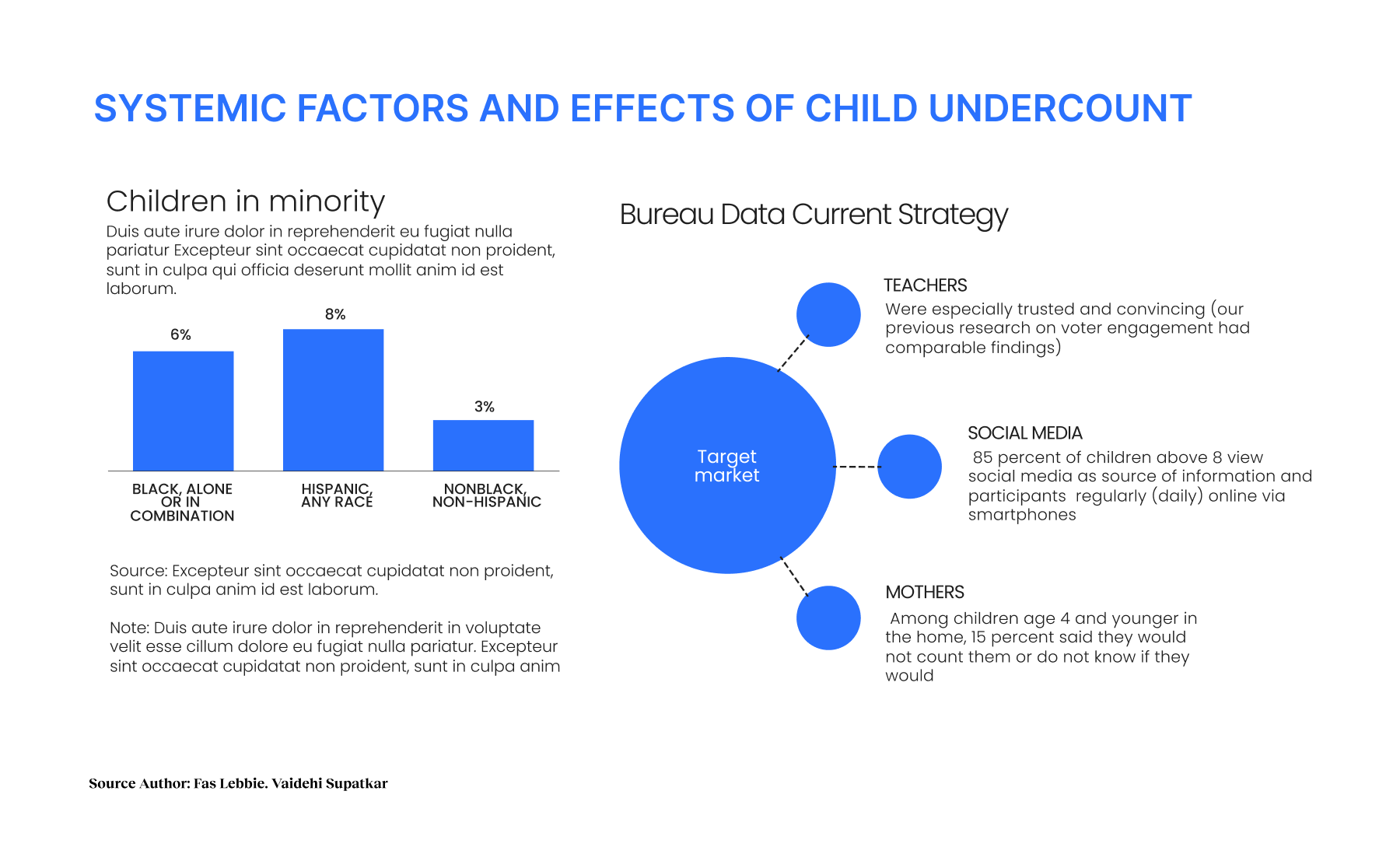
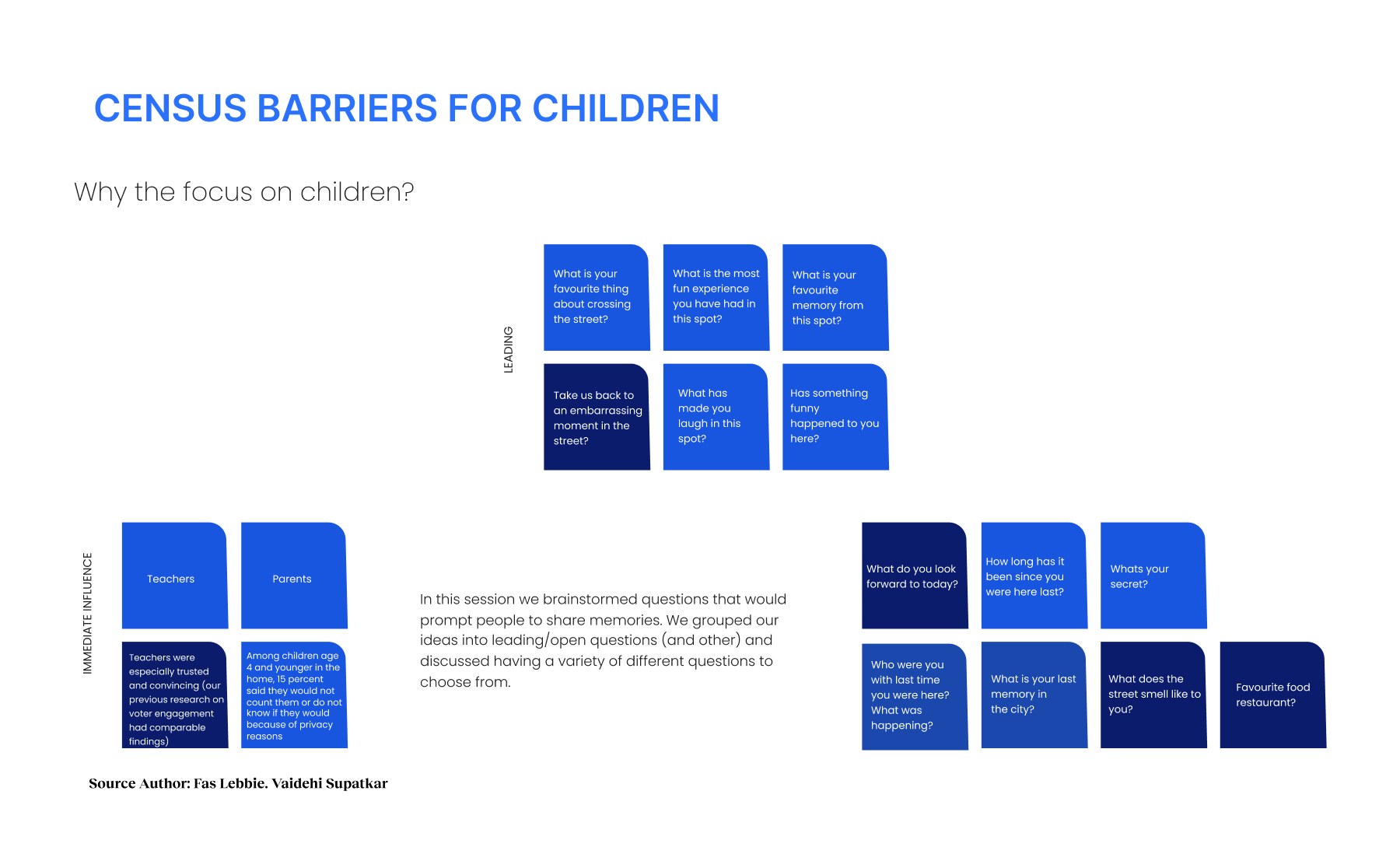
Six out of ten children of color were not counted in previous census efforts, affecting children in immigrant households, multigenerational homes, and families with limited English proficiency. The 2020 Census’s digital-first approach presented barriers for many immigrant communities due to the digital divide, while misinformation and distrust of the government created psychological barriers to participation.
My Approach
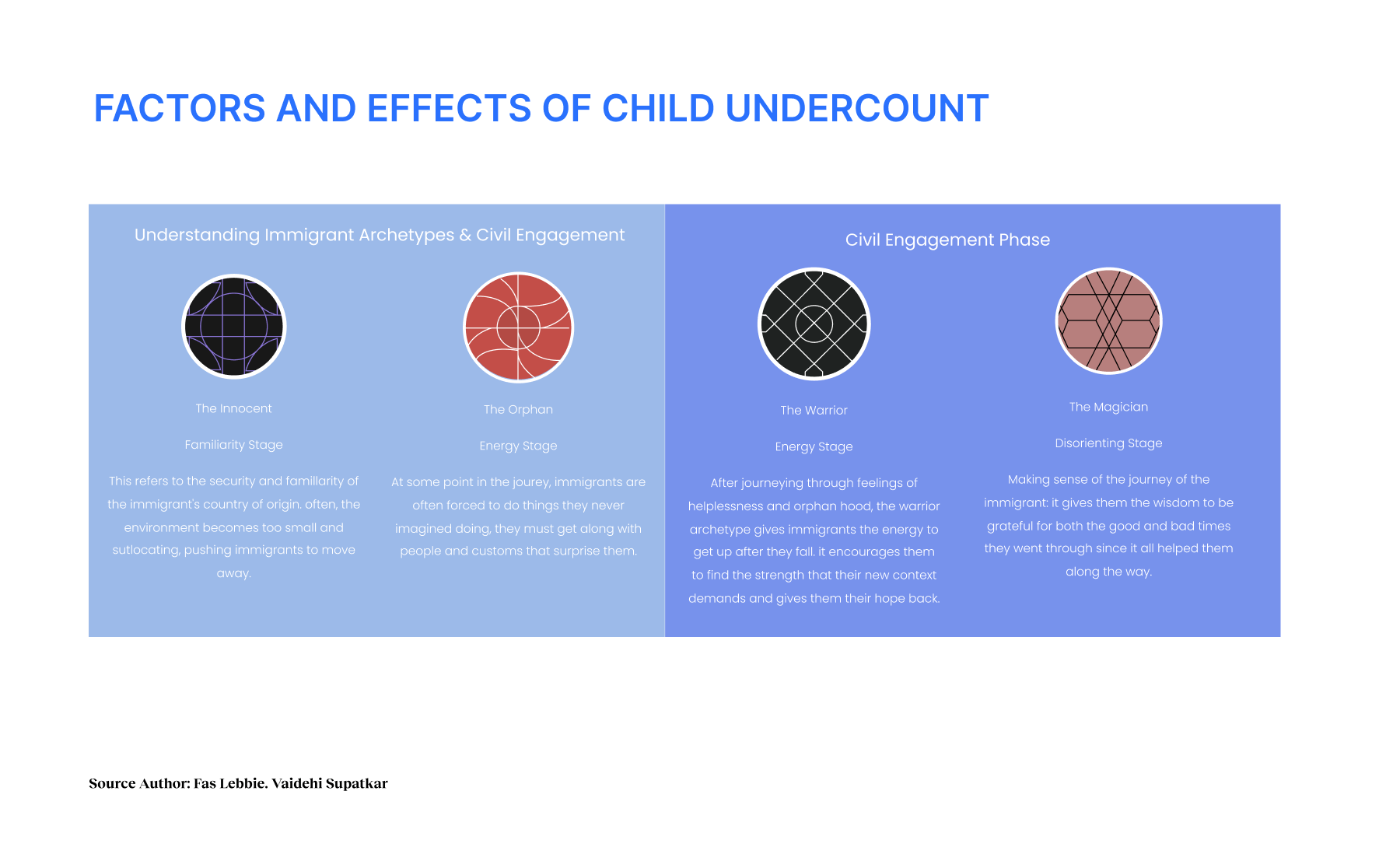
In this project, I focused on overcoming emotional barriers and uncovering real stories behind census participation barriers. Traditional census outreach often relied on appeals to civic duty or legal obligation, which fell flat with communities that were historically distrustful of government institutions. I examined immigrants’ experiences through four key archetypes: the innocent, the orphan, the warrior, and the magician. This framework helped us connect with people on an emotional level. Our approach informed our entire design process, emphasizing practical benefits rather than patriotic messaging.
Design Process
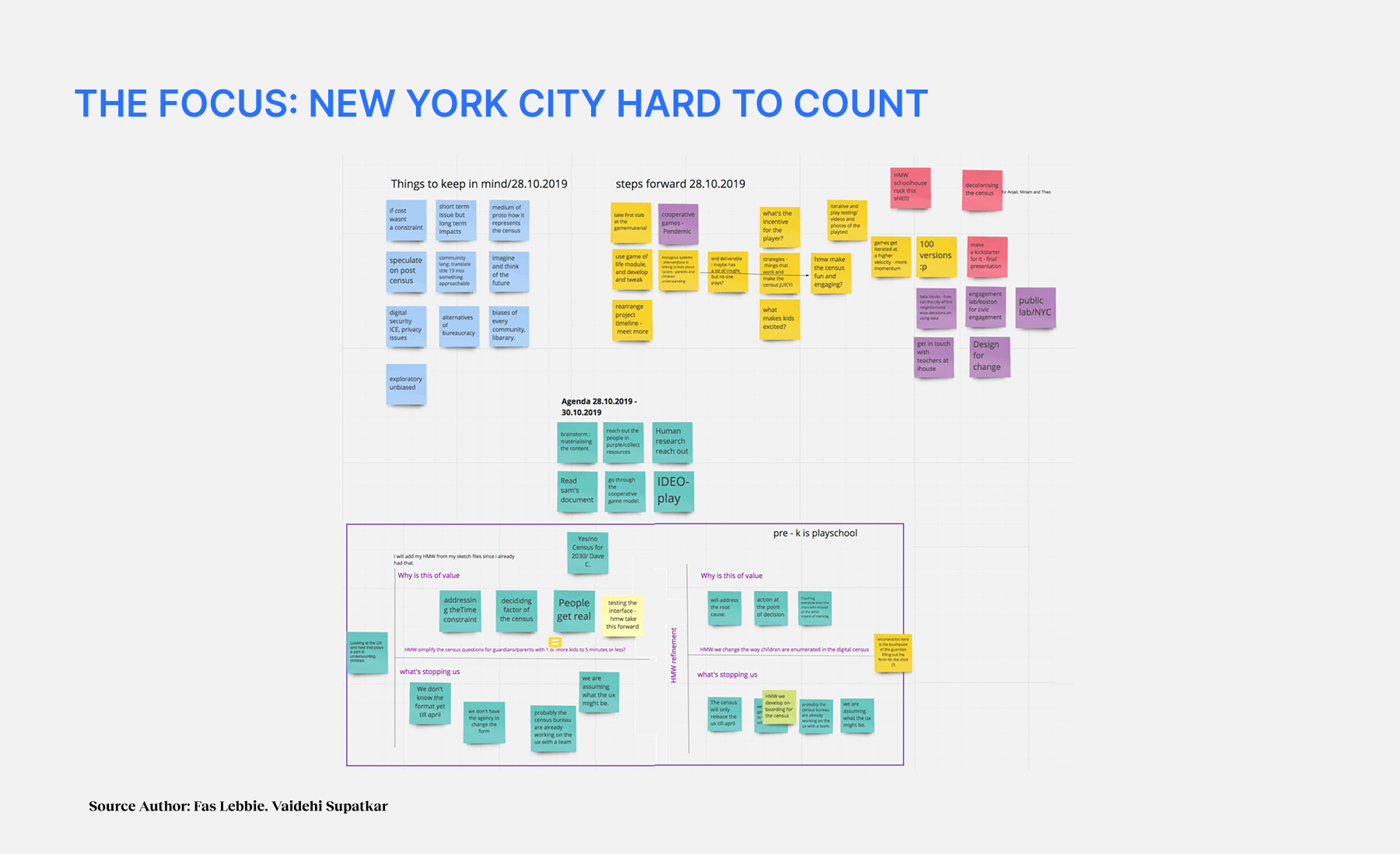
The early stages of this research examined the historical context of the census and the current challenges facing hard-to-count populations. I identified key misconceptions and fears surrounding the census by leveraging social media platforms and conducting field interviews with people at Washington Square Park. Some early insights revealed that 14 out of 21 people mistakenly believed that only citizens could participate, while others expressed concerns about the digital divide affecting older family members, and some immigrant communities shared fears about government data collection. These insights began to shape a complex narrative between practical barriers (such as digital access) and deeper emotional barriers (like government distrust), which would influence the trajectory of my research and design focus.
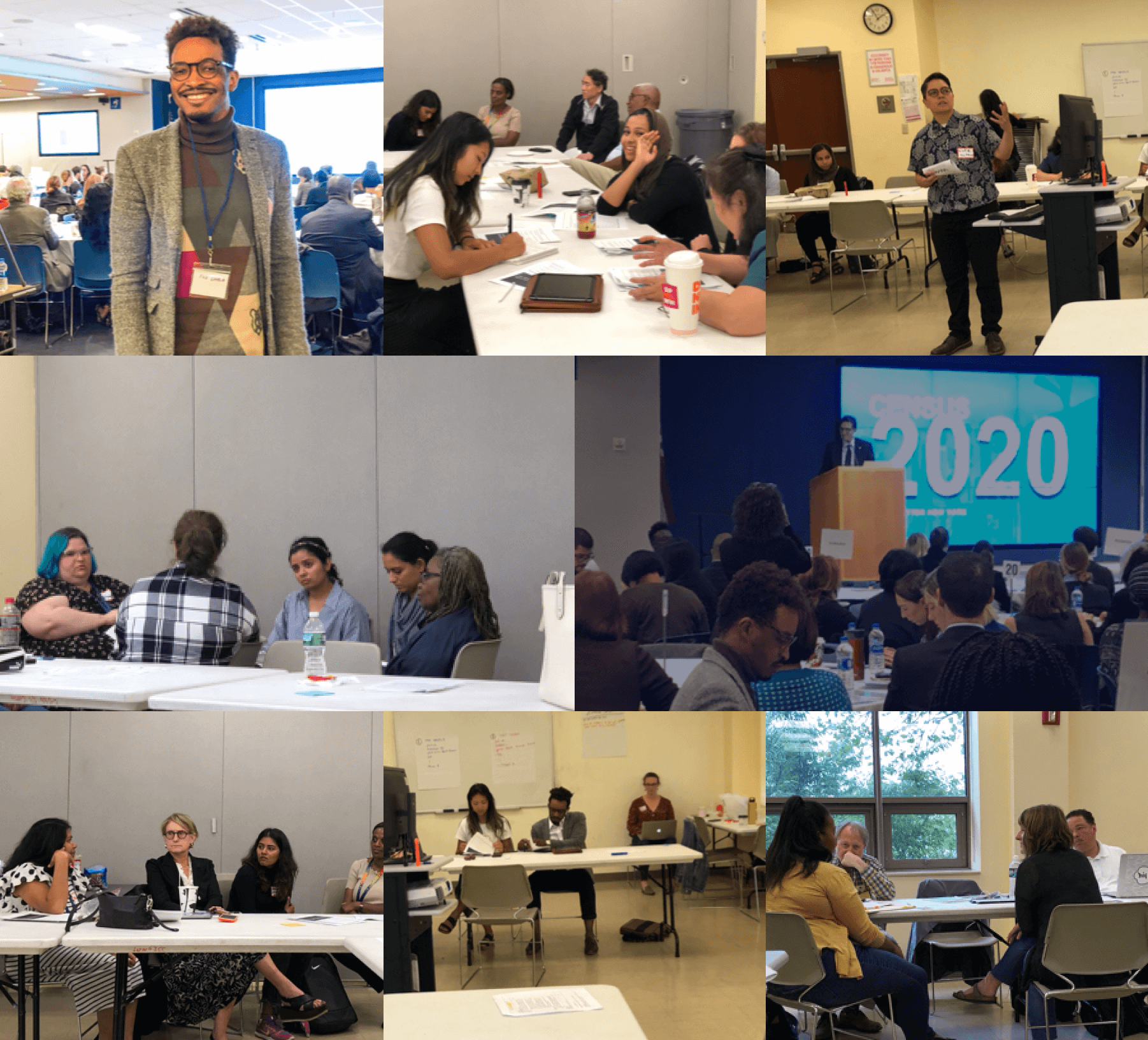
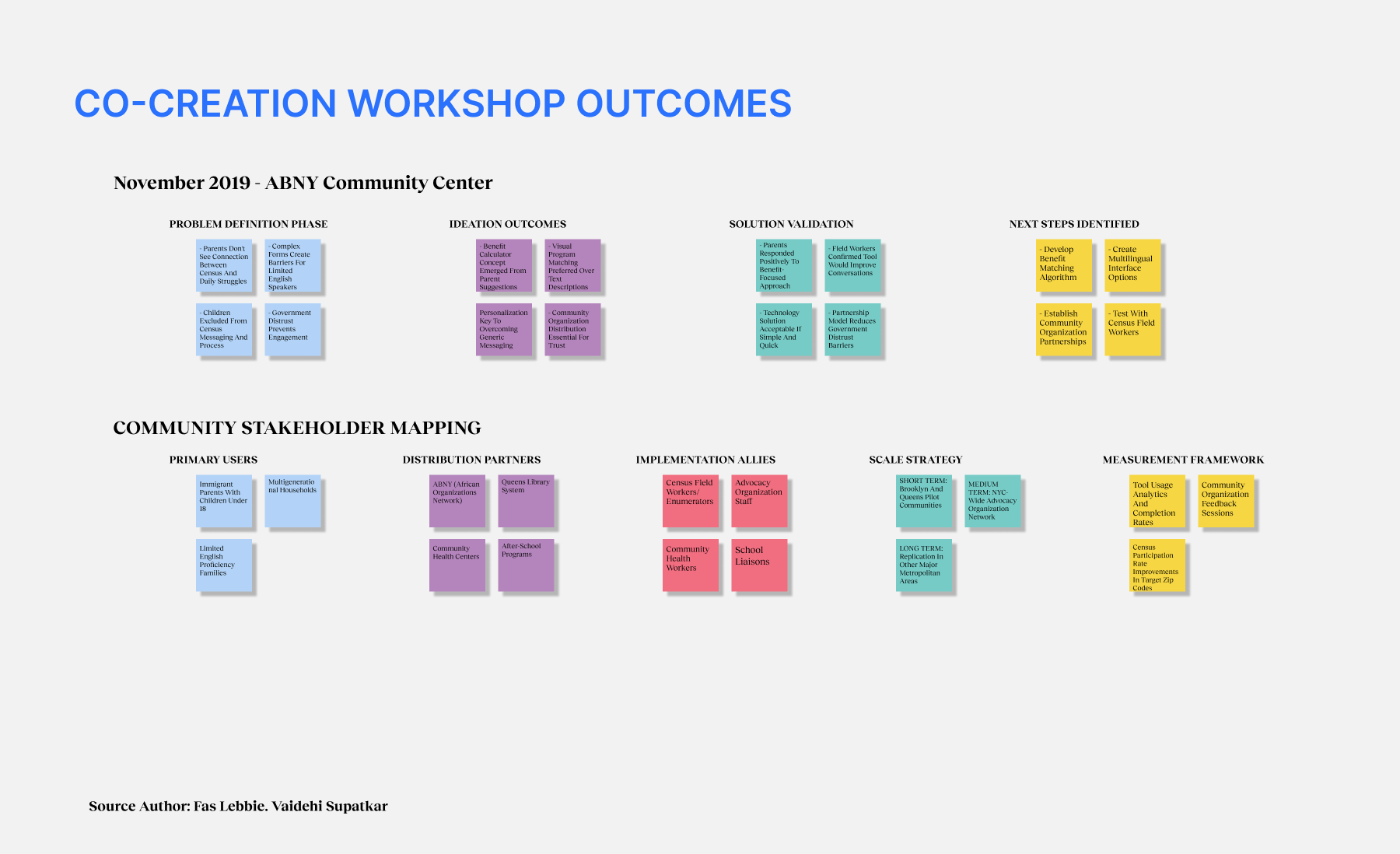
The research employed a multi-layered ethnographic approach, ranging from individual stories to community partnerships and system-level workshops. I conducted structured and semi-structured interviews with 20 immigrant families from nine African nations, focusing on Marie Sesay, a single mother from Sierra Leone who supports multiple households. I engaged with African Organizations in New York and participated in census co-creation workshops with organizations such as ABNY and the Queens Library. This three-tiered approach embodies a multi-scalar framework, identifying patterns at the personal, community, and systemic levels.
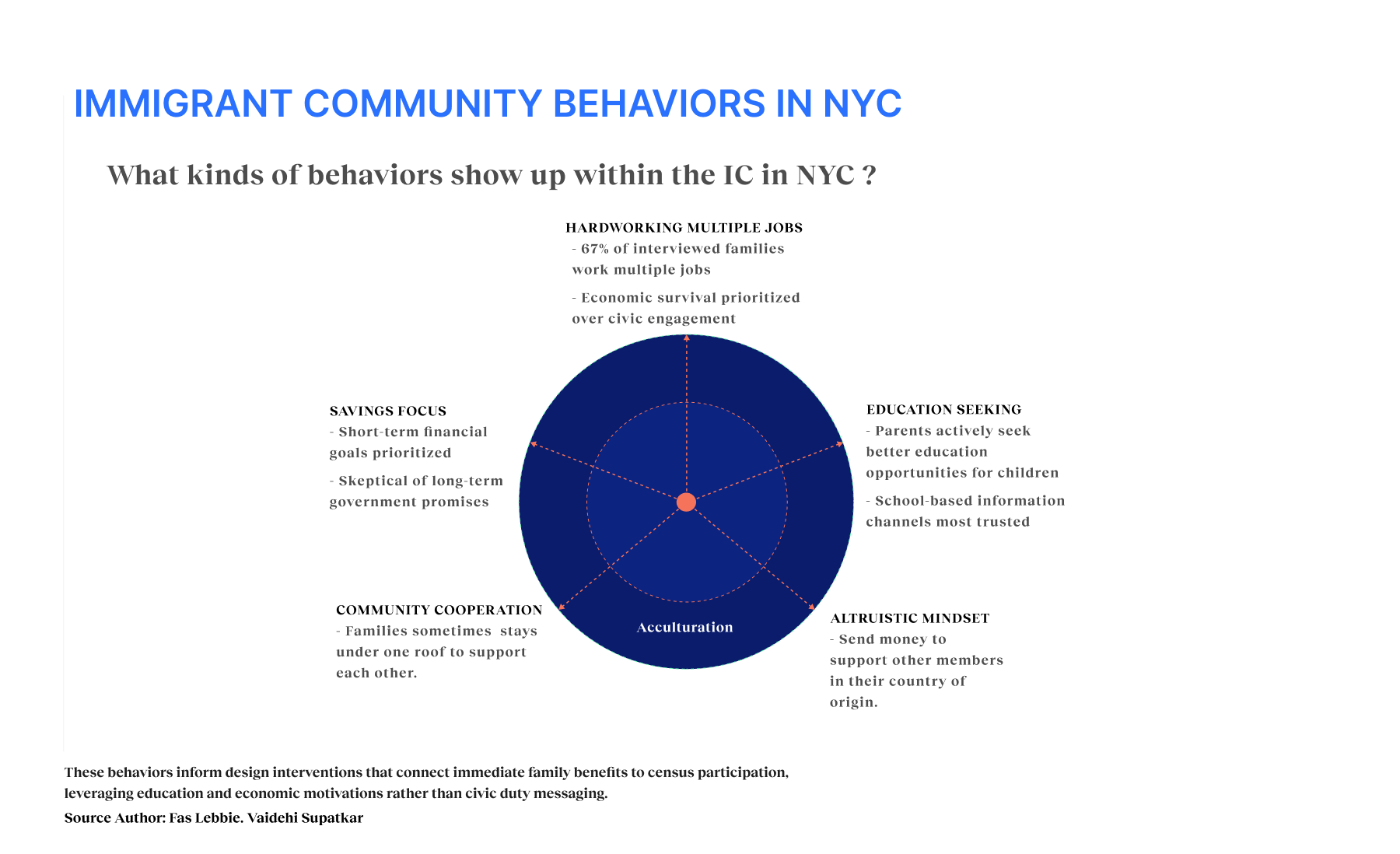
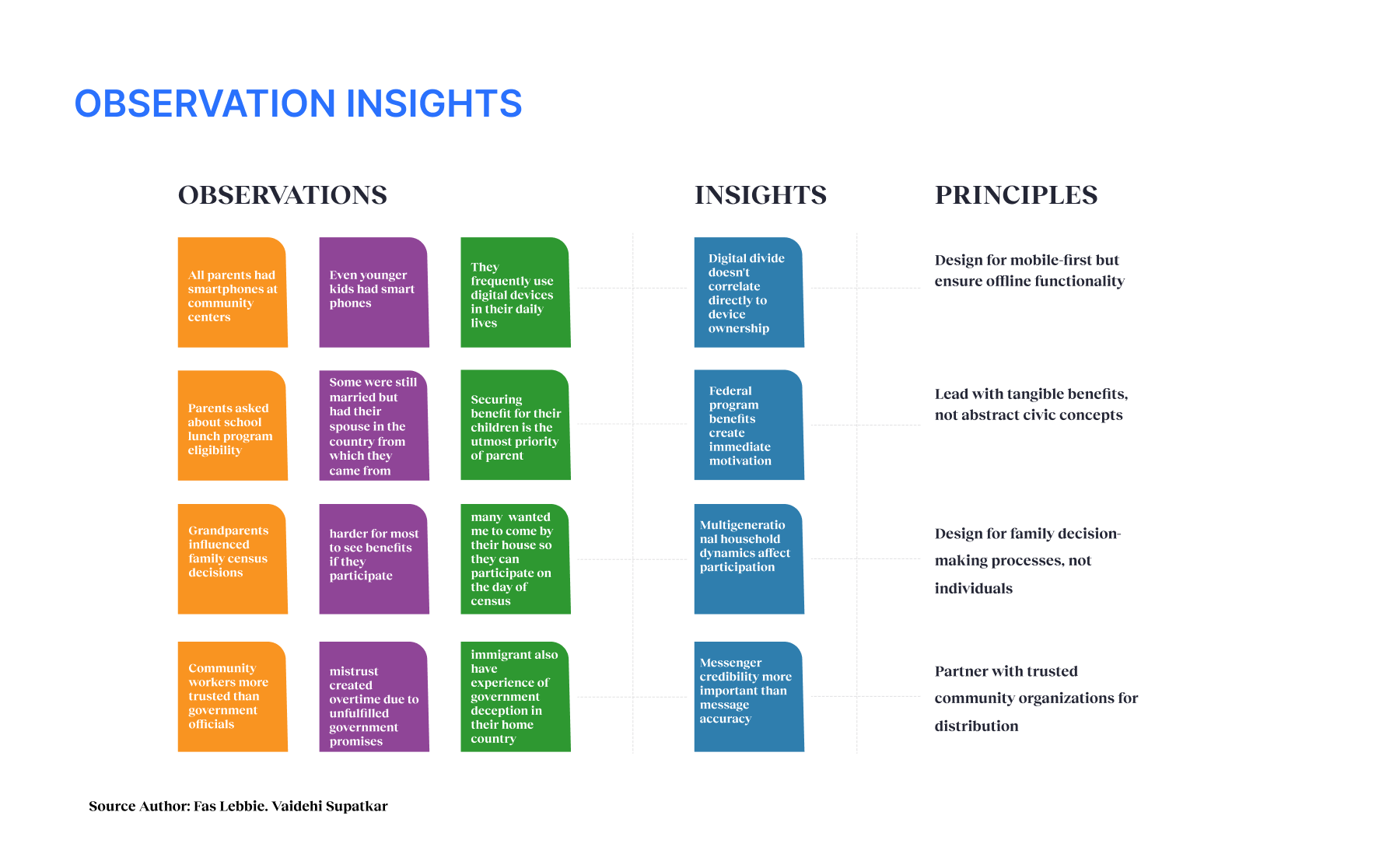
The research revealed deep-rooted government distrust based on immigrants’ experiences in their countries of origin, information gaps about the impact of federal funding on daily life, and the insight that parents were more motivated by benefits to their children than by appeals to civic duty due to their socio-economic status.
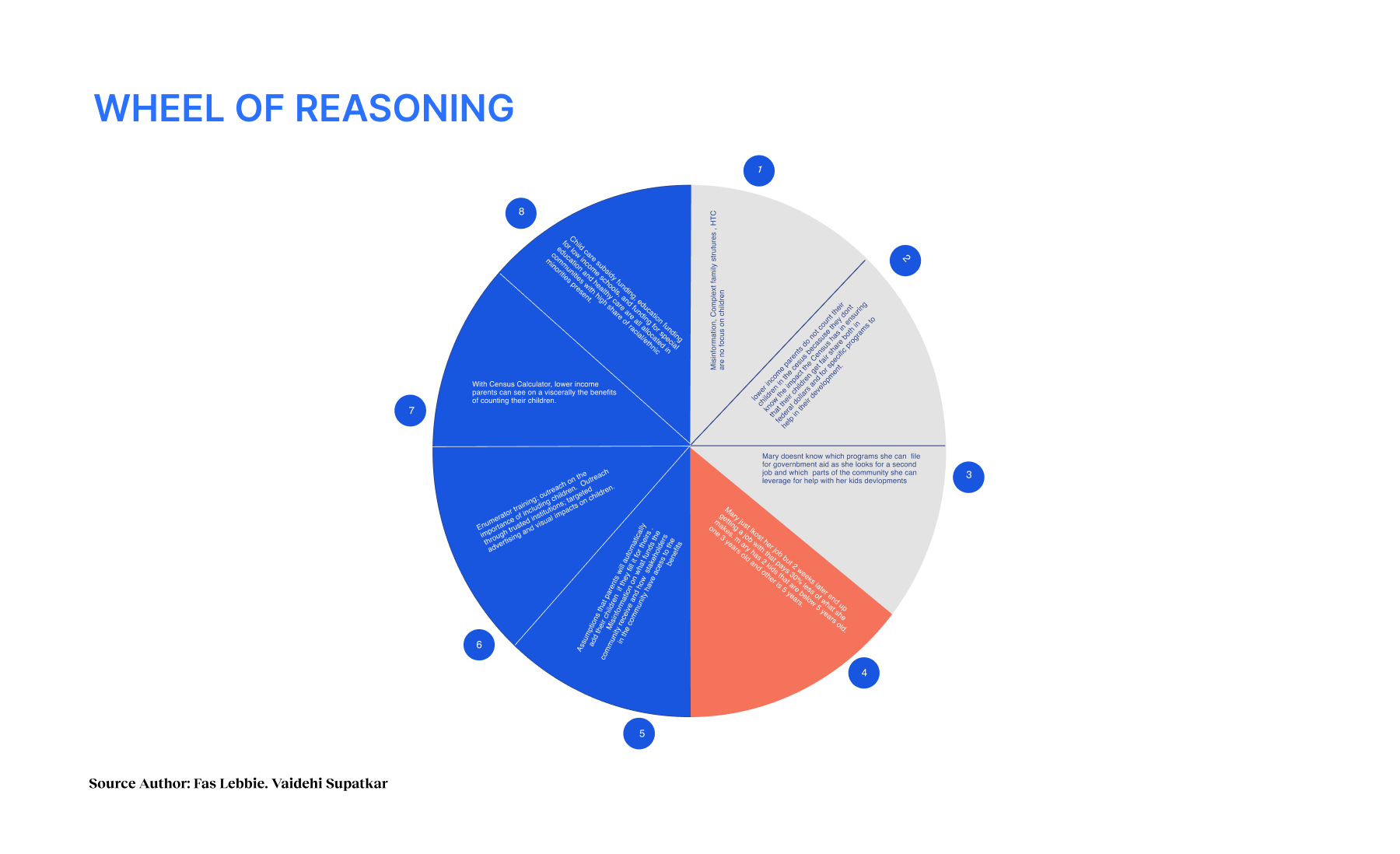
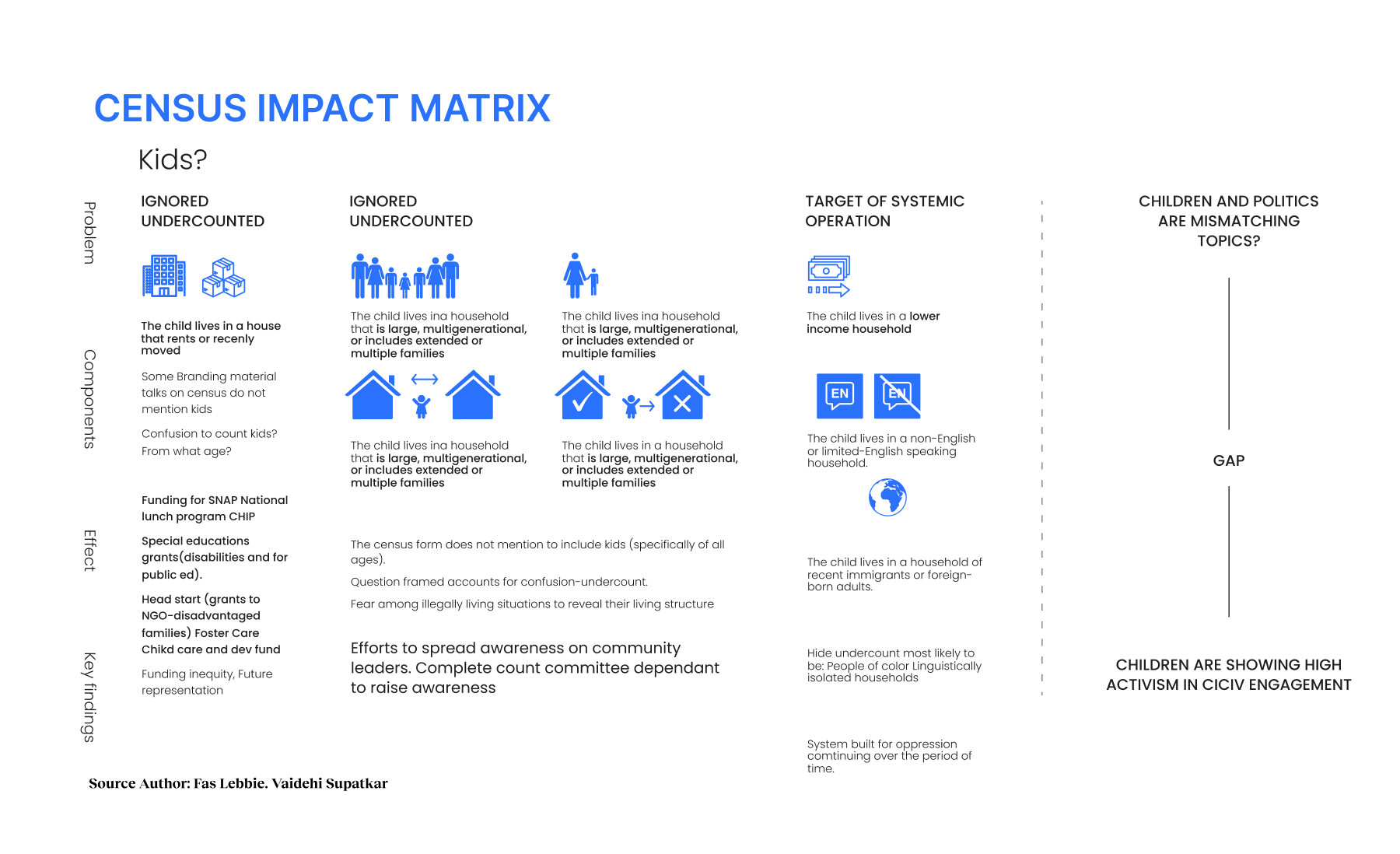
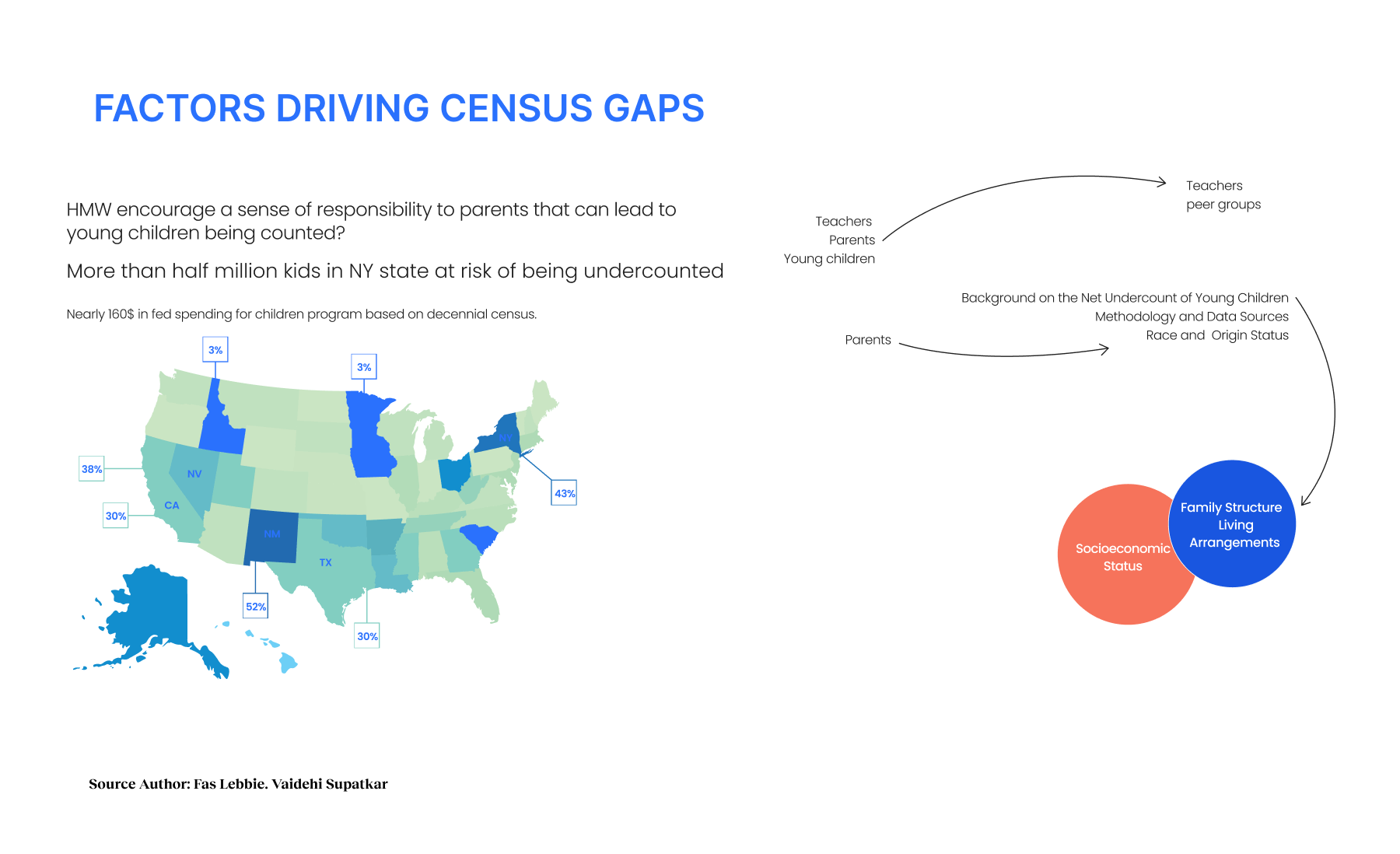
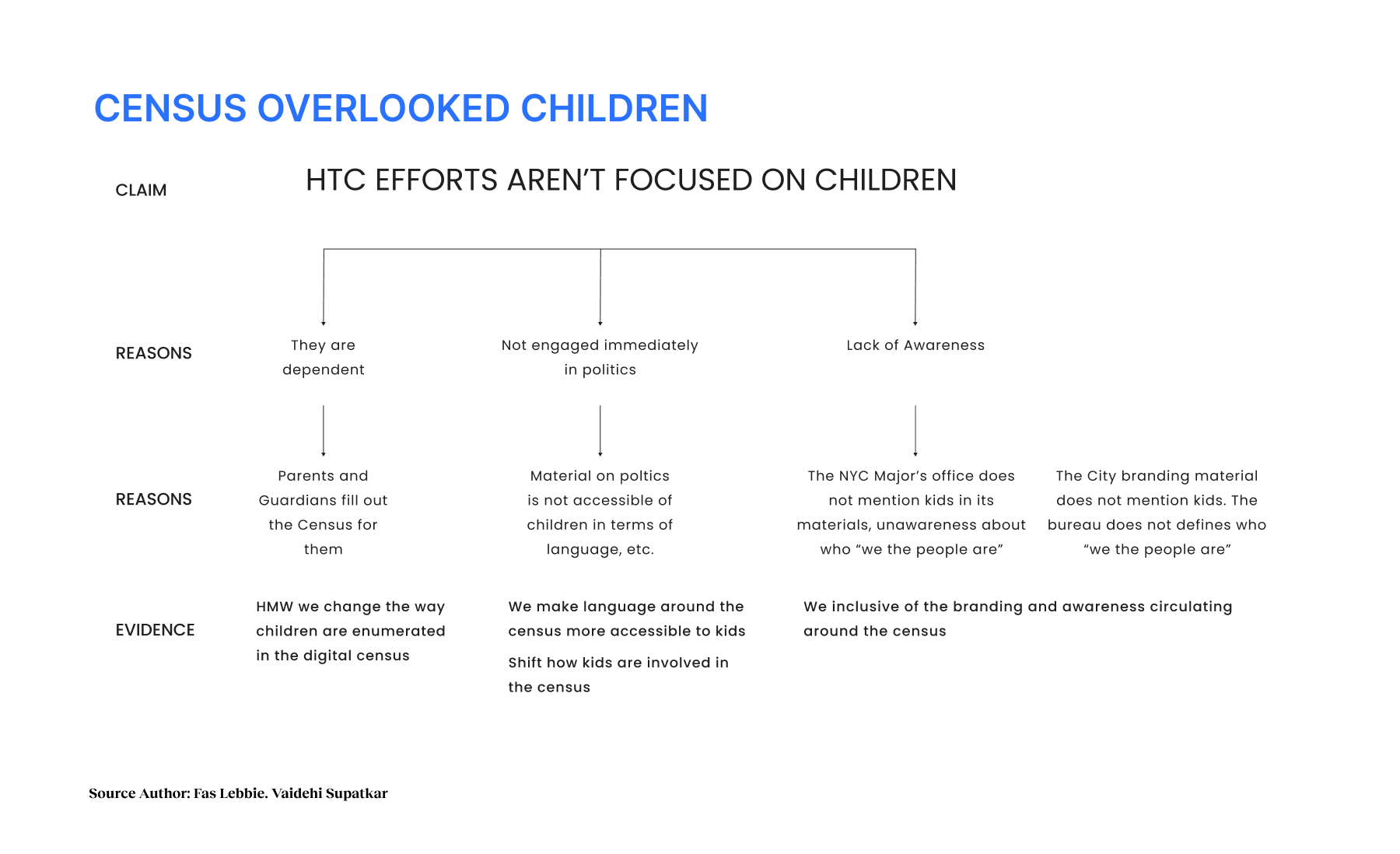
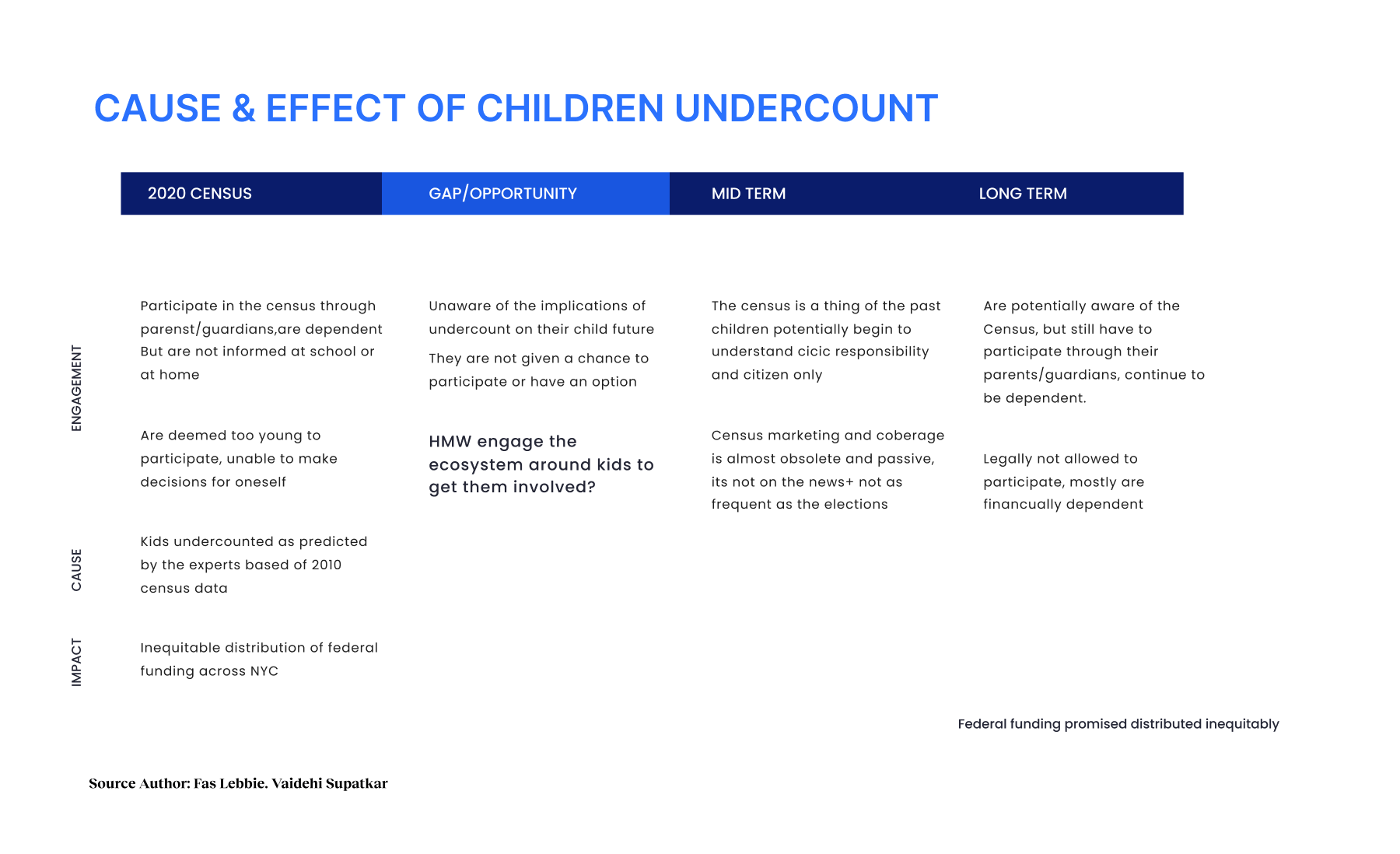
Our research synthesis led to a challenge mapping activity, identifying specific barriers to census participation among immigrant communities. We identified that children of color were at the highest risk of being undercounted, with nearly half a million kids in New York state alone at risk. We discovered systemic issues behind the undercount: confusion about counting children (especially young children), complicated household structures not fitting census categories, and fear of revealing family compositions among undocumented households. Through challenge mapping, we focused on immigrant families with children as both the most vulnerable to undercounting and potentially responsive to intervention based on benefits to their children.
Our design intervention focused on immigrant parents in New York City, particularly those in the warrior stage of their immigration journey — established enough to navigate daily life but still facing significant economic and social challenges. We targeted this group based on our research insight that immigrant parents deeply distrusted government institutions but were highly motivated by opportunities to secure better futures for their children.
The Census Benefit Calculator emerged from abstract discussions about civic duty into practical, personal value propositions. By creating a transactional framing, the tool addresses the core question: Can the risk of losing federal funds outweigh the risks of distrust towards the government? For immigrant parents struggling with low wages, expensive rent, healthcare costs, and overcrowded schools, seeing the direct connection between census participation and solutions to these challenges proved a powerful motivator.
In prototyping, I prioritize talking with more census workers who volunteer their time to help in the census count. Insights from these sessions improved the development of a tool for efficient, 10-minute conversations between field workers and immigrant community members. We developed and tested the Census Benefit Calculator through multiple iterations, utilizing digital prototyping tools such as InVision and co-creation workshops with community members. User testing revealed the tool needed to maintain privacy (through range selections rather than specific inputs), provide immediate value (through direct program matching), and offer clear next steps (through resource connections). The implementation strategy focused on distributing the tool through trusted community partnerships rather than government channels, leveraging existing relationships with advocacy groups and community organizations. This approach recognized that the messenger was as crucial as the message — information from trusted community sources would have a greater impact than the same information from government entities.
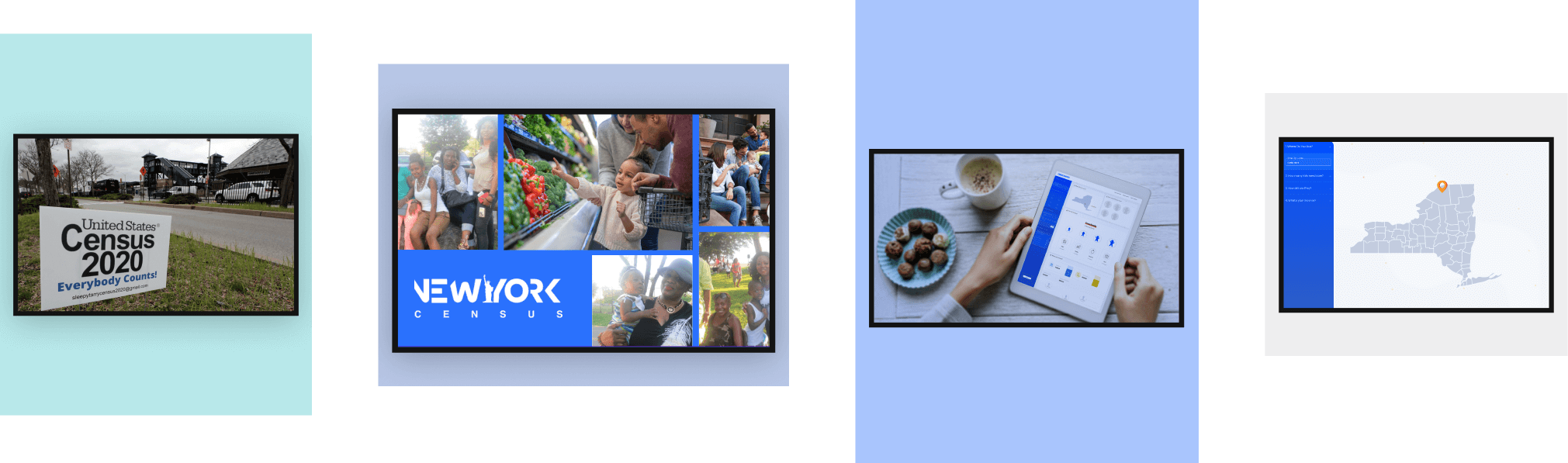
Millions of immigrant children risked being undercounted due to fear, misinformation, and limited resource access. Empowering immigrant families to count every child, every need, every future.
Design Interventions
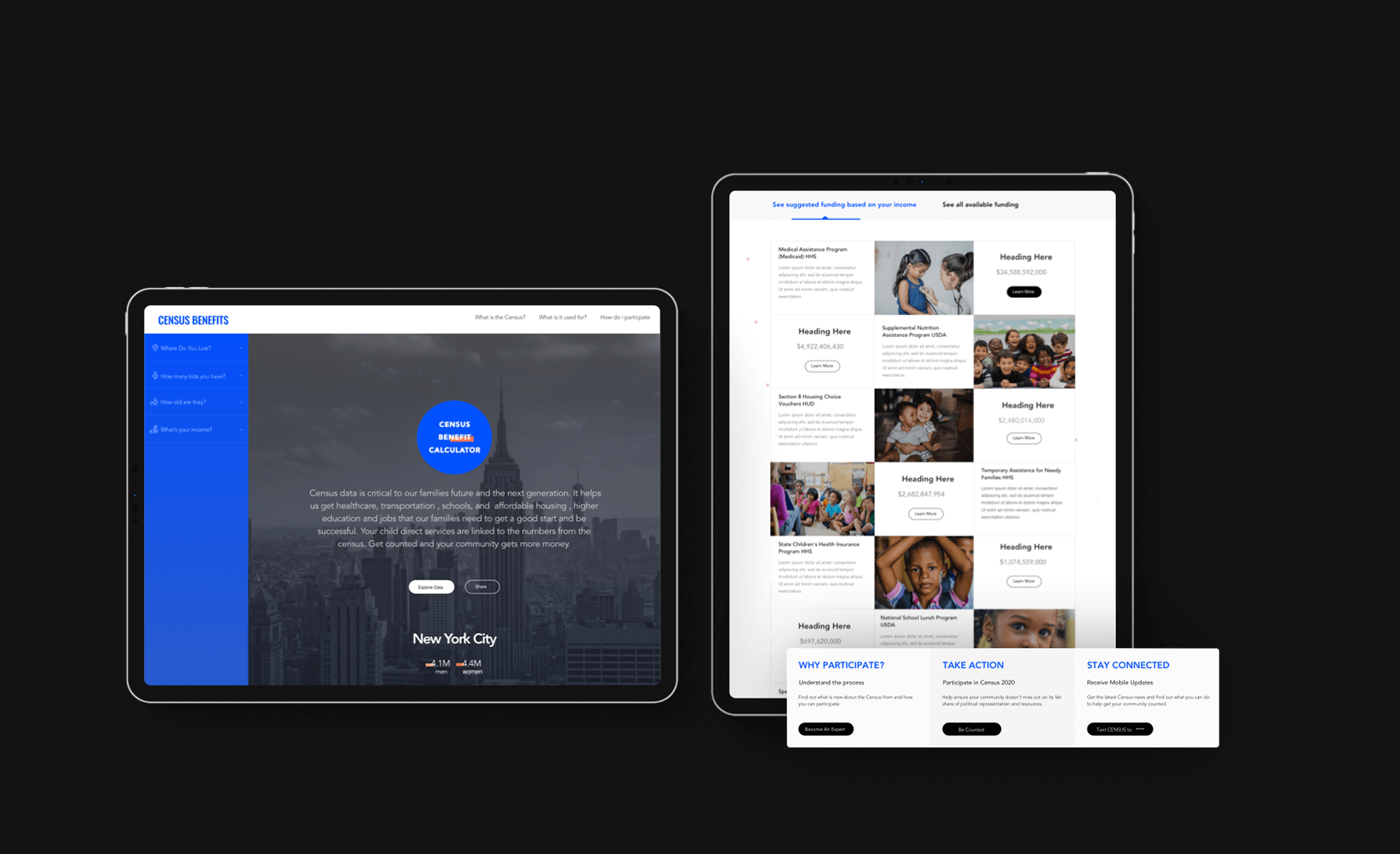
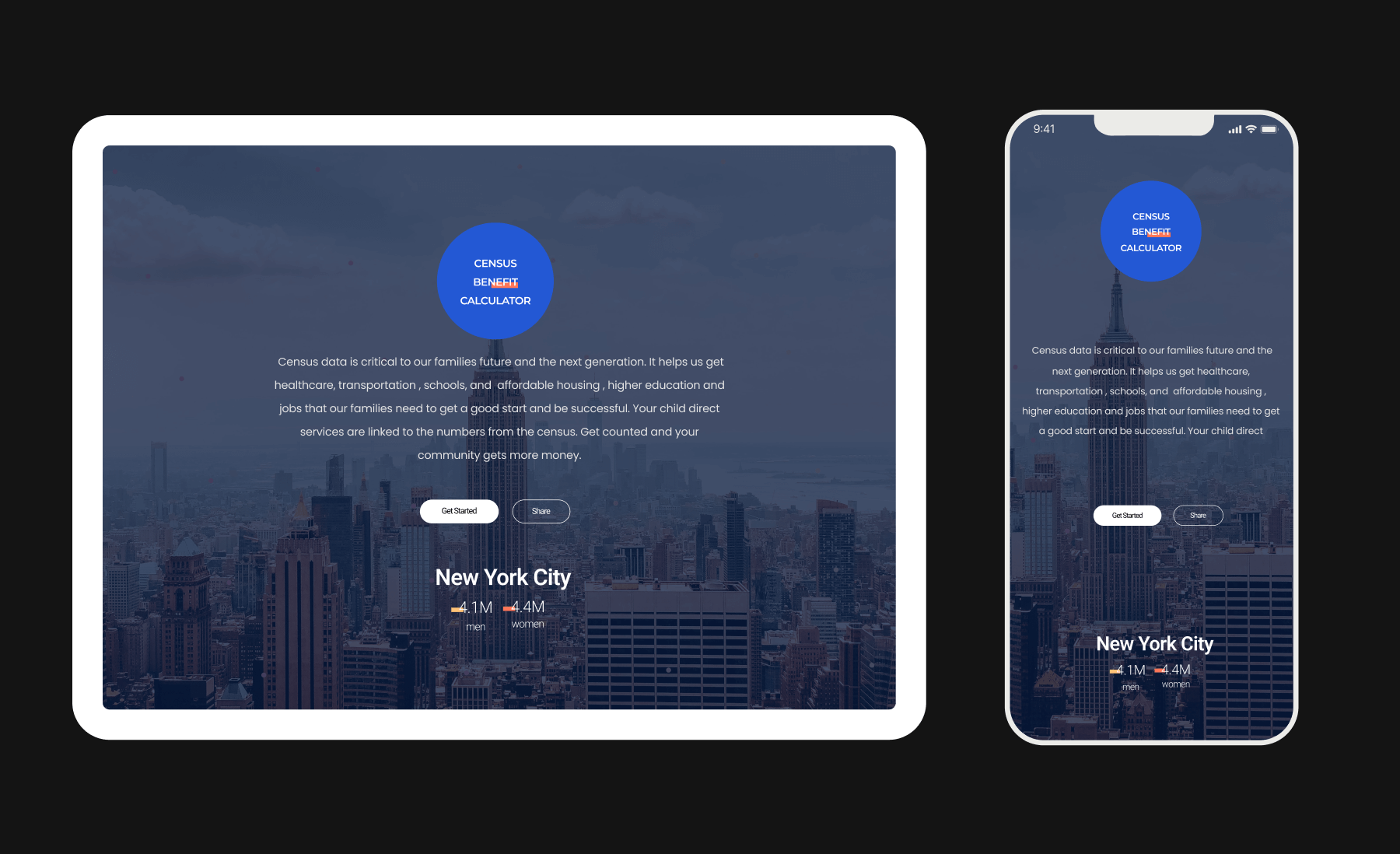
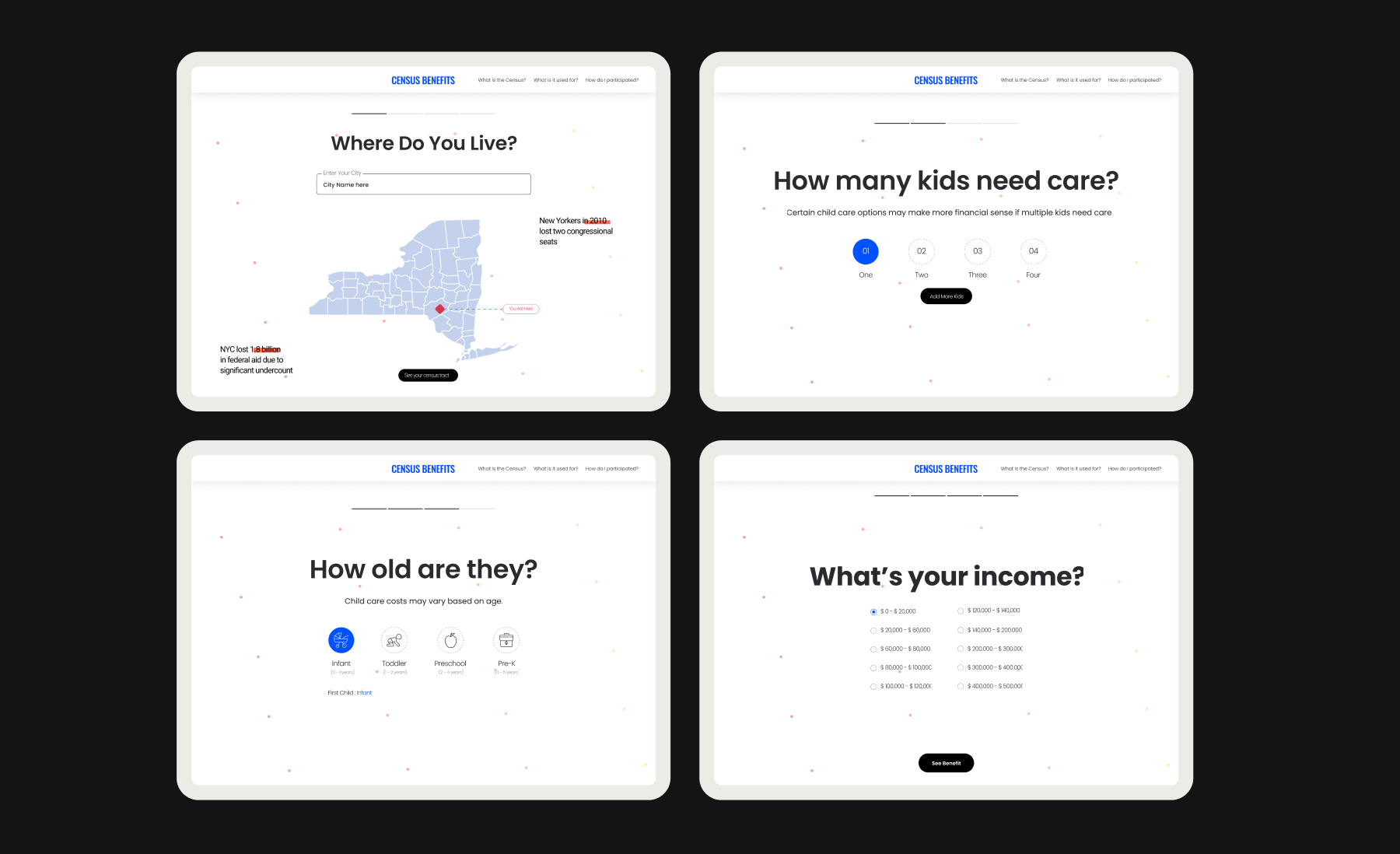
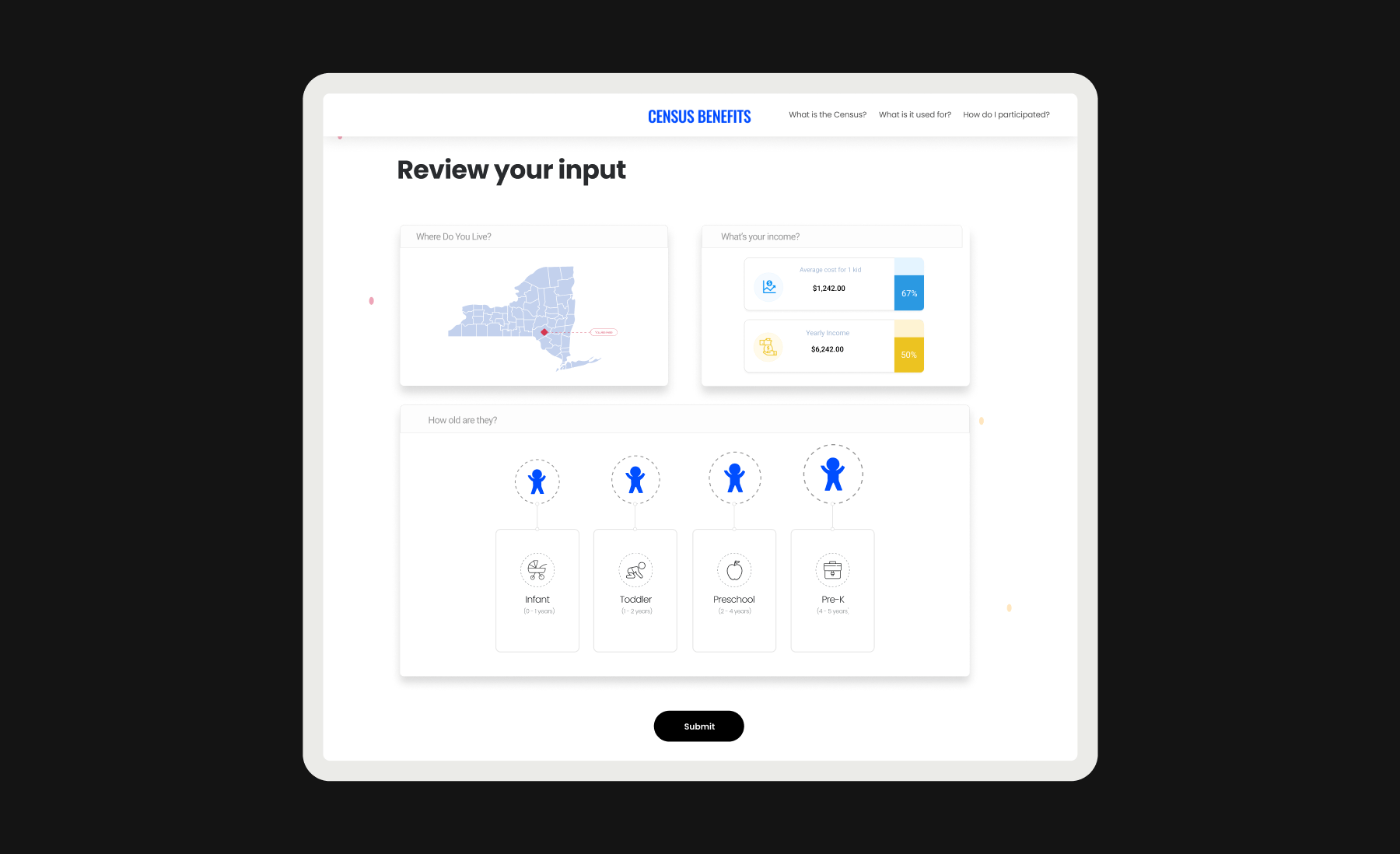
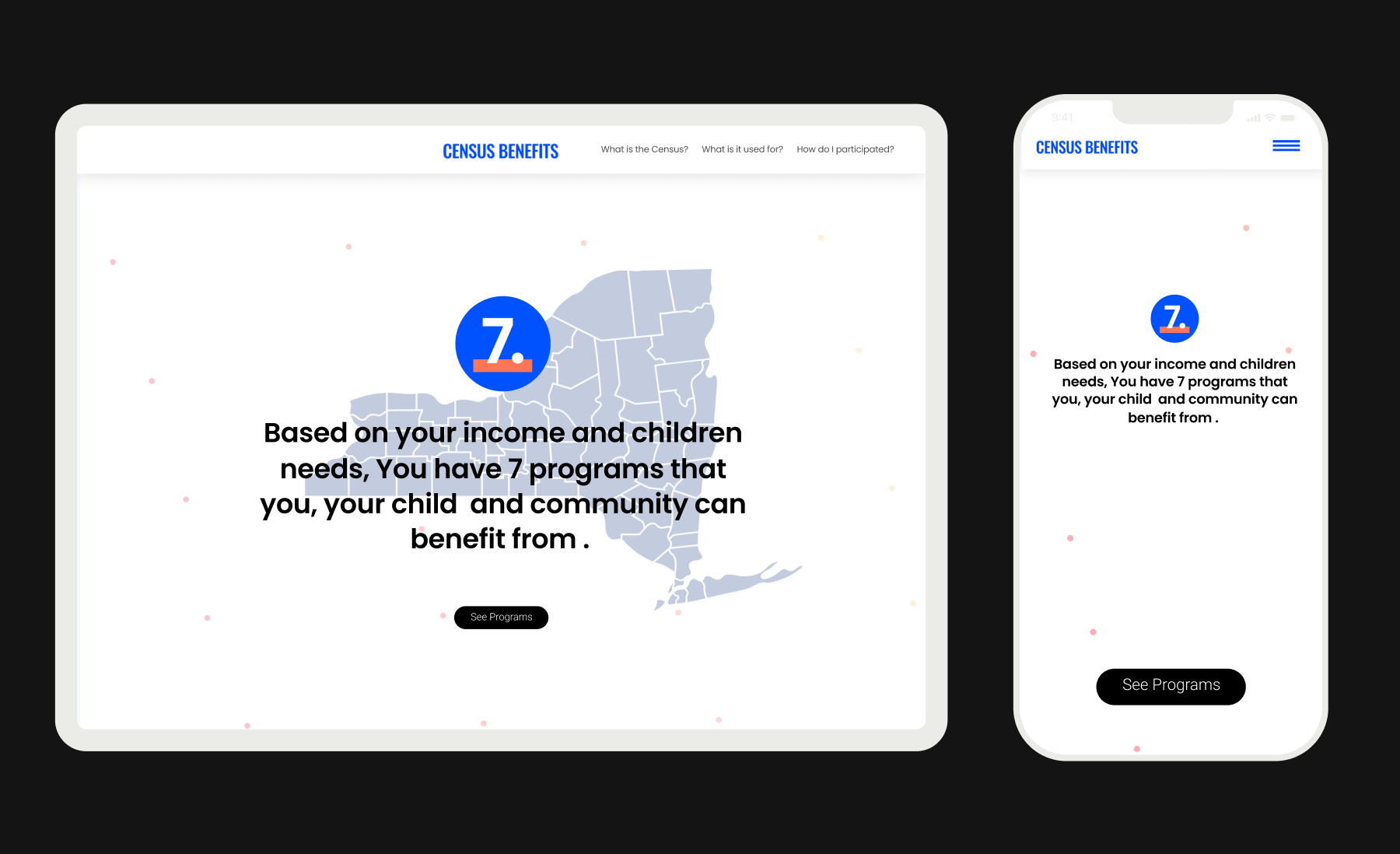
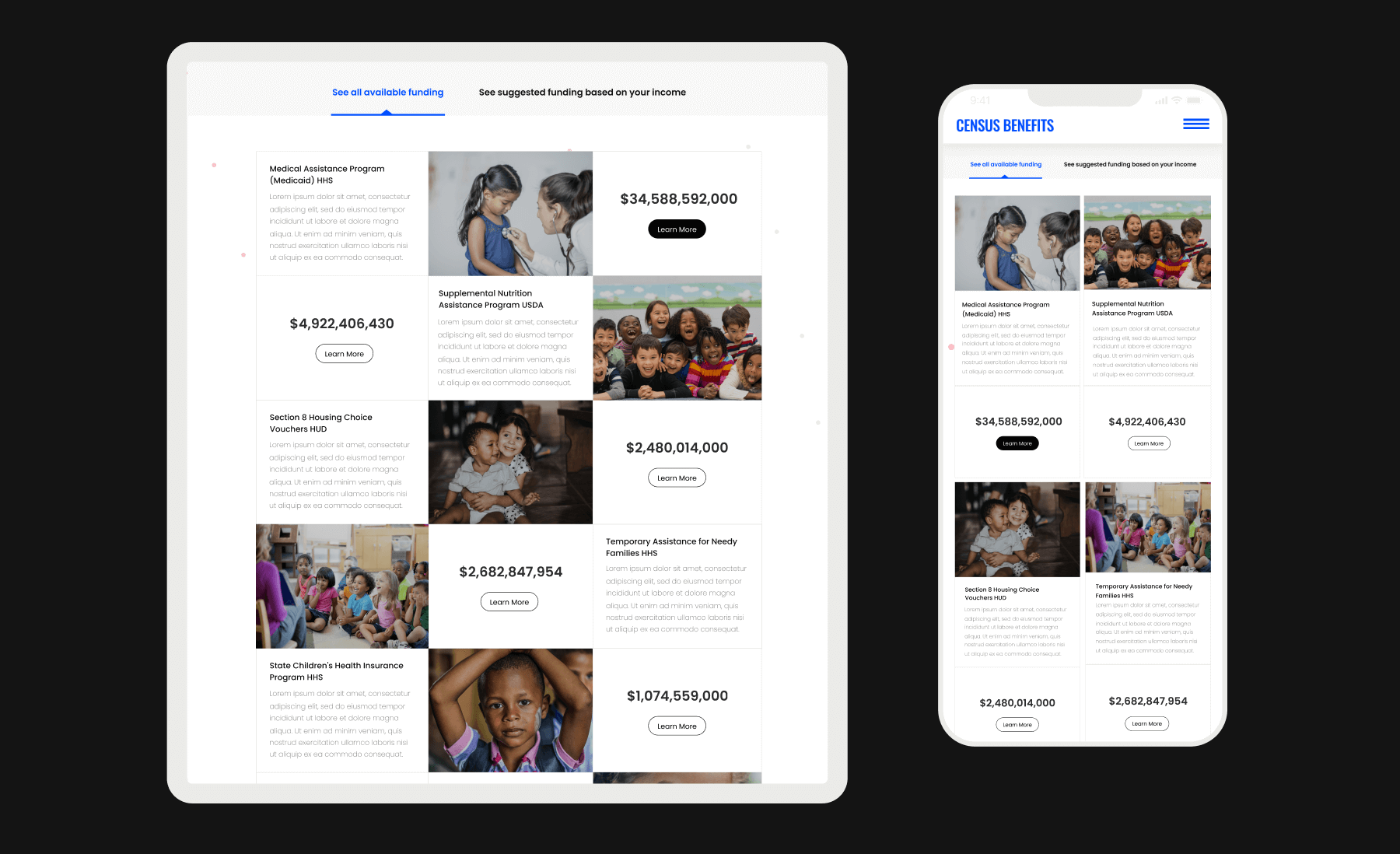
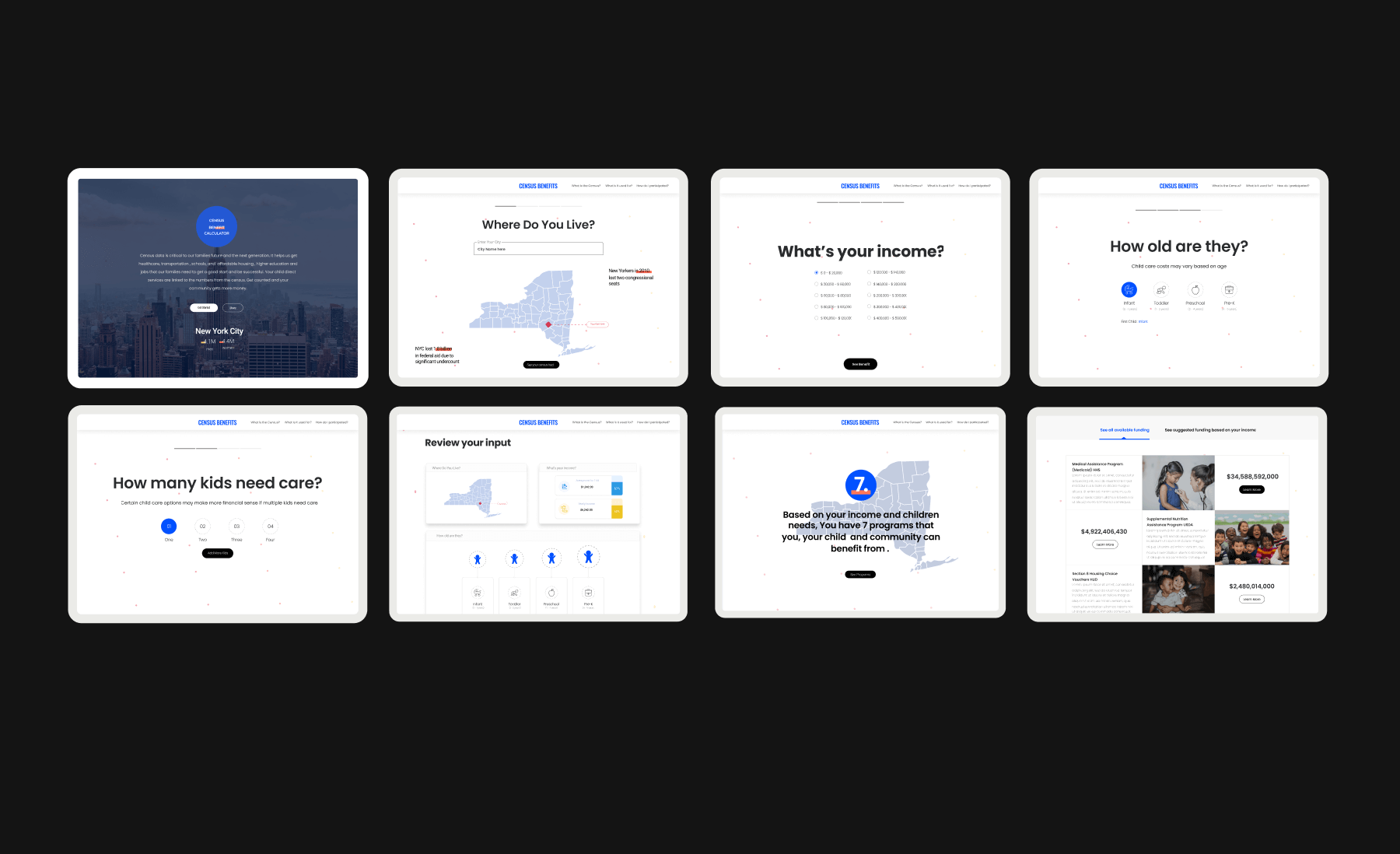
The design intervention targets immigrant parents in New York City who distrust government institutions yet prioritize their children’s welfare. Currently, more than half a million kids in New York state risk being undercounted, losing federal funding. To address this, we proposed the Census Benefit Calculator. This web application connects users’ locations, incomes, and children’s ages to personalized federal programs and their corresponding participation funds. By linking participation to benefits, families gained practical motivation for engagement.
Toolkit, Methods & Frameworks
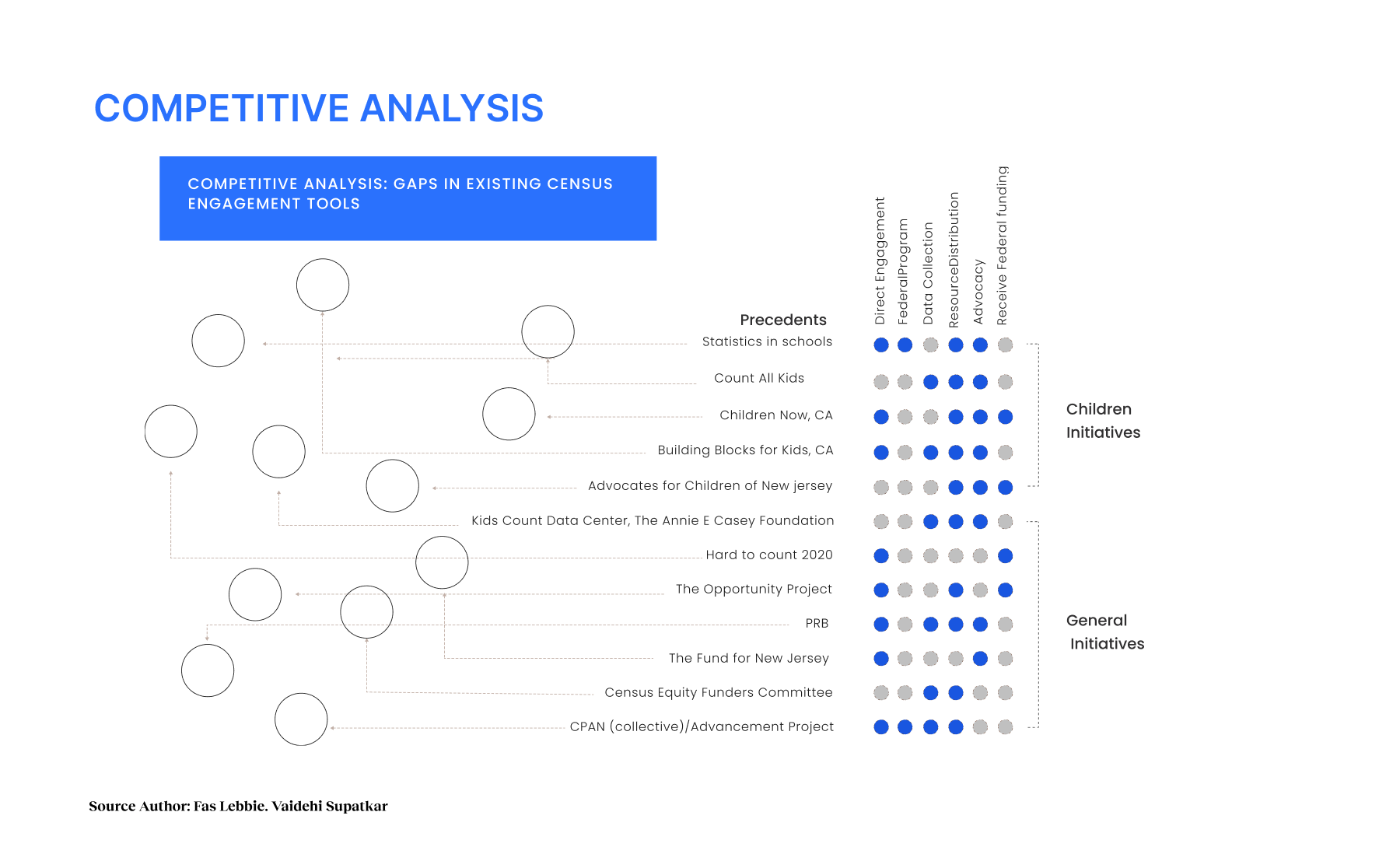
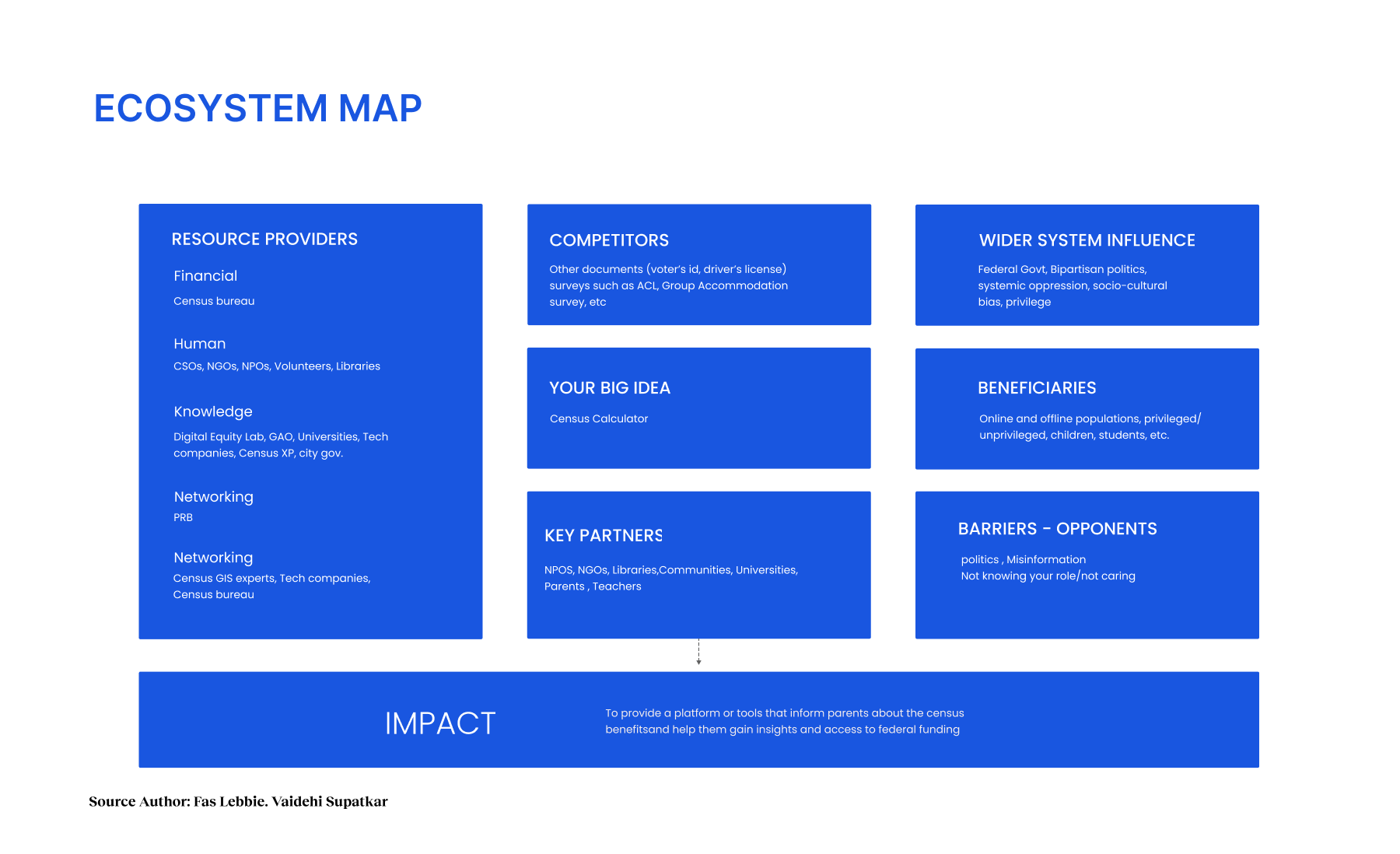
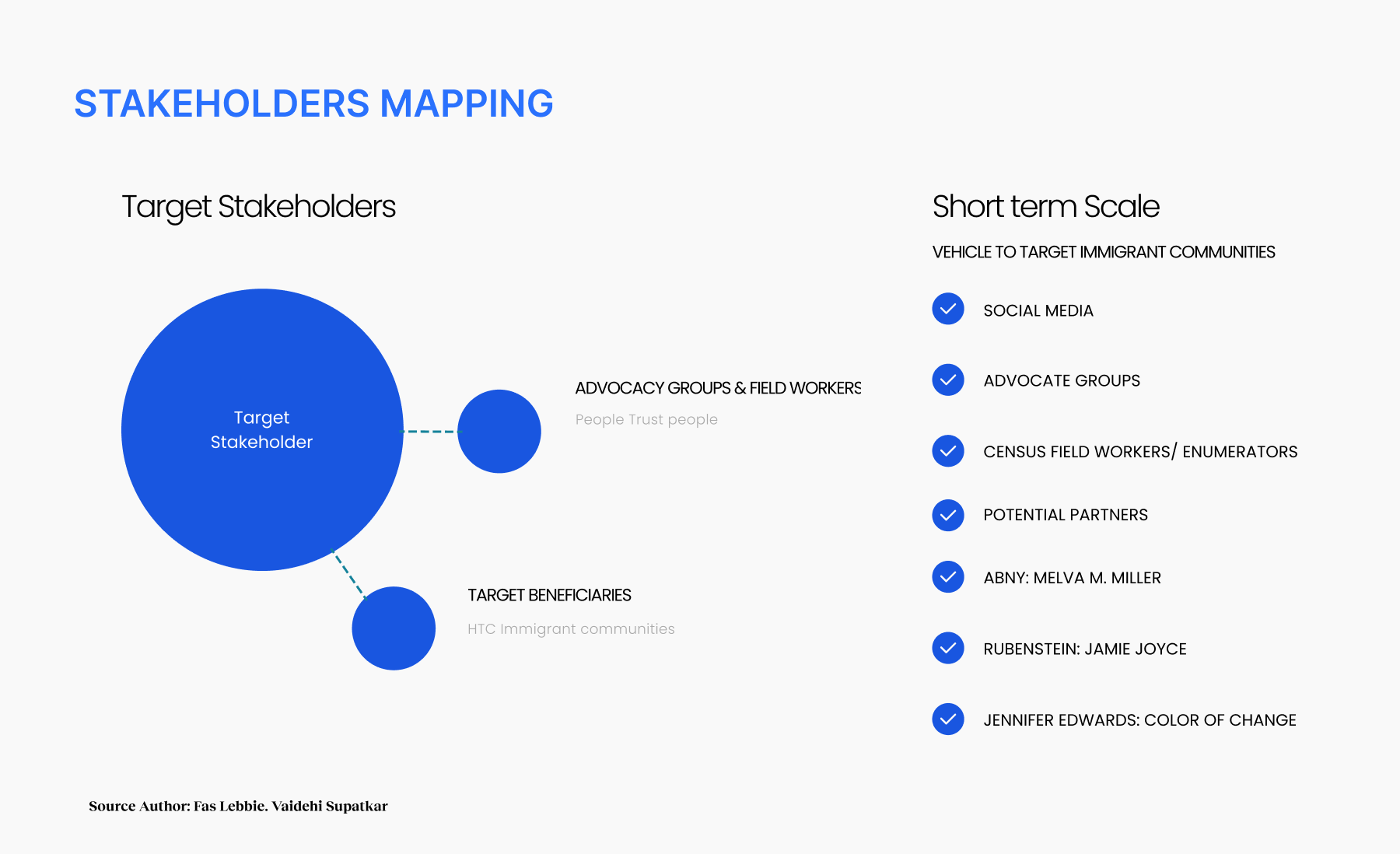
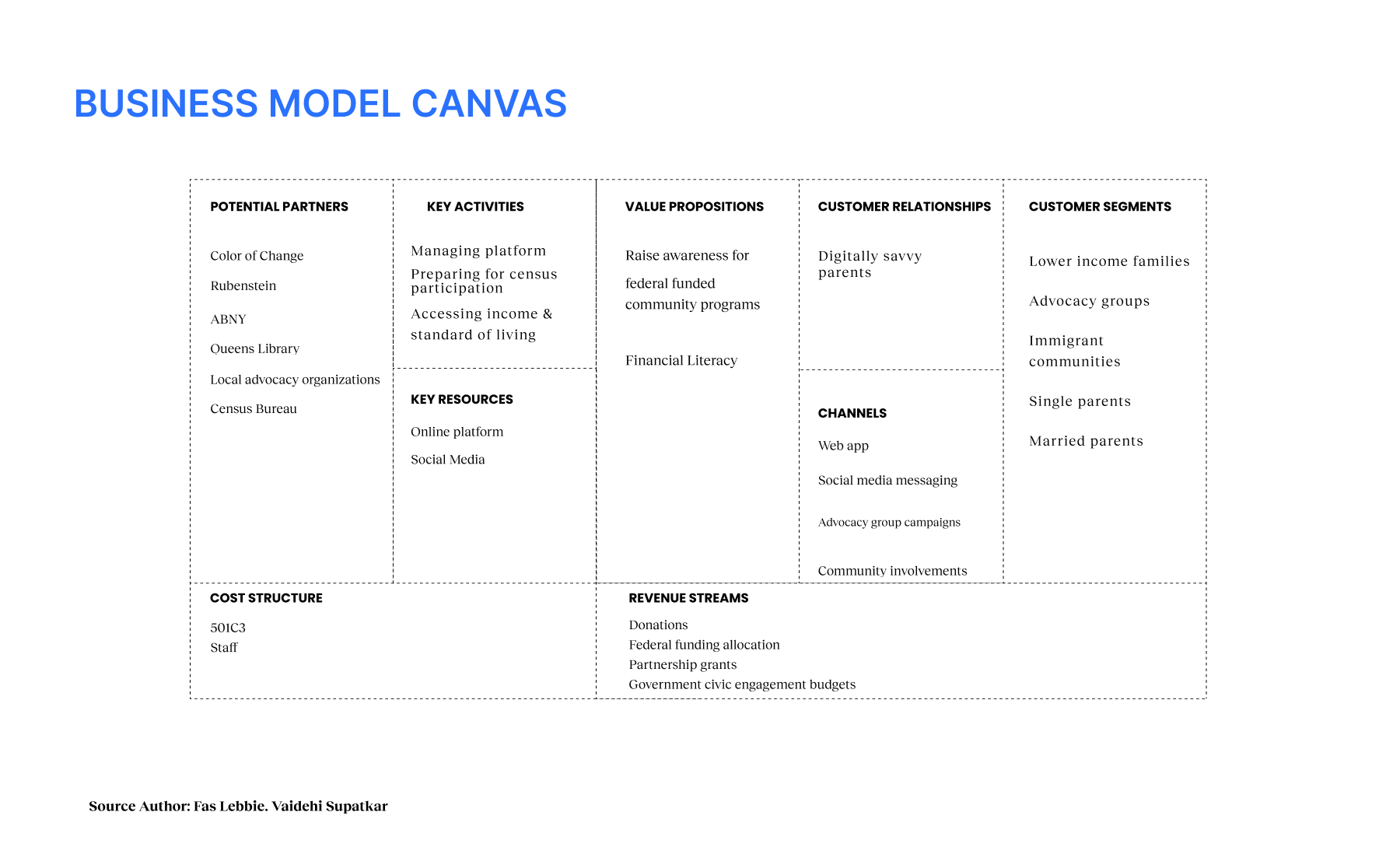
Through a transdisciplinary design approach, I integrated several methods and frameworks, some of which are presented here, including the ethnographic research, systems analysis, and participatory co-creation methodologies. From stakeholder mapping to competitive analysis, each method and approach aims to reveal the civic challenges and opportunities within the New York City US census.
In Federal Funding Retainedprojected by increasing census participation among immigrant families and reducing undercount risk in hard-to-reach NYC districts
Estimated Increase in Census Response Ratebased on targeted fieldworker interventions using the benefit calculator to reframe participation as a pathway to tangible family resources
At-risk Children Made Visible by helping immigrant households count every child, unlocking funding for schools, healthcare, and housing support
Reflections & Impact
The Census Benefit Calculator served as a personalized web application that empowers immigrant parents by connecting census participation to real federal benefits such as school lunches, healthcare services, and housing assistance. Users input simple information, such as location, income range, and children’s ages, to receive tailored insights about which programs their census participation helps fund.
This tool helps make abstract appeals to civic duty visible through practical, personalized conversations about tangible outcomes. By reframing census participation from a narrative of government surveillance to one of resource access, advocacy groups and field workers were able to engage families who were previously hesitant. Field testing revealed that immigrant parents became meaningfully involved when they understood how participation could directly support their children.
By addressing both emotional and informational barriers, especially government distrust, through transactional framing rather than patriotic messaging, the project created a replicable model for civic design. The Census Benefit Calculator demonstrates how design can activate conditions for trust and engagement, making civic processes more usable, relevant, and centered on people’s lived experiences.
Next Steps
- Pilot with other states’ advocacy partners by testing the calculator in real outreach settings to gather impact data and refine usability for next census adoption.
- Develop a civic fieldworker toolkit that includes a calculator, talking points, and training materials to support value-based outreach.
- Publish policy brief and impact report to share outcomes and propose the model as a scalable civic engagement.
- Expand the calculator to include additional federal programs beyond children’s services.
- Develop field worker training materials and protocols to ensure optimal tool deployment.
- Integrate real-time federal funding data for more precise benefit calculations.
- Develop offline capabilities for communities with limited internet access.