WHAT I BROUGHT
Led mixed-methods research and participatory workshops with 25 artisanal miners in Sierra Leone to identify systemic barriers in diamond valuation. Co-developed an equity-driven accessibility framework that shaped the product's core strategy.
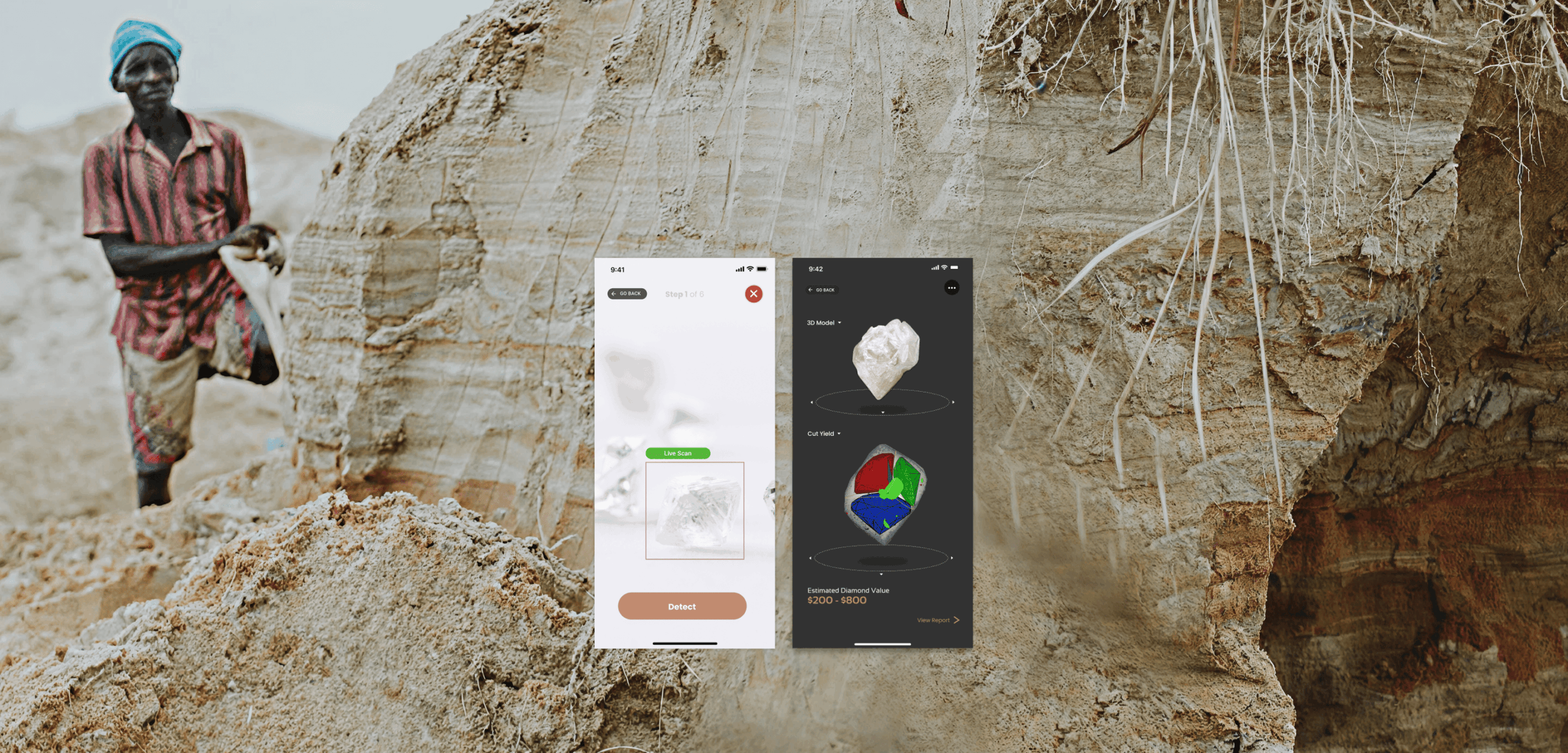
Designed a mobile-first, offline-compatible AI interface using computer vision, translating gemological complexity into intuitive, visual-first interactions for miners with limited literacy or internet access.
Directed cross-functional collaboration between Root Studios, Pact, and GIA to build a decentralized, accessible diamond valuation tool that empowered 5,000+ miners with pricing independence.
Problem Context
Diamond valuation has historically favored buyers over miners. In Sierra Leone’s artisanal mining communities, this information gap leads to systematic undervaluation due to the asymmetry in the valuation process. Existing tools such as DiamondMaster and CARATRATE cater to dealers and traders, requiring extensive gemological knowledge, subscription fees, and a stable Internet, which most miners lack. Our early research revealed that most miners lacked practical methods to assess the minerals they discovered. Professional scanning systems are not readily available in remote areas, and when they are, they are often used discreetly. In some cases, scanning systems are available in major trading centers, but security risks and travel costs make them inaccessible. Despite these challenges, miners did have access to cell phones. The Root Foundation, the company launching this app, aims to build a local grading and valuation office as an embedded ally approach while engaging in potential partnerships with Pact and GIA. Through community-led discussions with miners about the local grading and valuation office in Kono, the Diamond Valuation AI app emerged, allowing them to shift from a centralized valuation office to a decentralized mobile solution. This app addresses security concerns raised by local miners, protects Root Foundation agents and office safety, decentralizes the accessibility of market prices, and puts them in miners’ pockets.
My Appraoch
This research is based off the idea that most systems are designed to be exclusionary, and the designer’s role is to democratize systems that marginalize and oppress vulnerable people and communities. I used this principle to identify leverage points within the system. Our research and design decisions prioritize accessibility, transparency, and immediate value for miners previously excluded from fair market participation. This aligns with the Participatory Technology Development framework, which focuses on equity, inclusion, and meaningful stakeholder engagement throughout the technology development process. For this project, we’ve prioritized transparency, respect, partnership, two-way knowledge exchange, and capacity building, core principles that guide our work with miners.
Design Process
Early fieldwork showed that smartphones were common in Kono and Sierra Leone, but technical literacy varied among miners. Traditional diamond assessment tools such as Diamond Master and CARATRATE served dealers, requiring specialized gemological expertise and costly subscriptions. Market analysis showed that professional solutions, such as Sarine’s scanning technology, made diamond valuation feasible but inaccessible to miners. Security concerns made centralized valuation facilities impractical. By understanding the socioeconomic challenges within Kono’s mining communities, supply chain power imbalances, and miners’ technological capabilities, I grounded my approach the local context.
I employed a mixed-methods approach, using a participatory technology development approach to research and contextual interviews with miners across various sites. These sessions revealed miners’ workflows, pain points, and technology usage patterns. Participatory design workshops with 25 miners helped reveal the systemic barriers and knowledge gaps that they faced. Collaboration with gemological experts helped distill complex valuation principles into accessible interactions.
Research findings revealed that miners’ knowledge of diamond valuation was fragmented. While miners understood basic principles of diamond valuation, they struggled to link these qualities to market value and optimal cutting strategies. This gap perpetuates power imbalances when middlemen, such as local dealers and foreign buyers, exploit this information asymmetry. This study identified some barriers to fair valuations:
- Limited technical literacy despite smartphone access
- Intermittent connectivity in remote mining sites
- Deep mistrust of centralized valuation systems due to historical exploitation
- Reliance on local pricing networks that often undervalue stones by 30-70%
Working with gemologists and miners, we developed three strategic pillars:
- Create a simplified interface design that requires minimal technical knowledge. Visual-first interactions translate complex gemological concepts into intuitive assessments.
- Built with an offline-first architecture to provide full functionality without Internet, ensuring accessibility in remote regions through locally cached data.
- Integrate viewing, imaging, and pricing into a unified AI-powered analysis system to democratize valuation expertise and translate simplified inputs into trustworthy price estimates.
Miners tested conceptual and experience design flows, starting with basic wireframes, to understand our intervention within infrastructure limitations and cultural contexts. The initial prototypes highlighted the need for clear visual guidance during diamond scanning and clear value reports suitable for mining conditions. Current tests focus on the offline optimization of the AI model for mobile devices. Miners can install the model through the Root Foundation office. Enhanced features refined from miner feedback include real-time visual guidance for optimal image and video capture, automated value estimation, and downloadable reports for negotiation support. Limited AI literacy suggests a 50-80% accuracy rate in field conditions, but the app can still have successful use cases with a simplified UI assessment approach. Successful implementation may indicate new opportunities for technology transfers that can expand functionality to other minerals, such as gold, potentially benefiting artisanal mining communities.
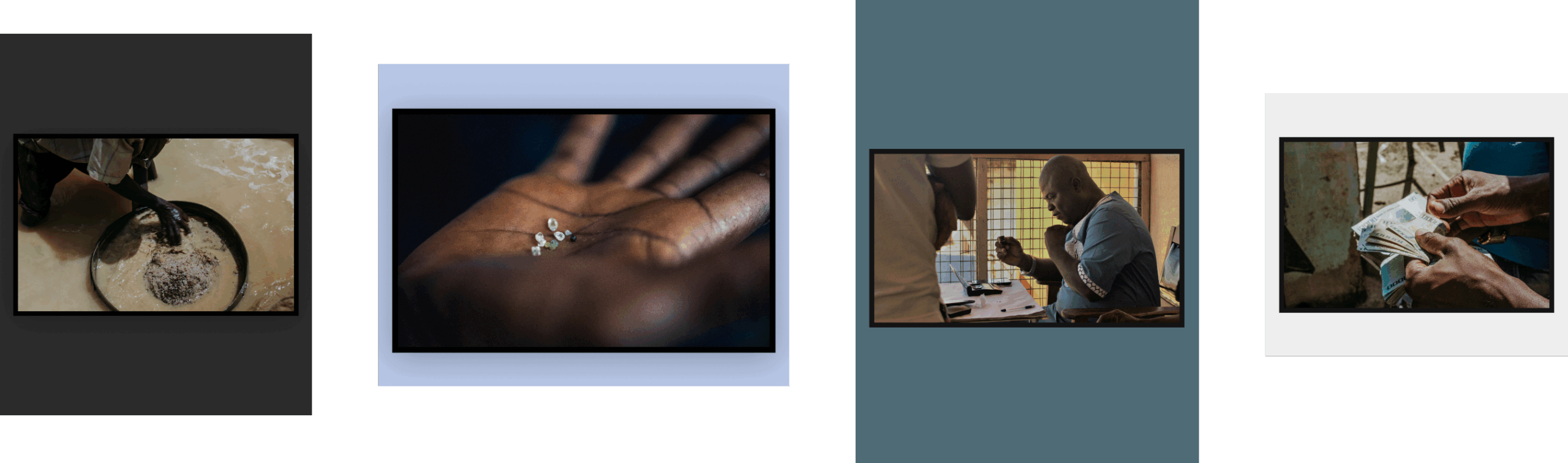
Undervalued Exchange
The miner finds diamonds but lacks market knowledge, selling to dealers without fair valuation due to limited knowledge of minerals and pricing.
Design Solution
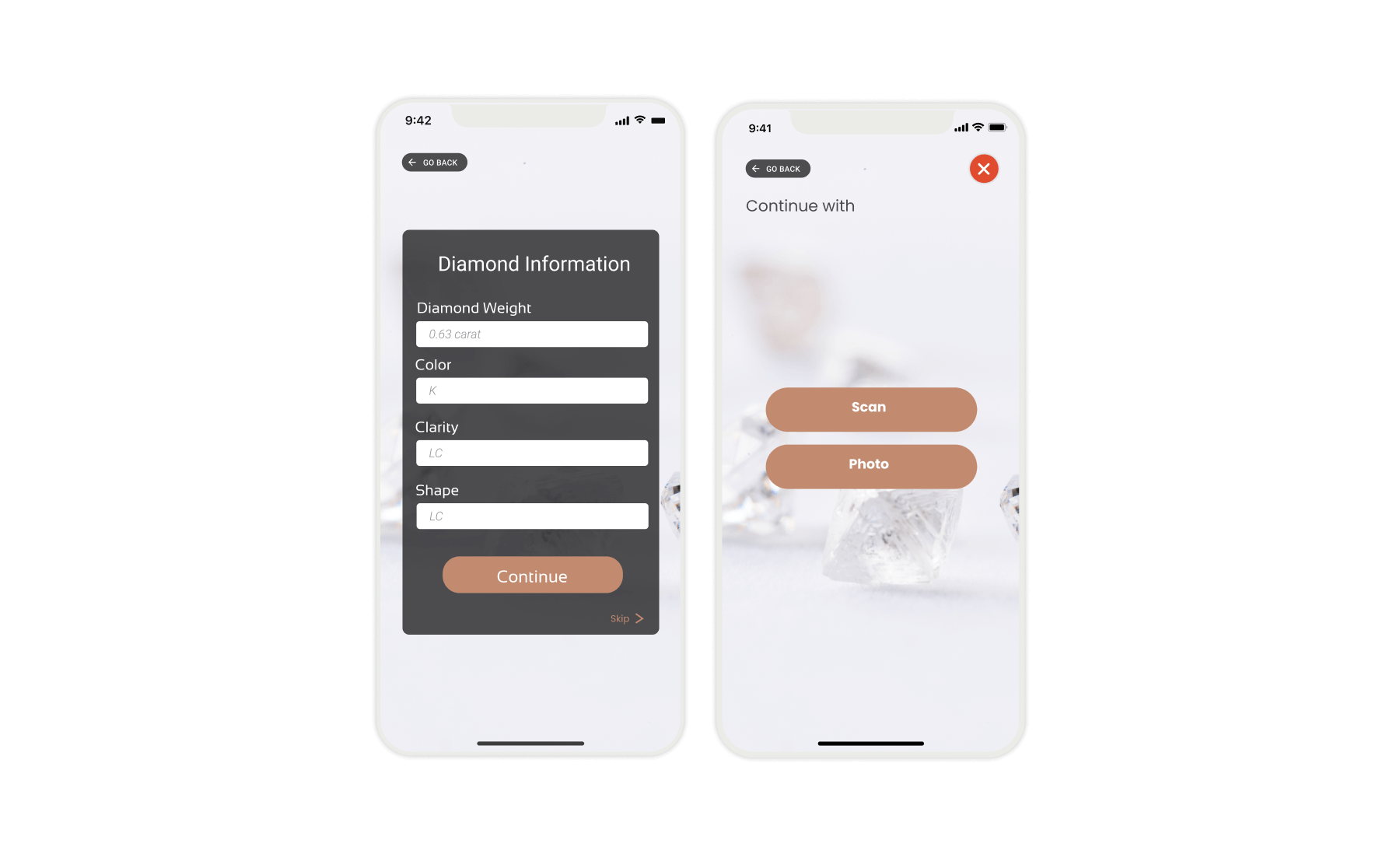
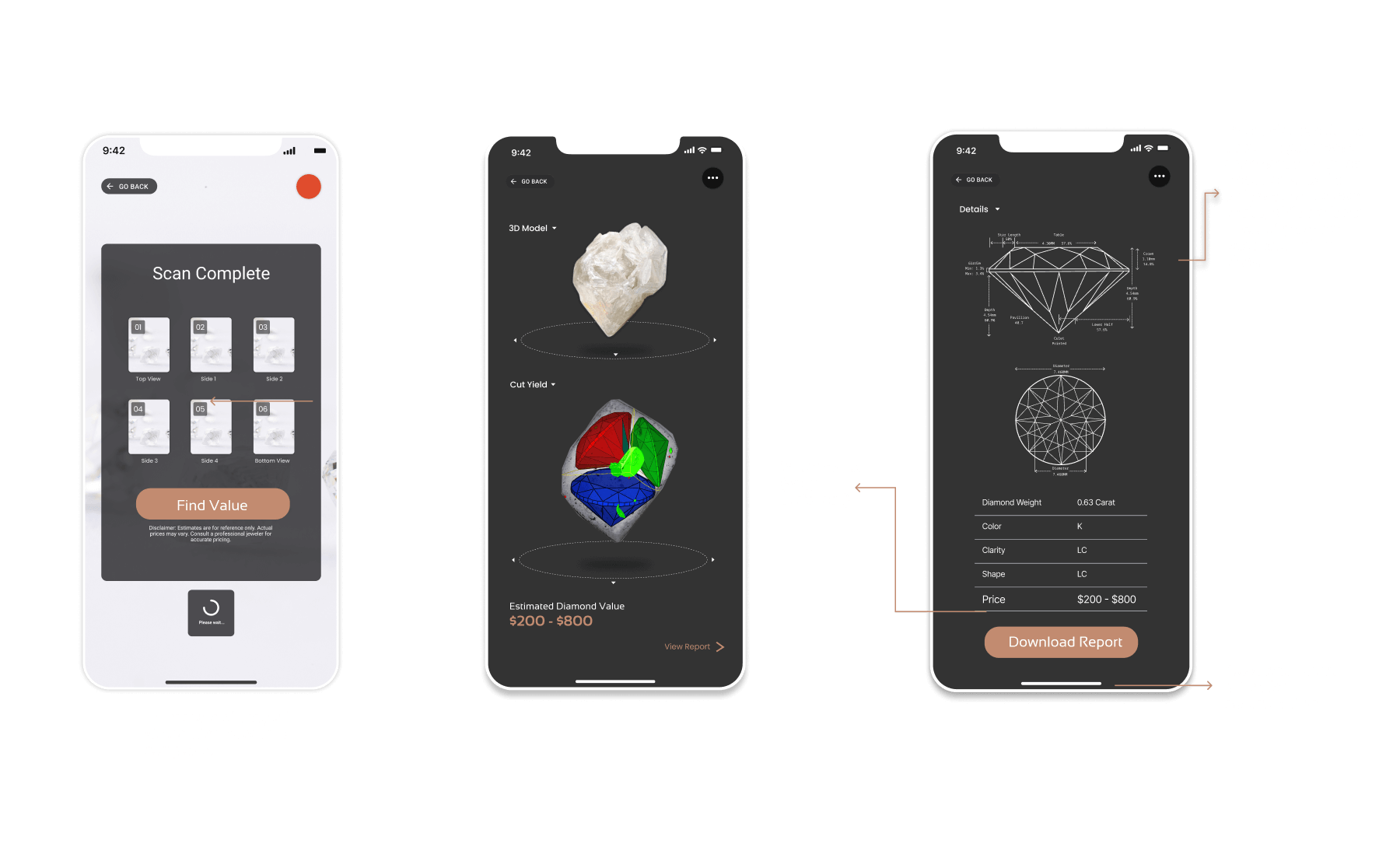
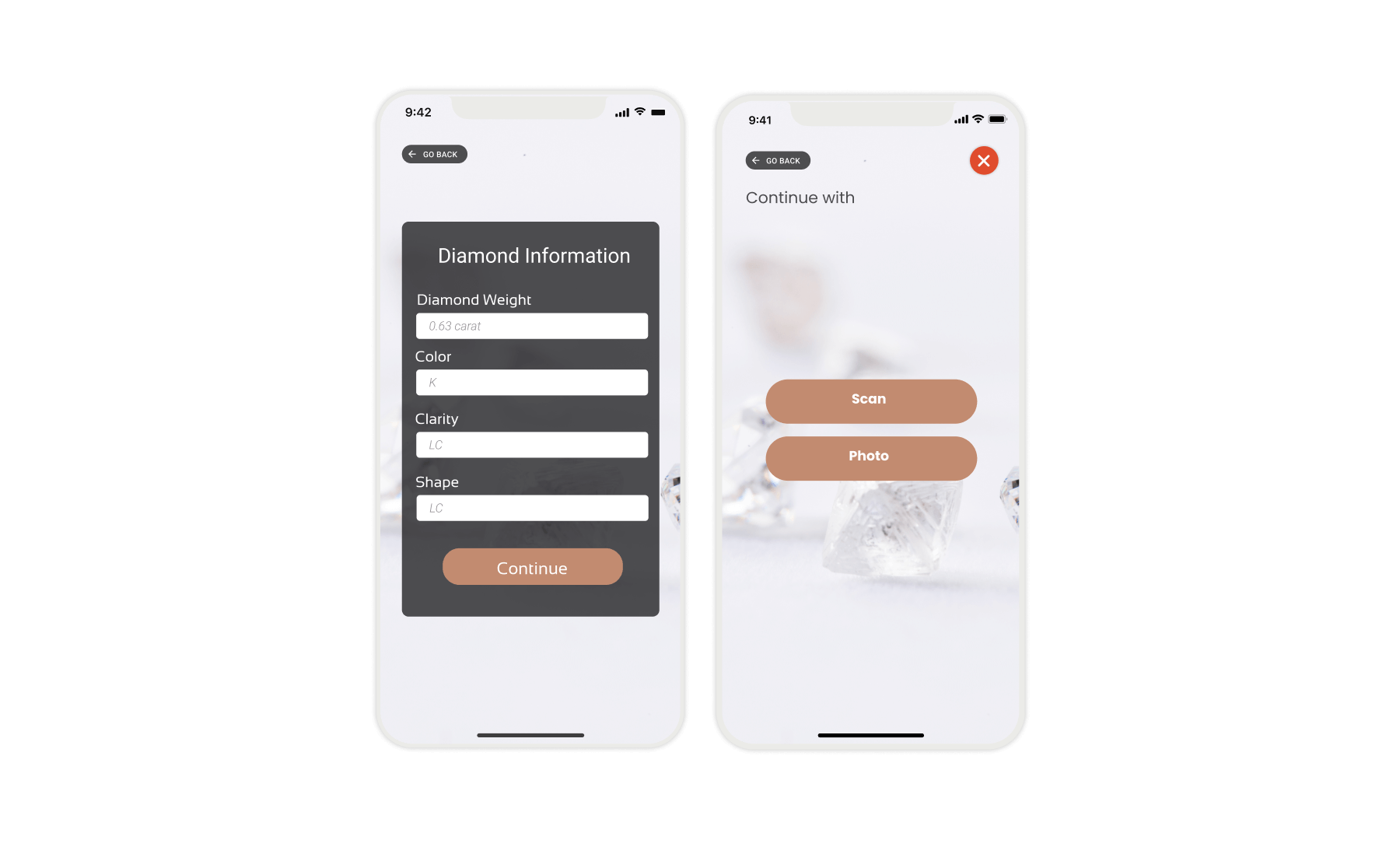
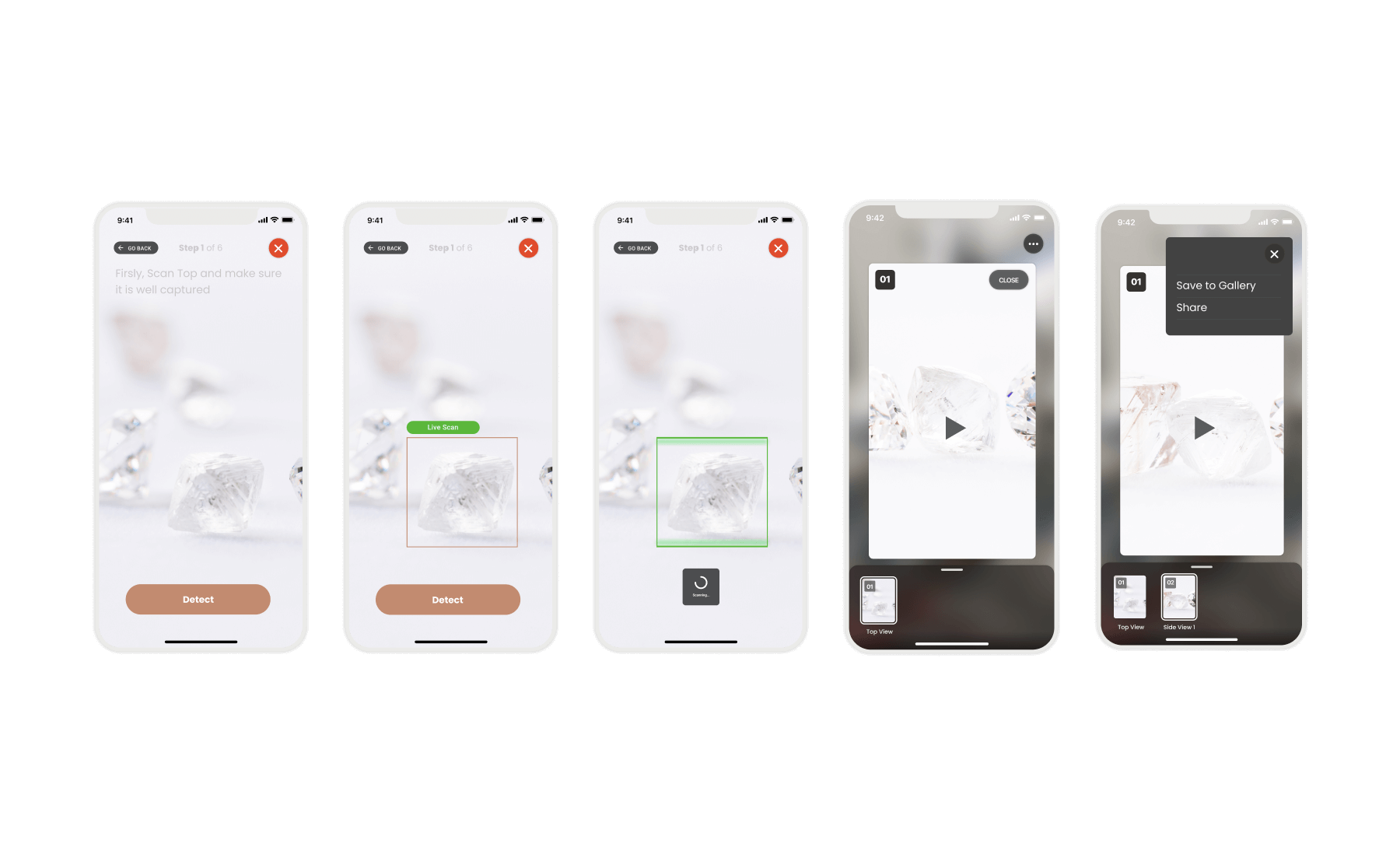
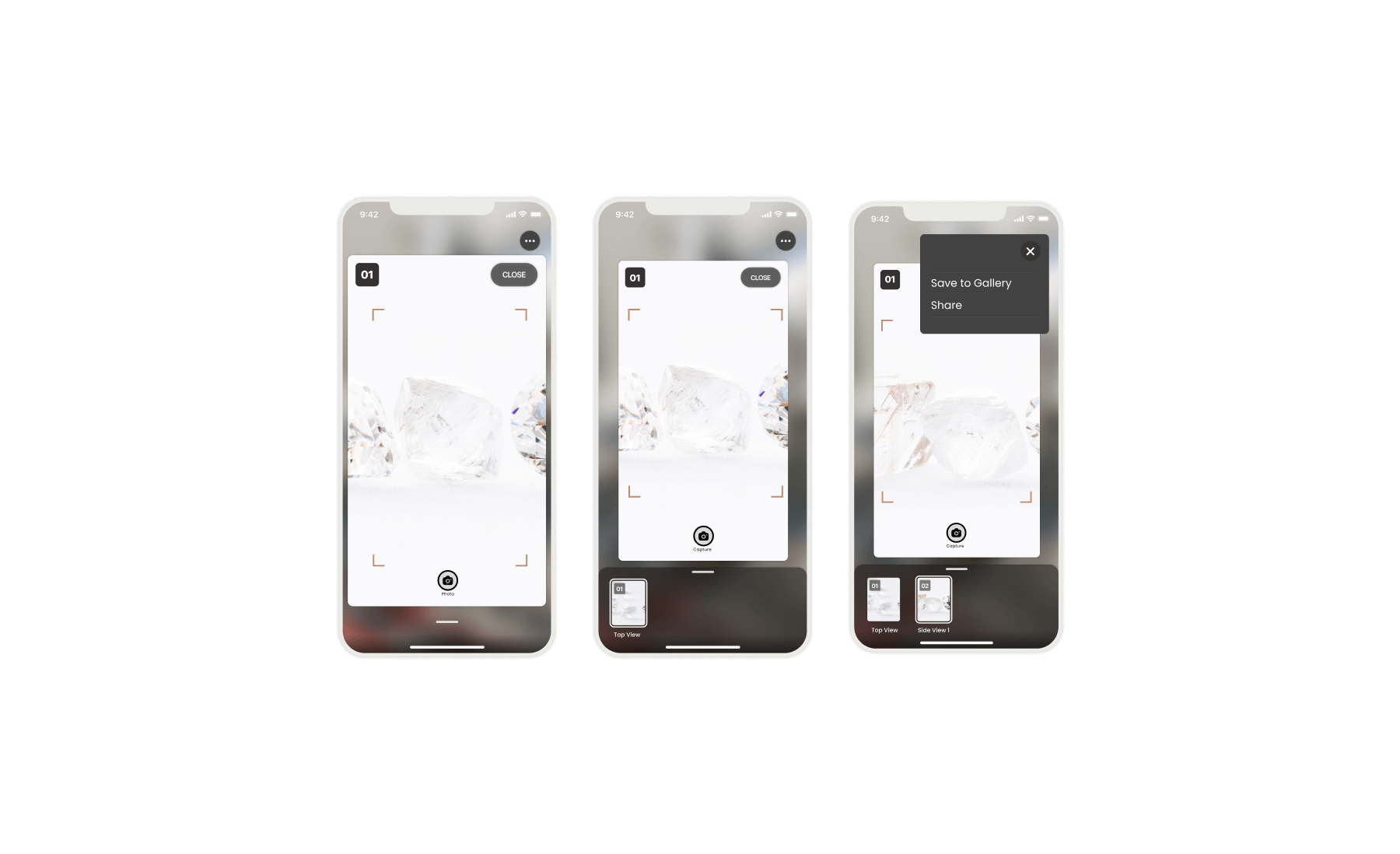
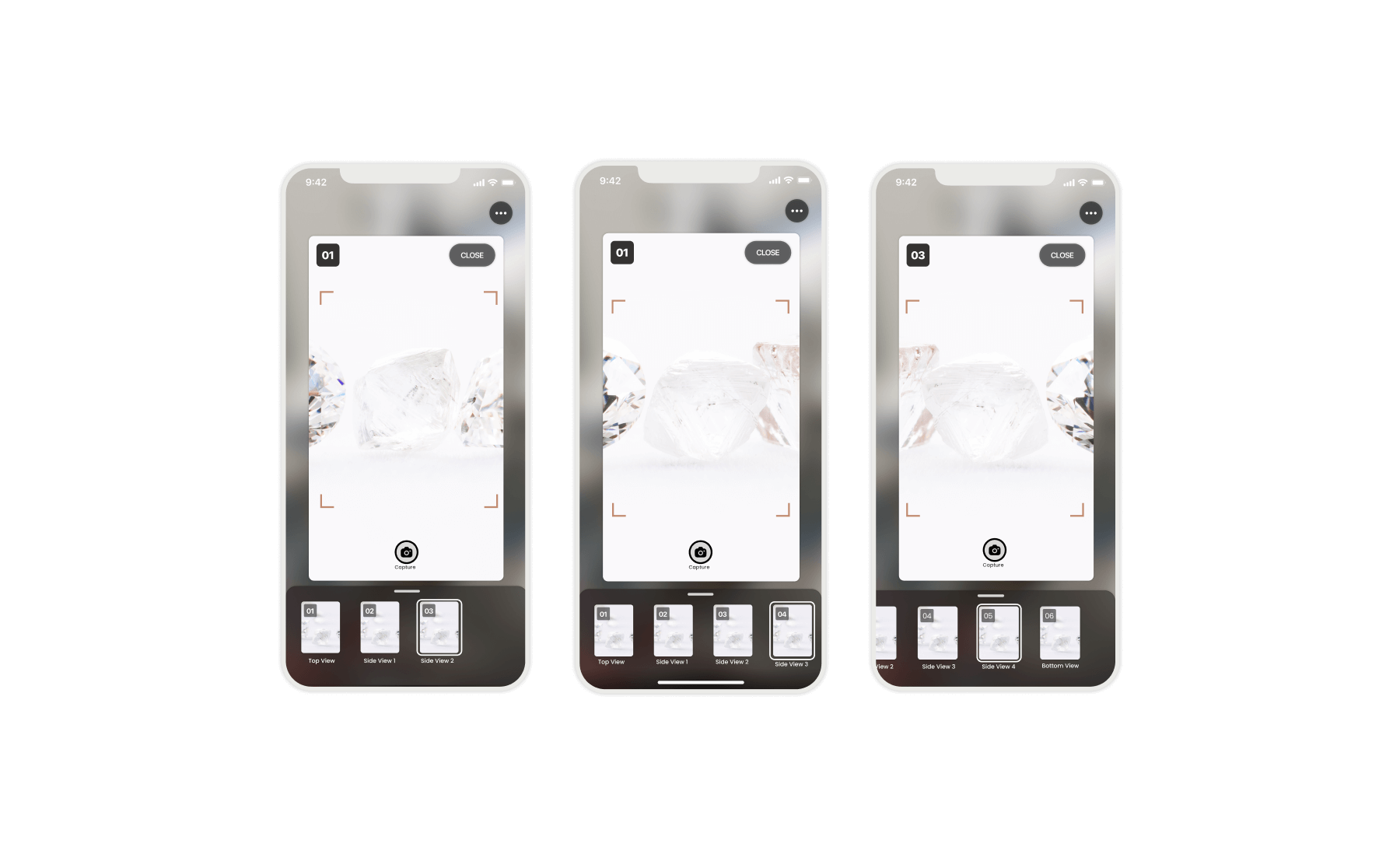
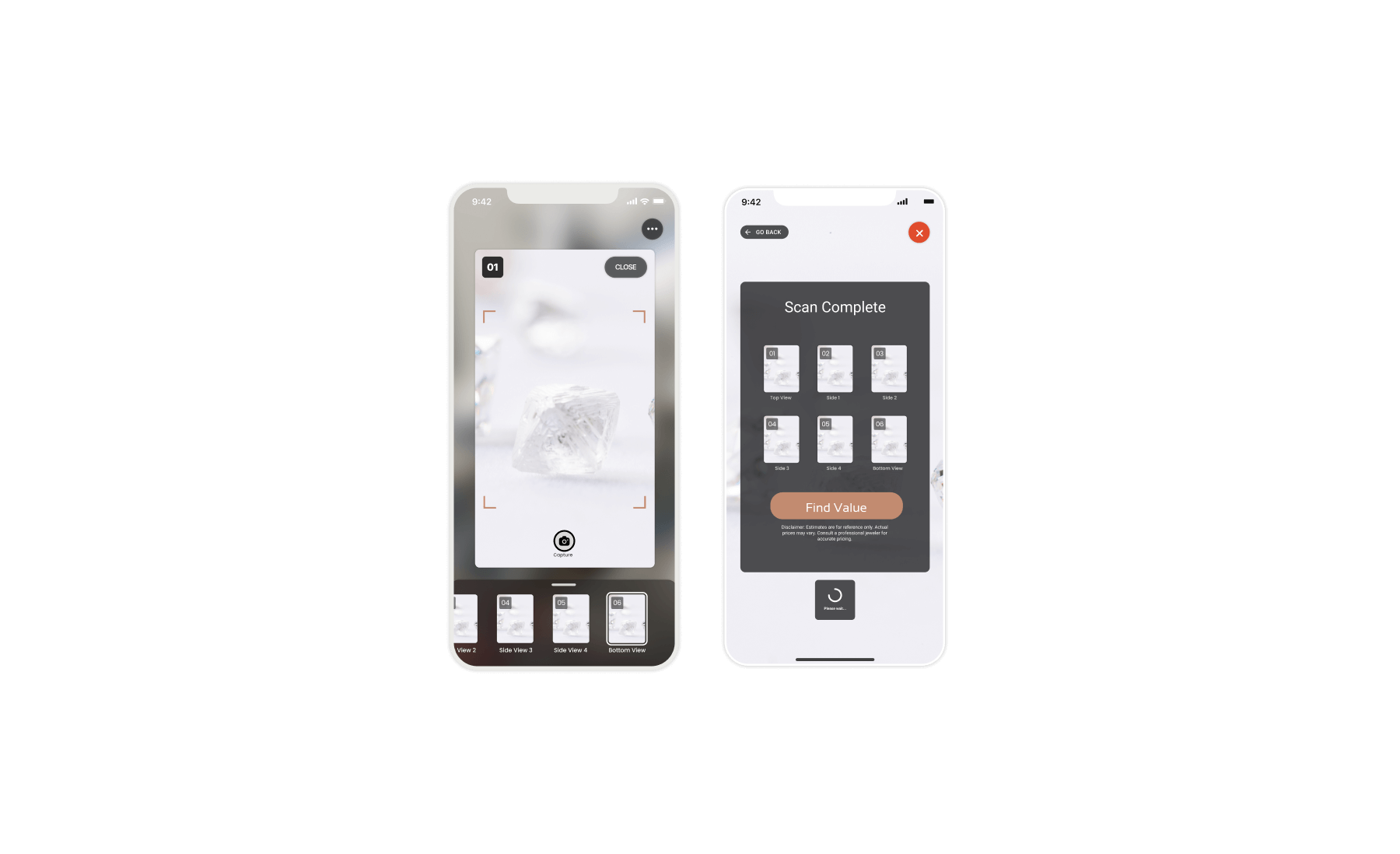
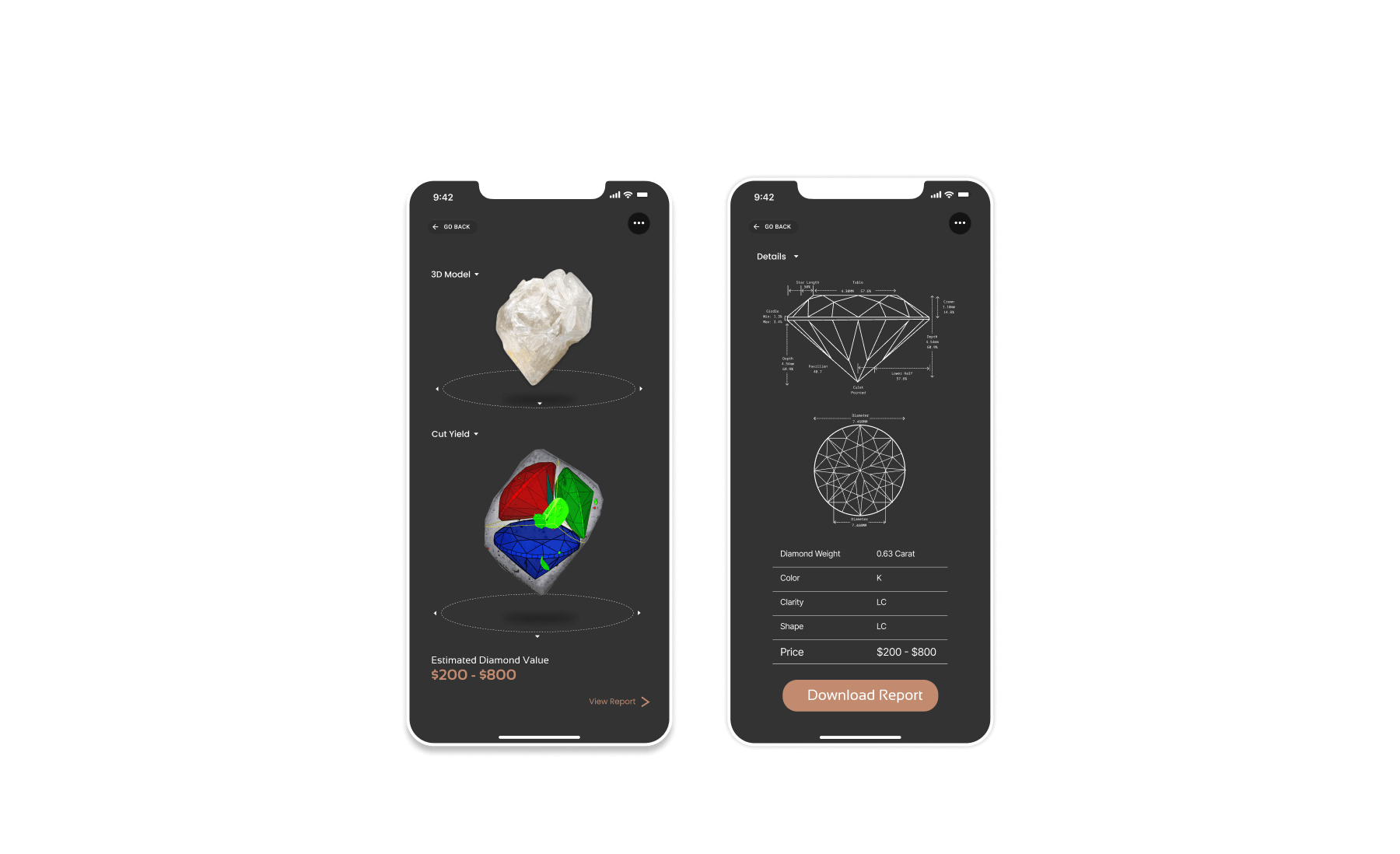
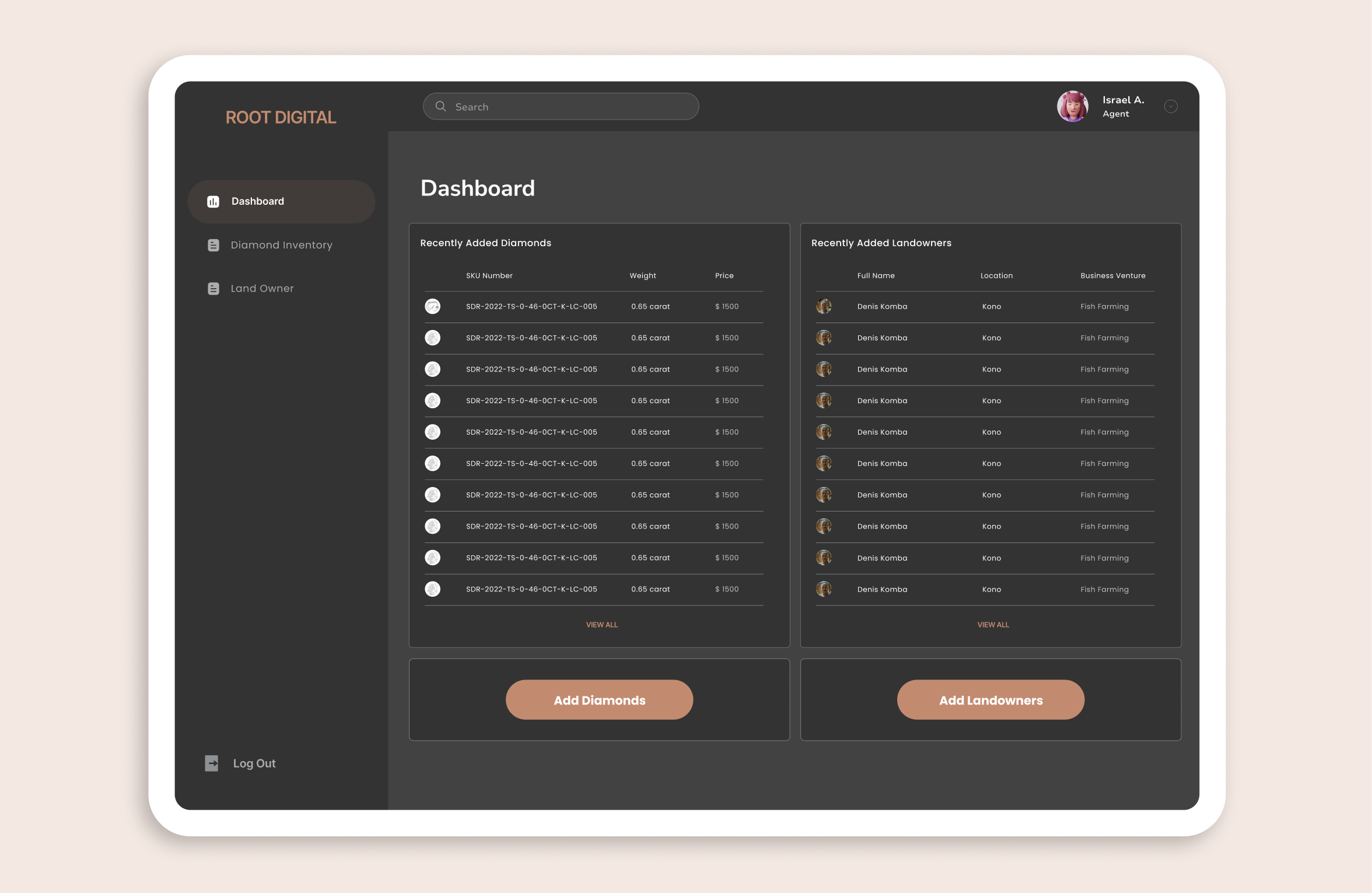
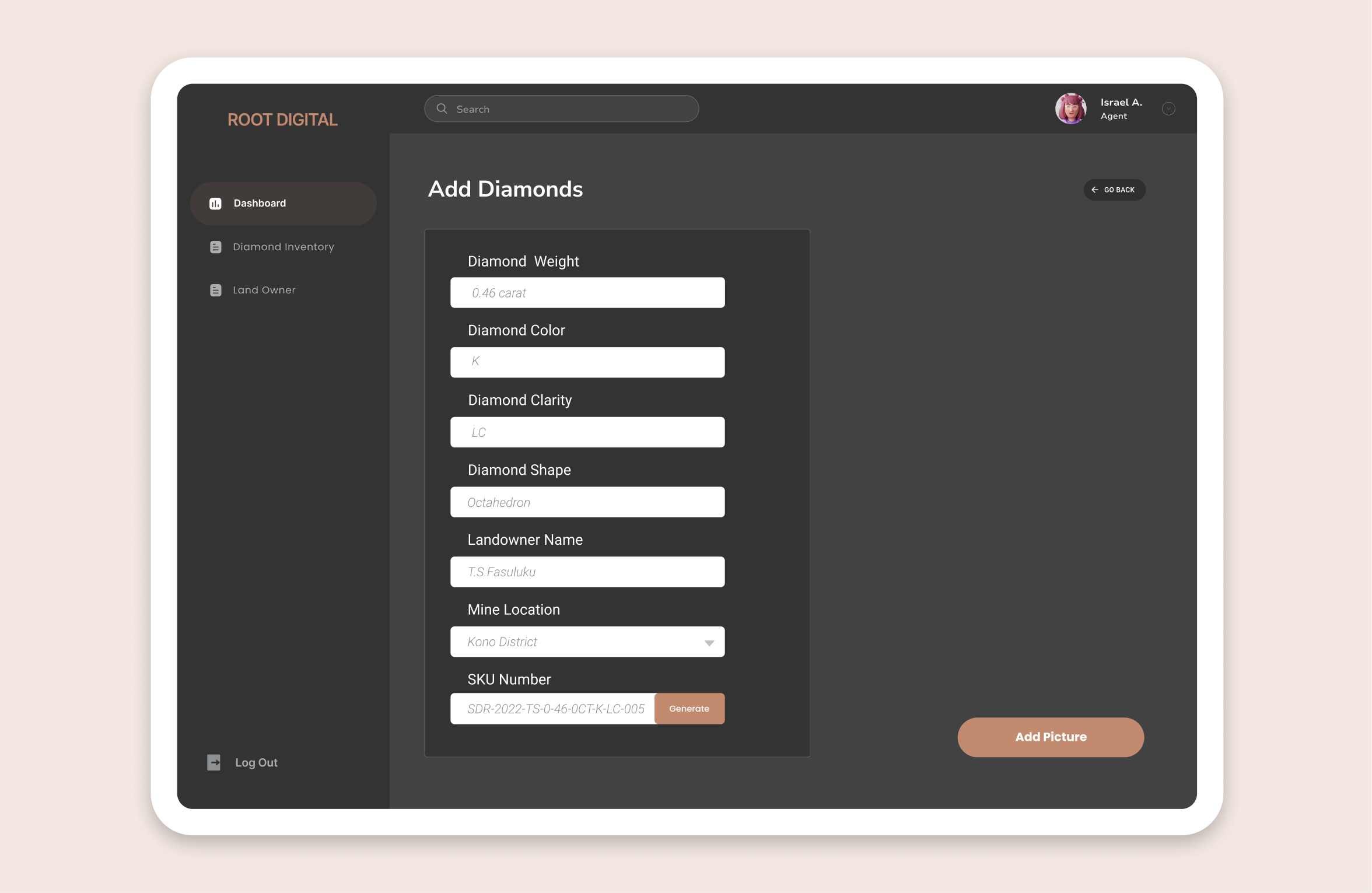
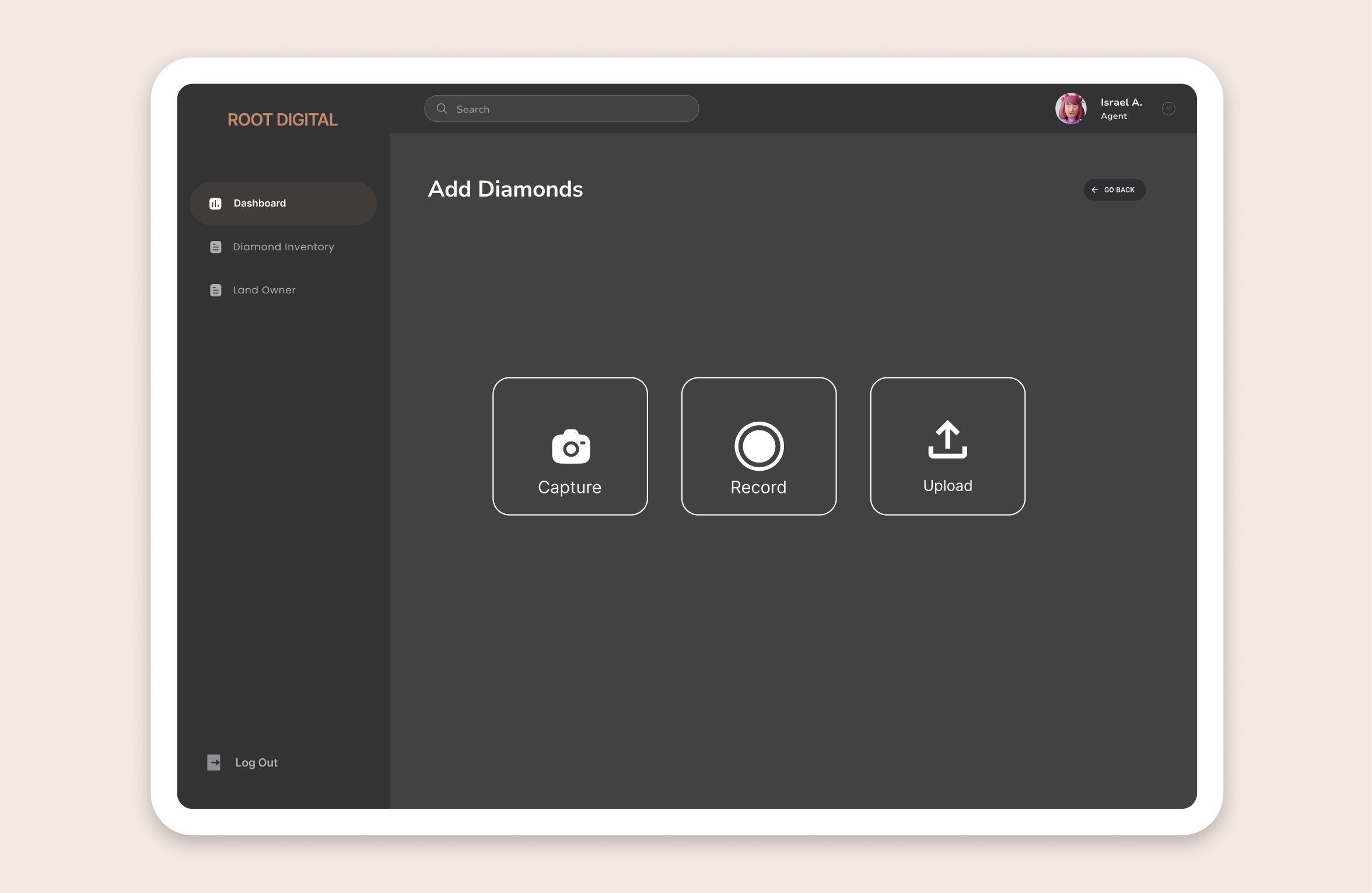
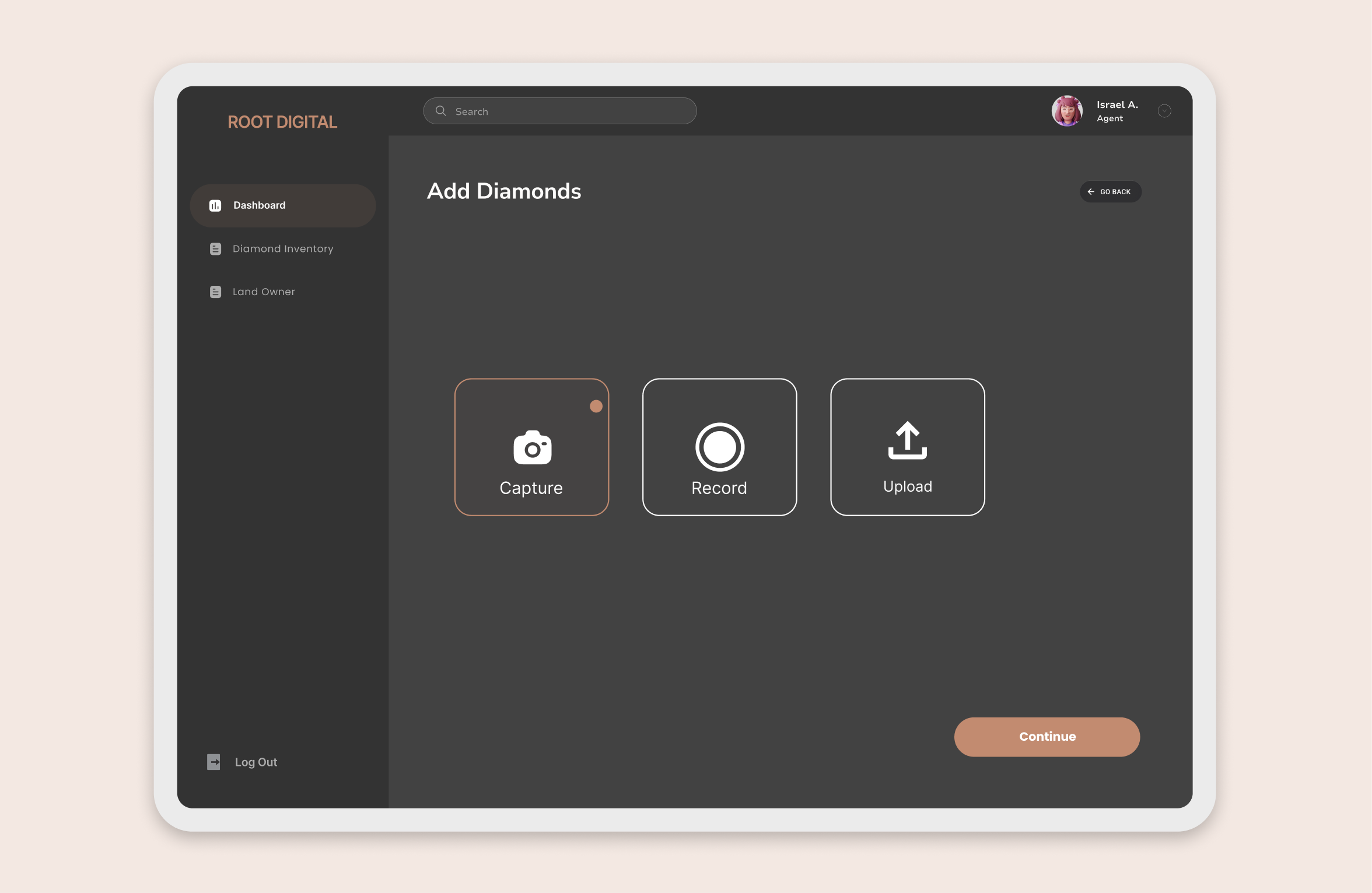
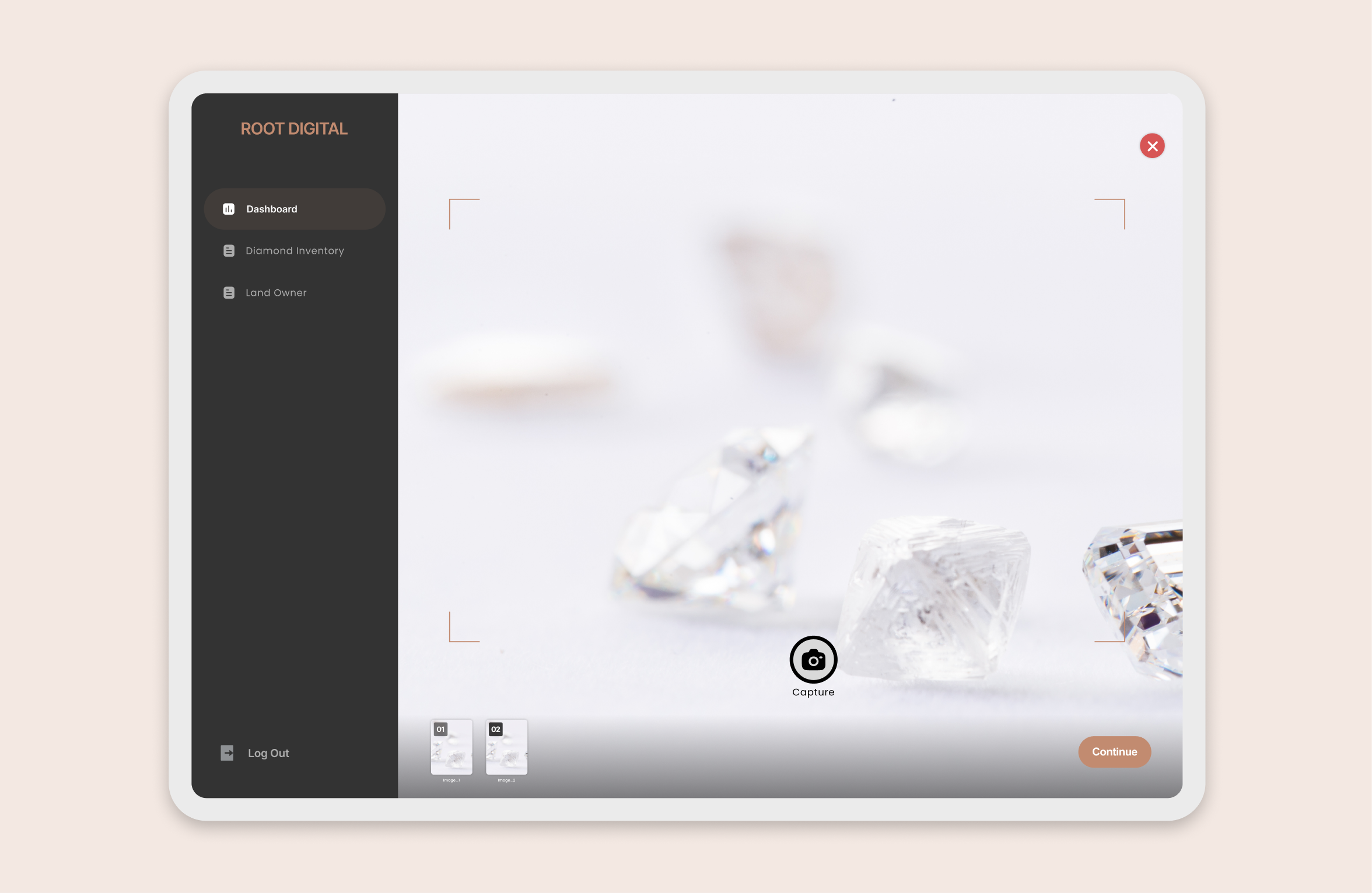
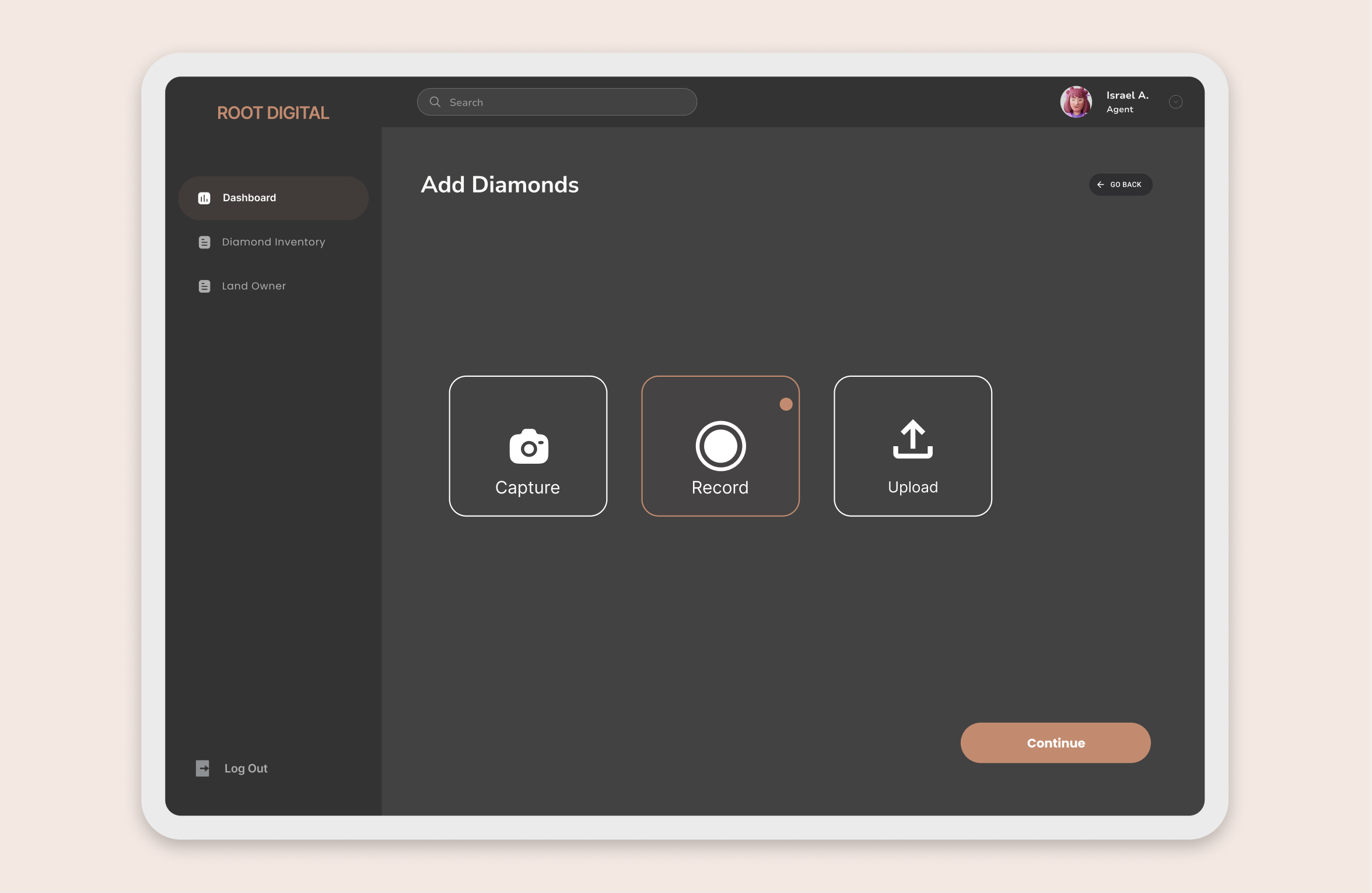
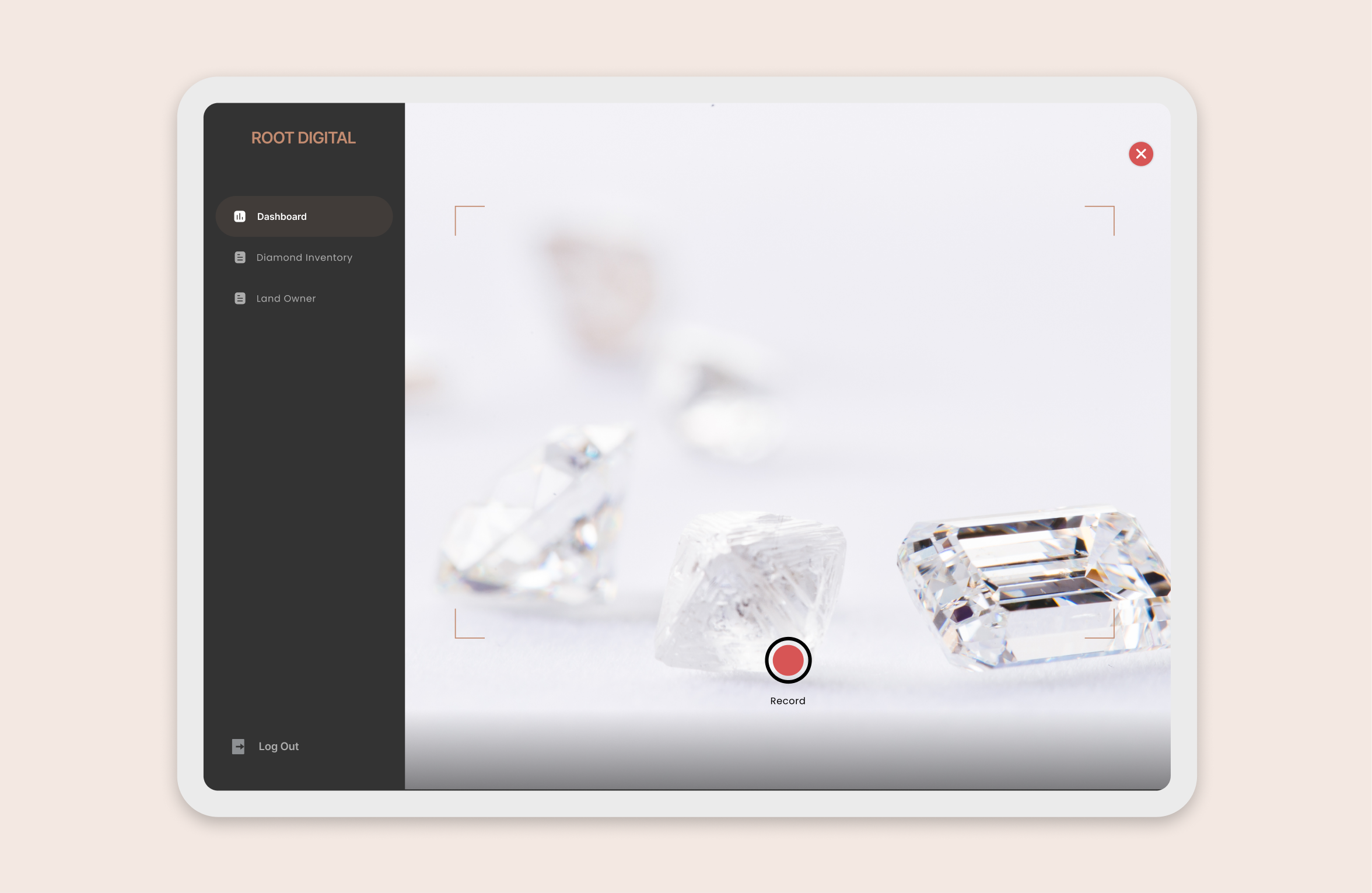
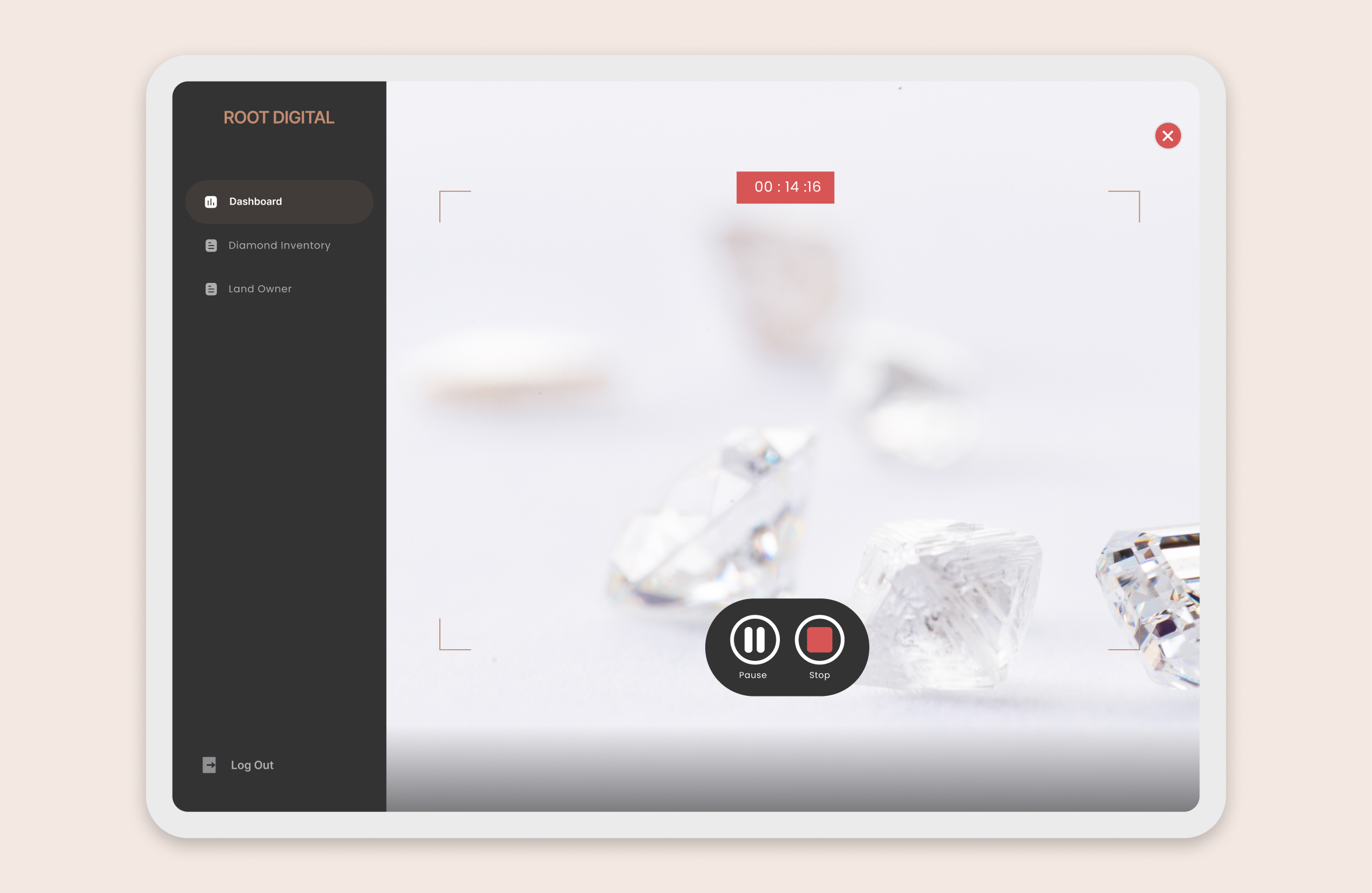
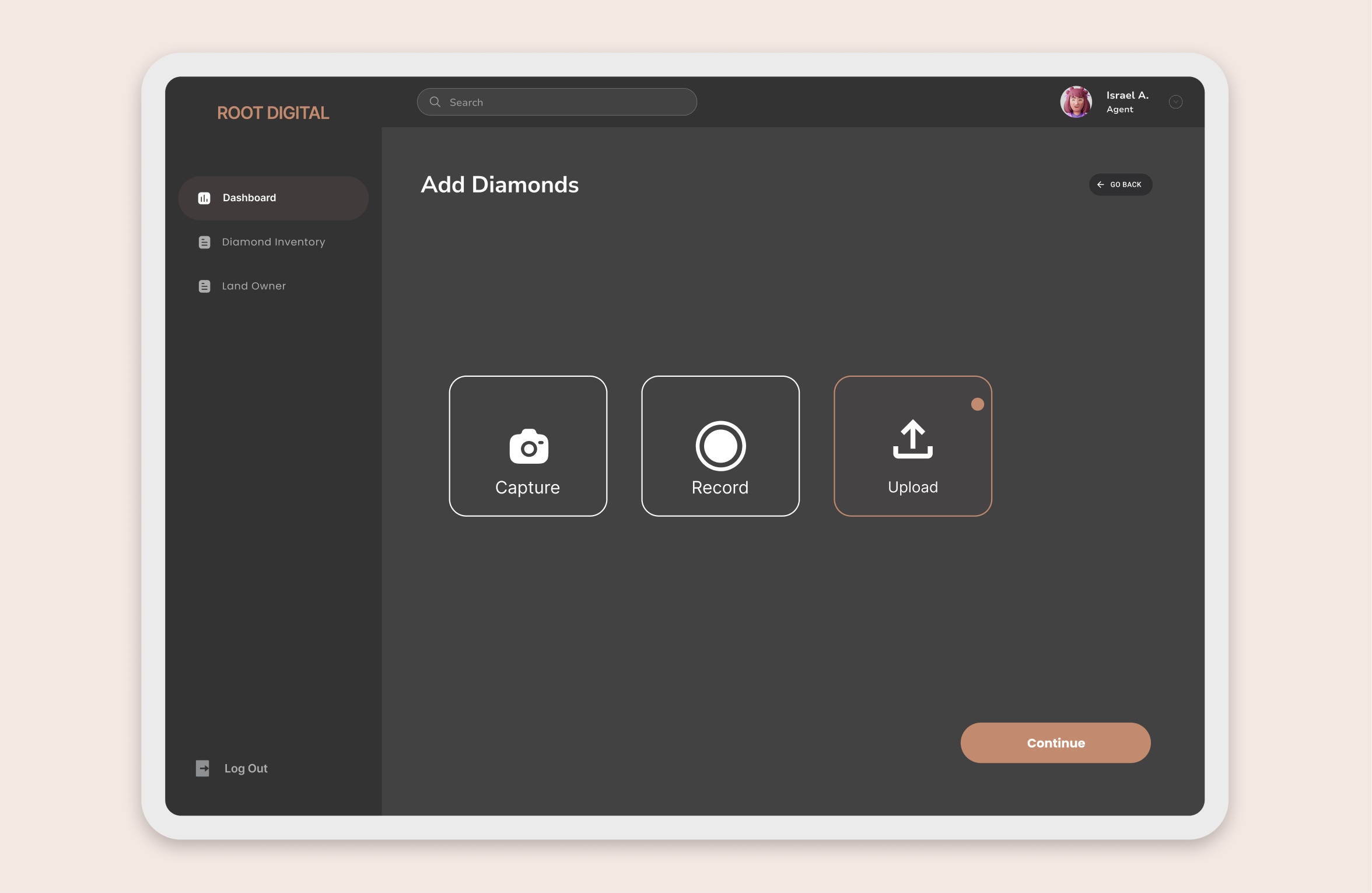
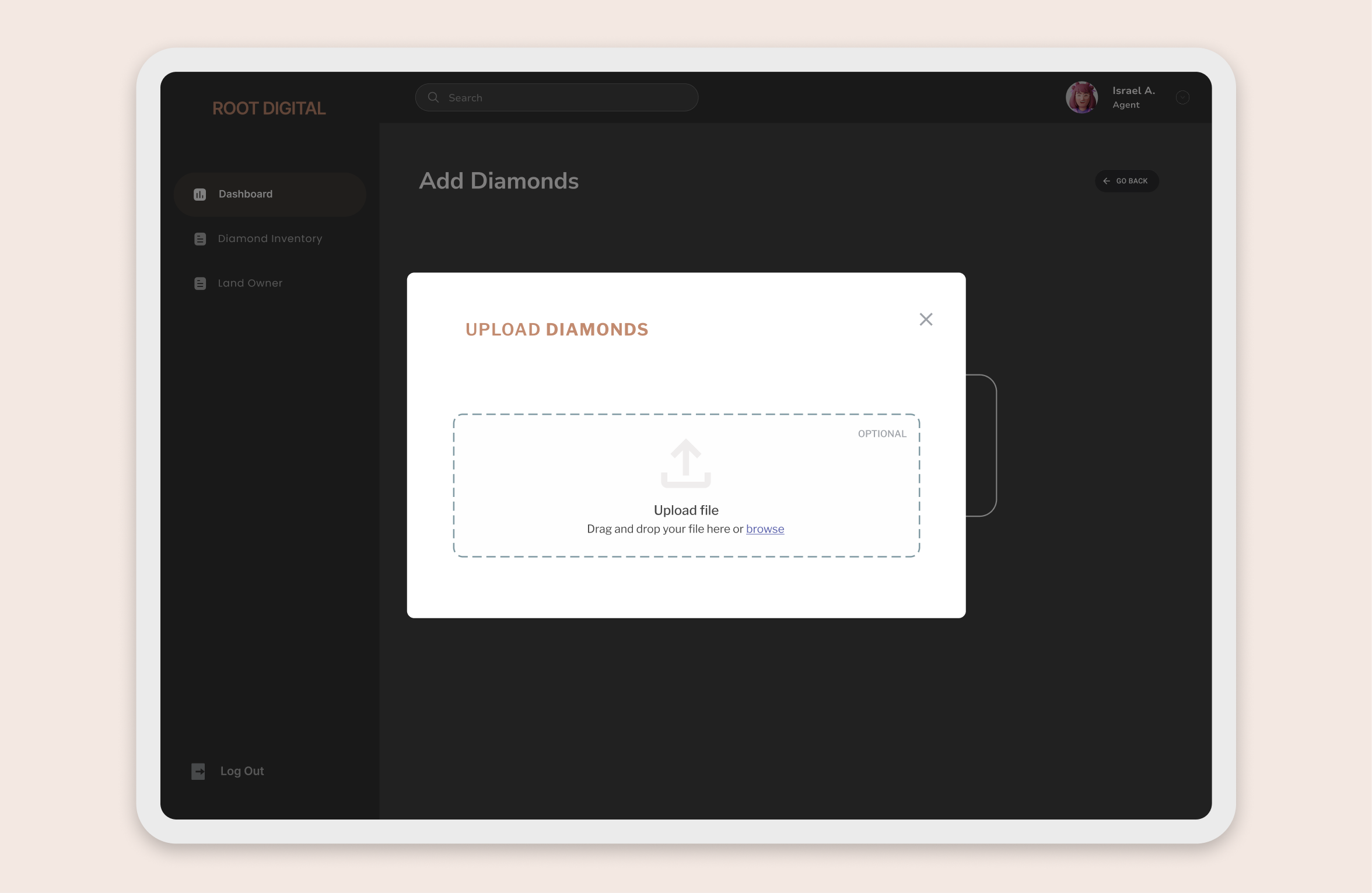
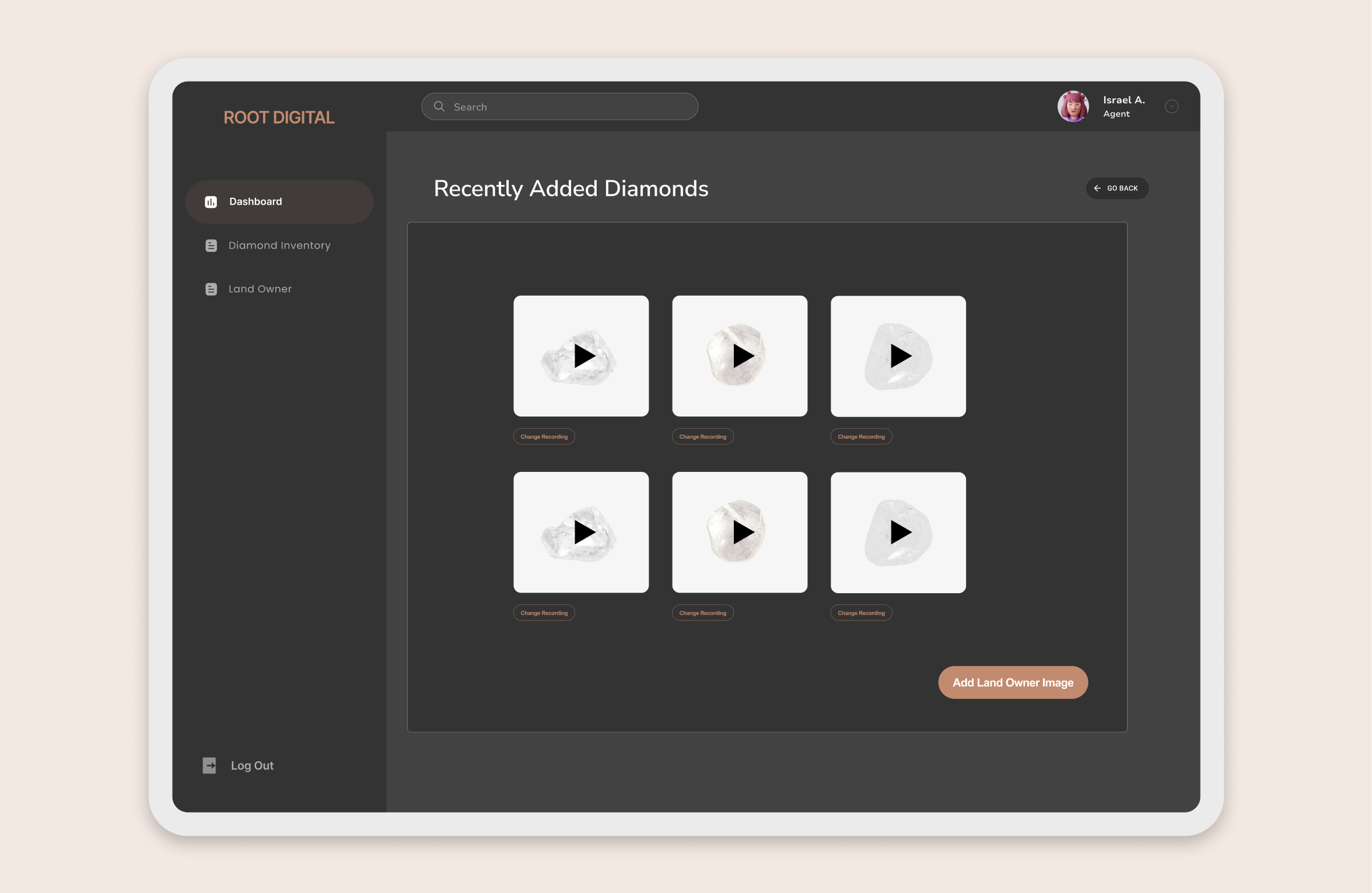
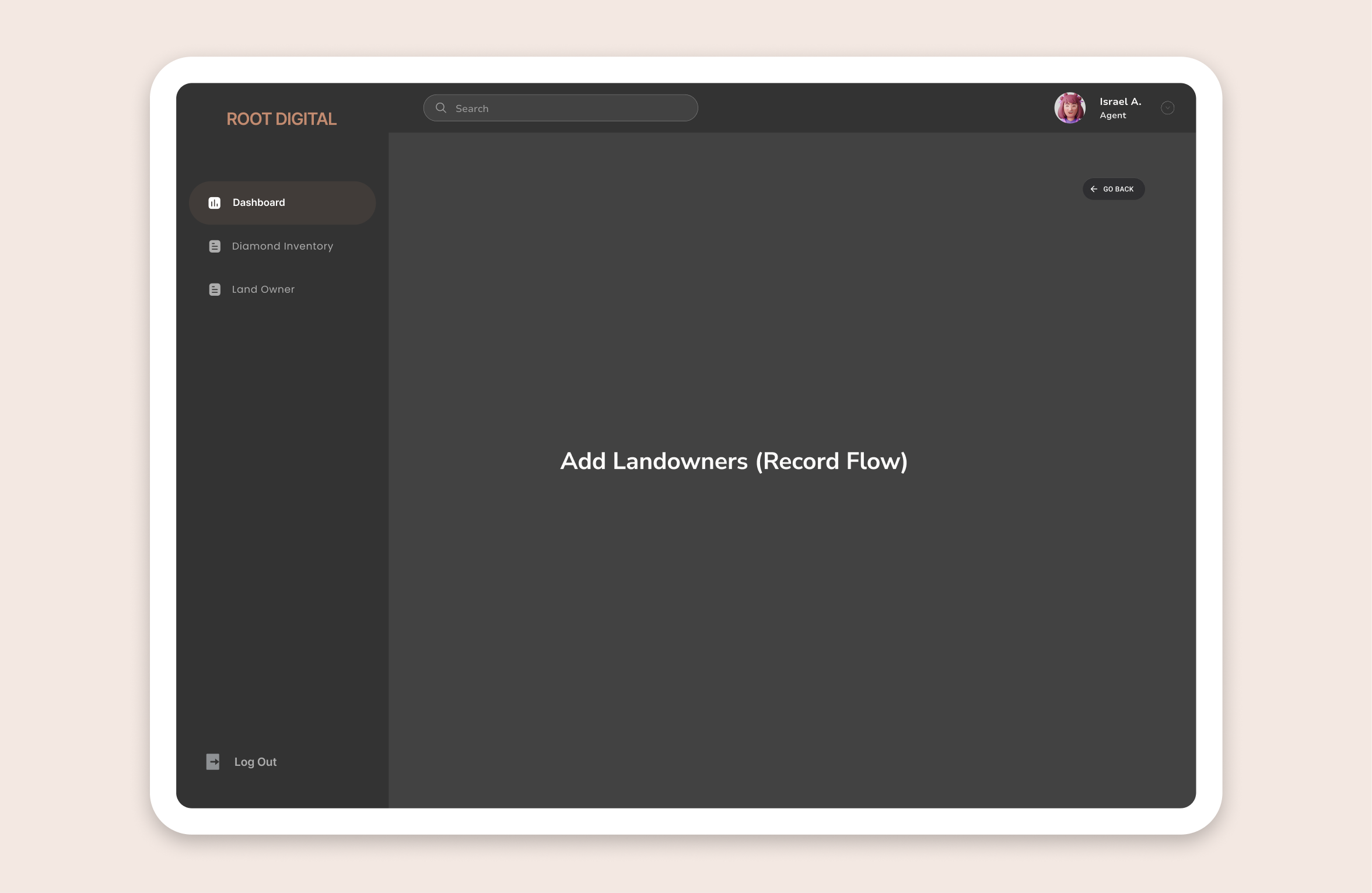
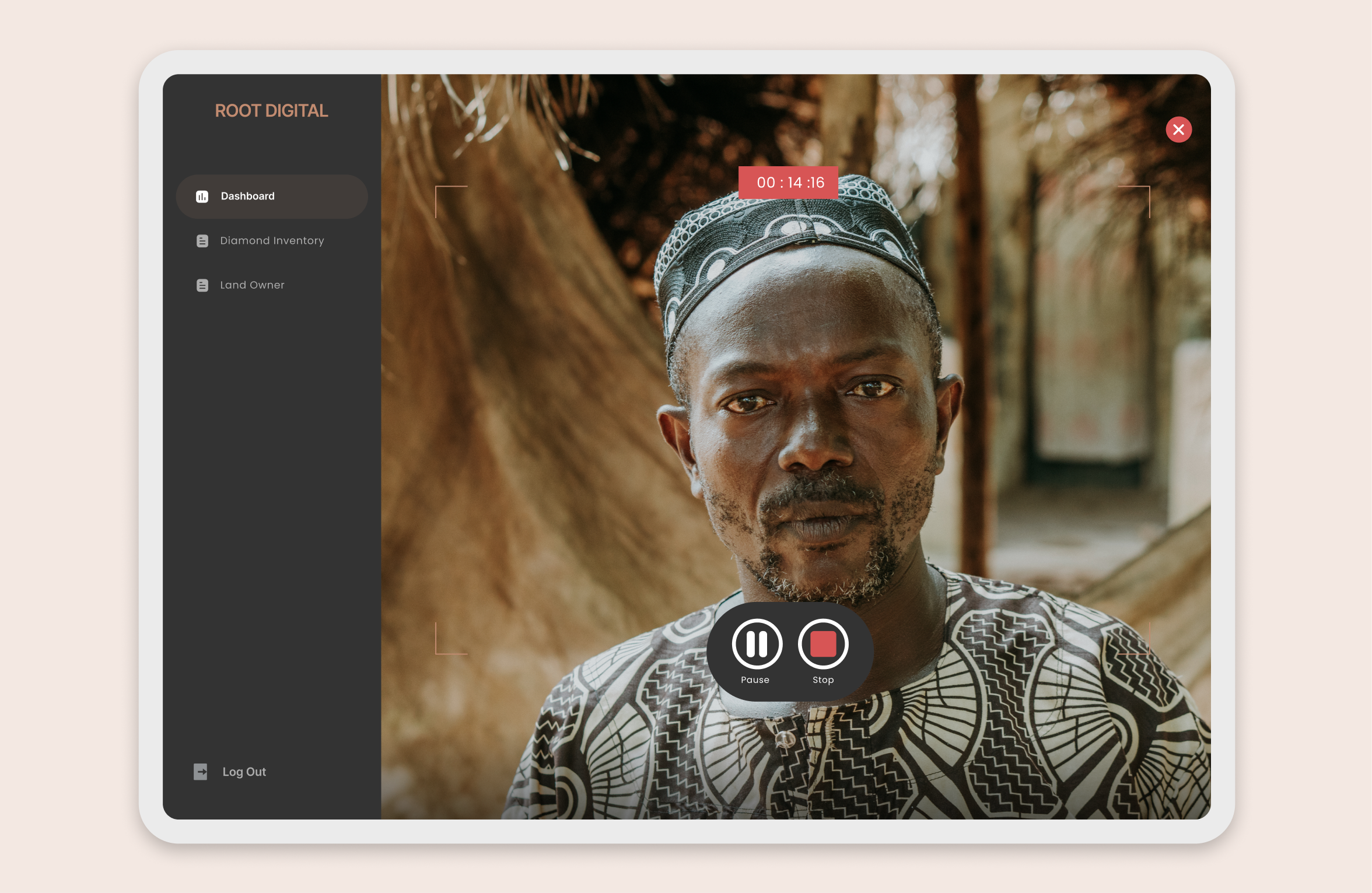
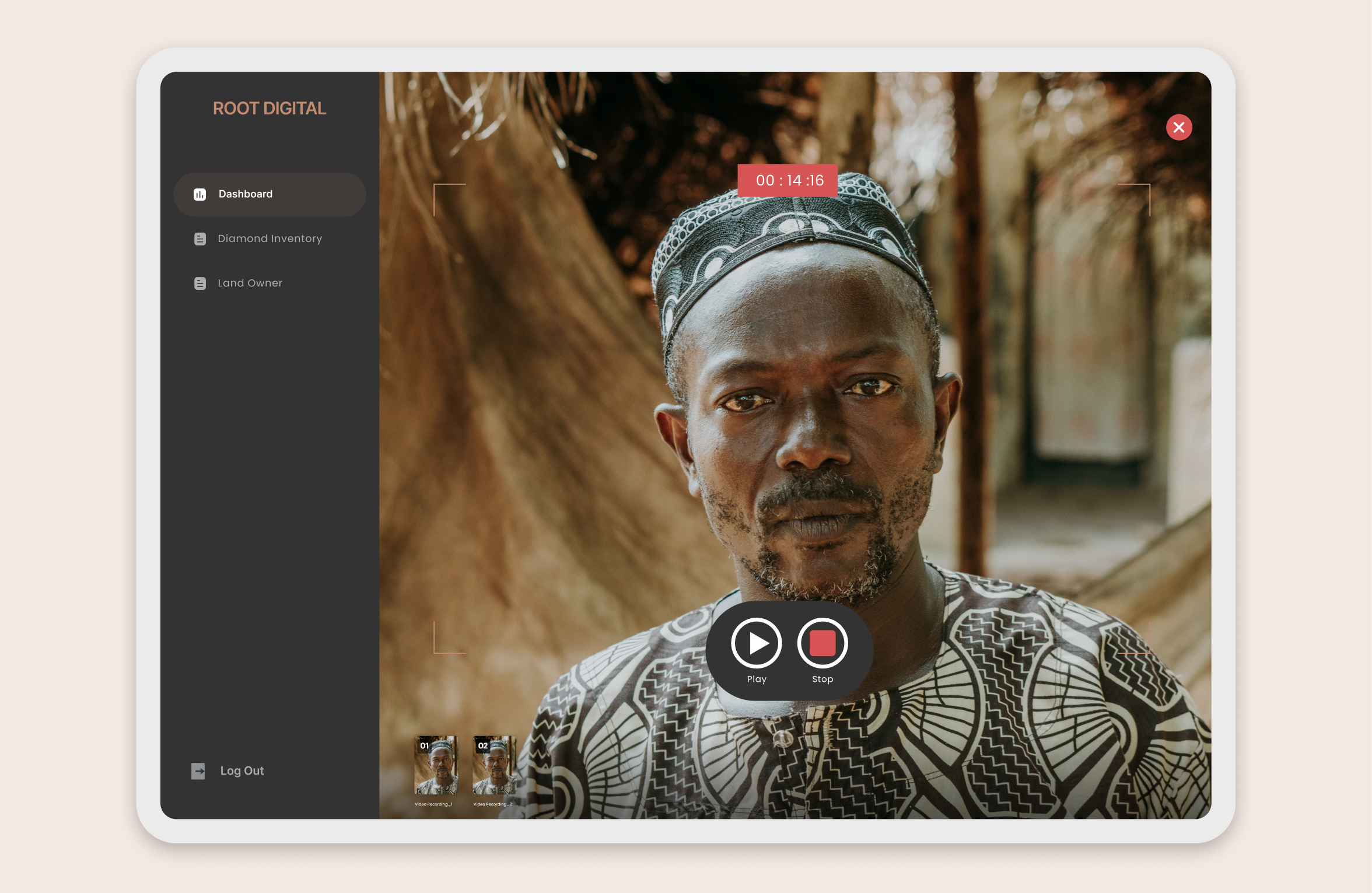
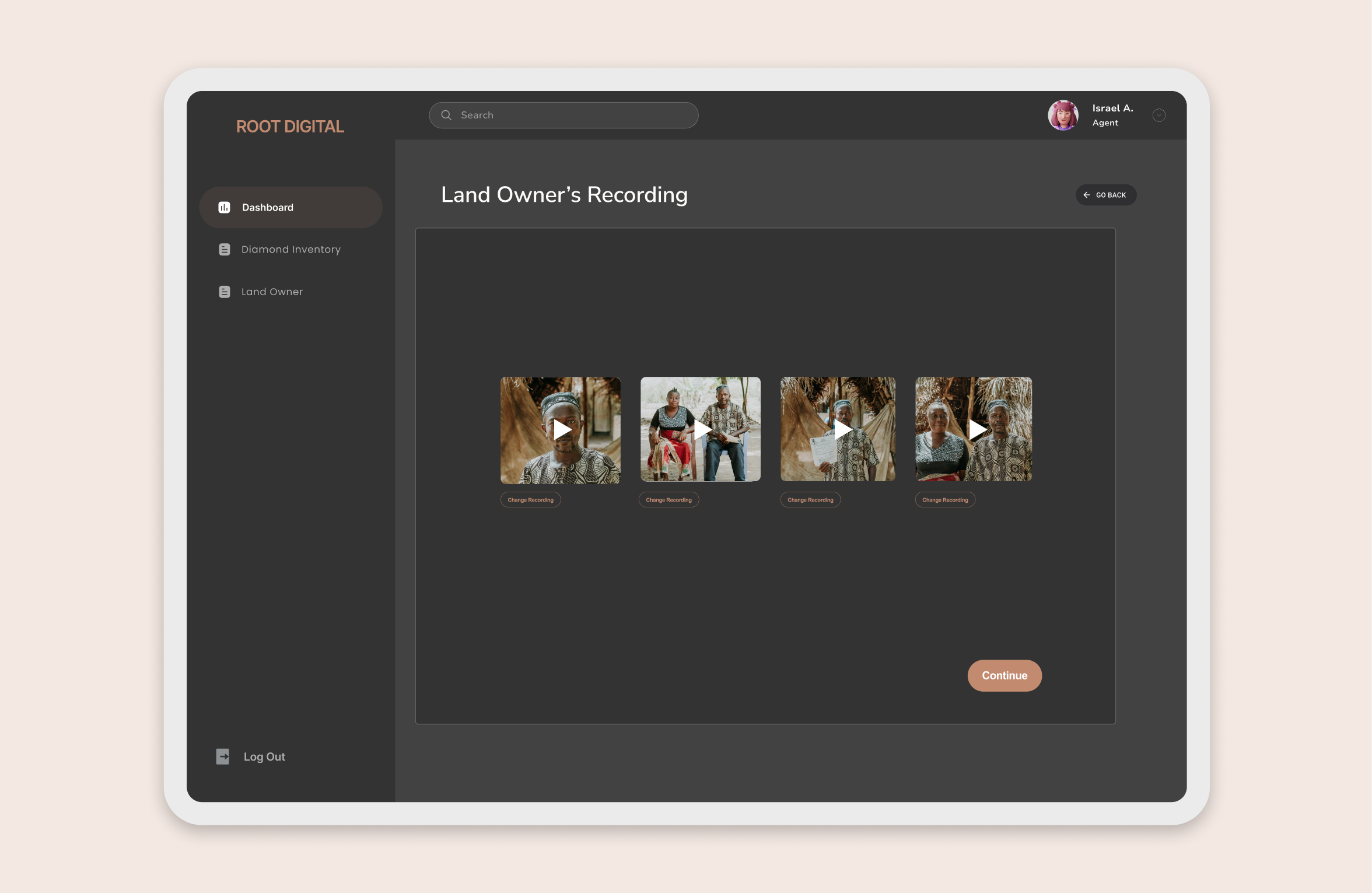
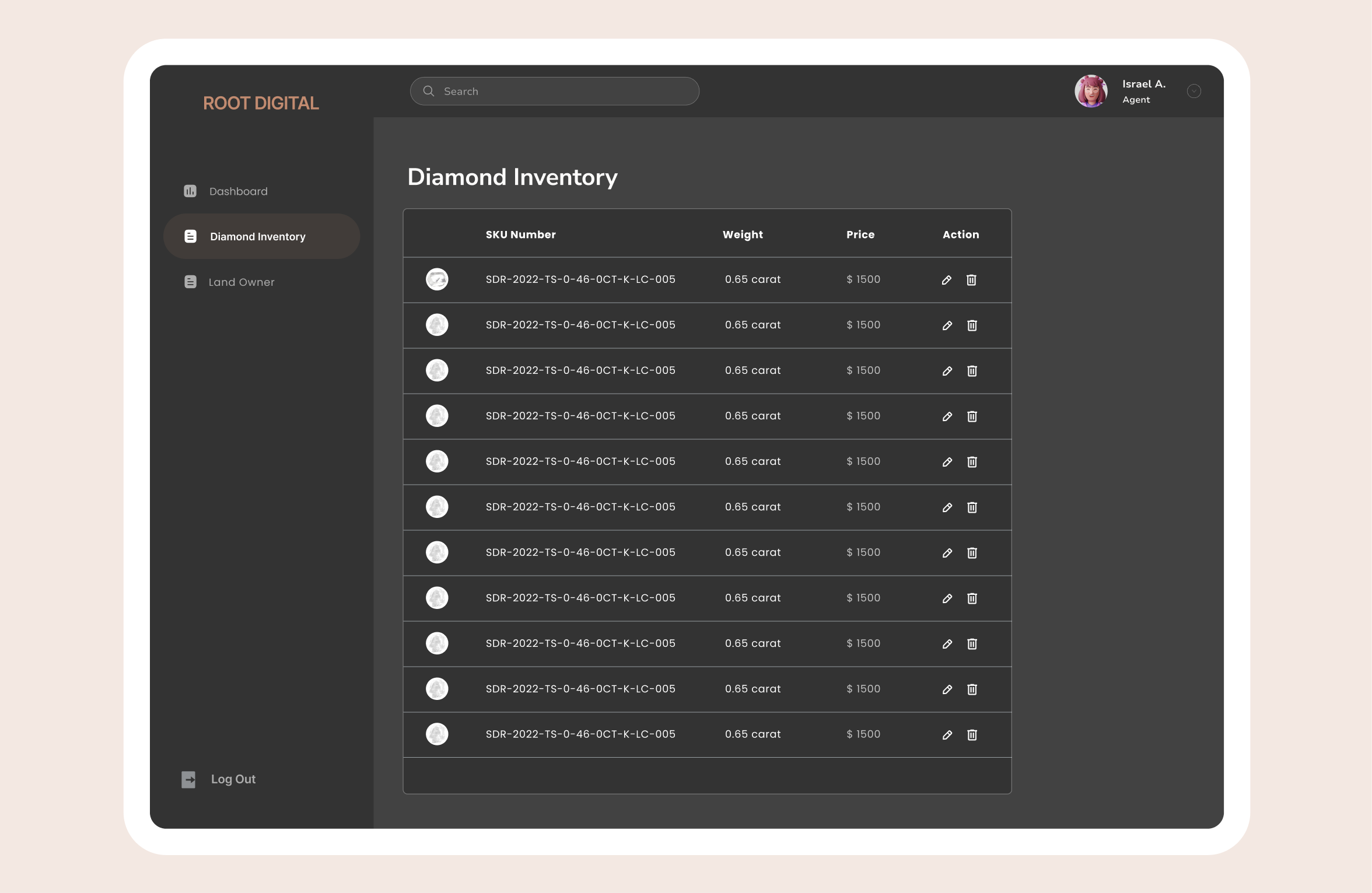
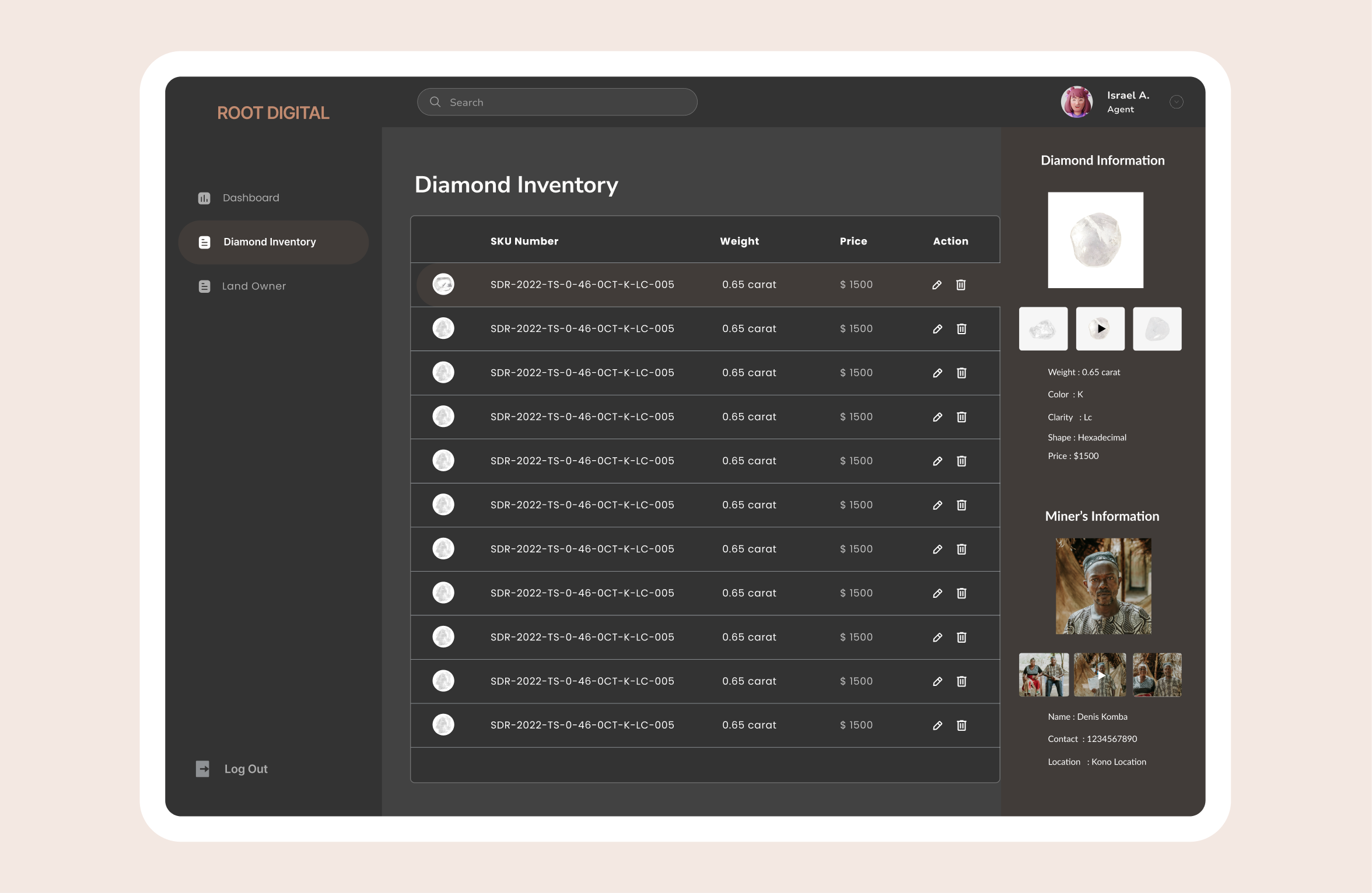
The app democratizes diamond valuation using AI-powered mobile technology that enables miners to independently assess rough diamonds, their market value, and potential yield analysis. The solution offers both online and offline smartphone scanning for live capture photography and videos, which are analyzed using AI to provide reliable market value estimates without Internet connectivity. The app prioritizes accessibility and usability for miners with limited technical knowledge by simplifying professional assessment principles into clear steps that anyone can follow.


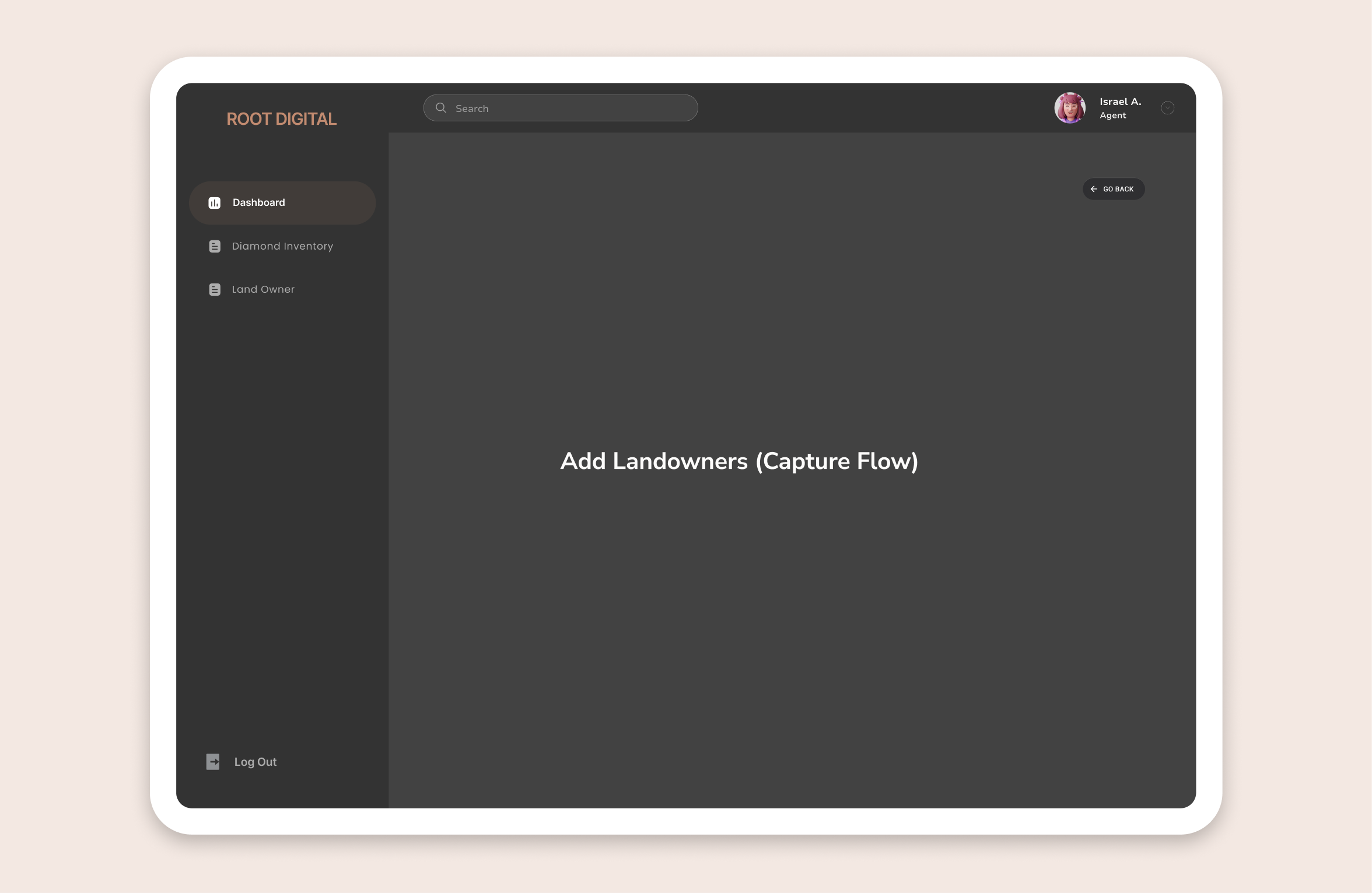
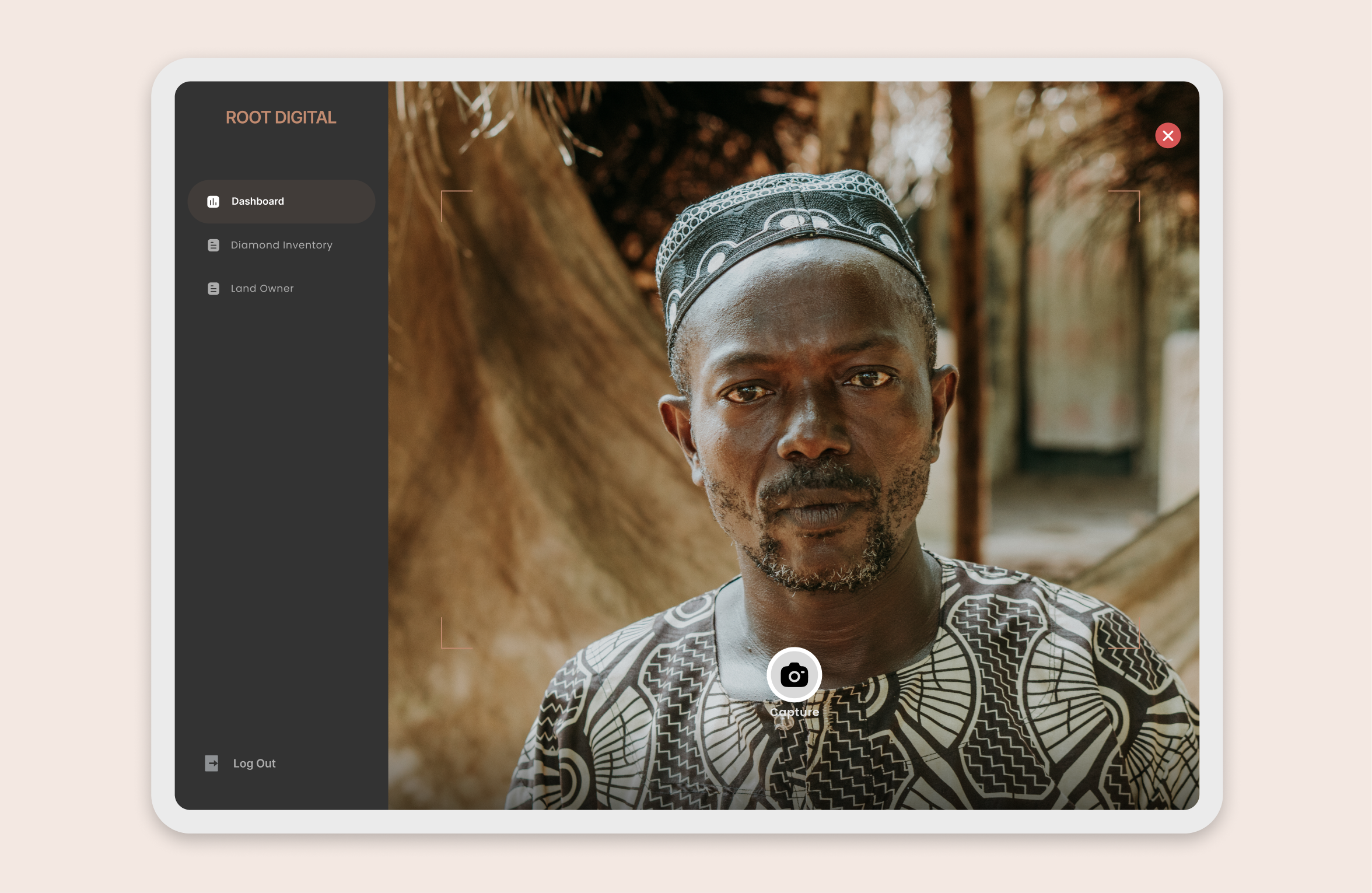
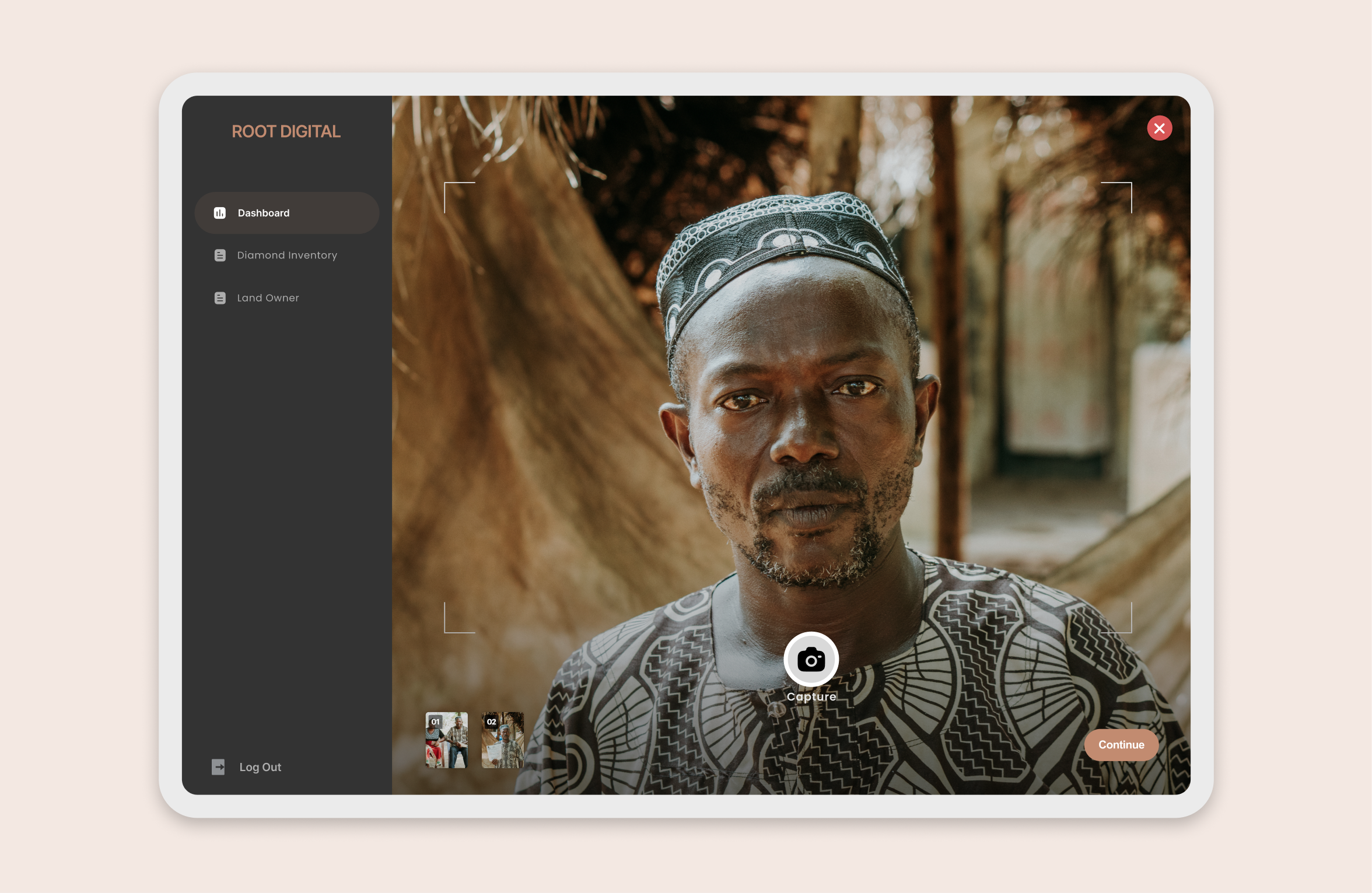
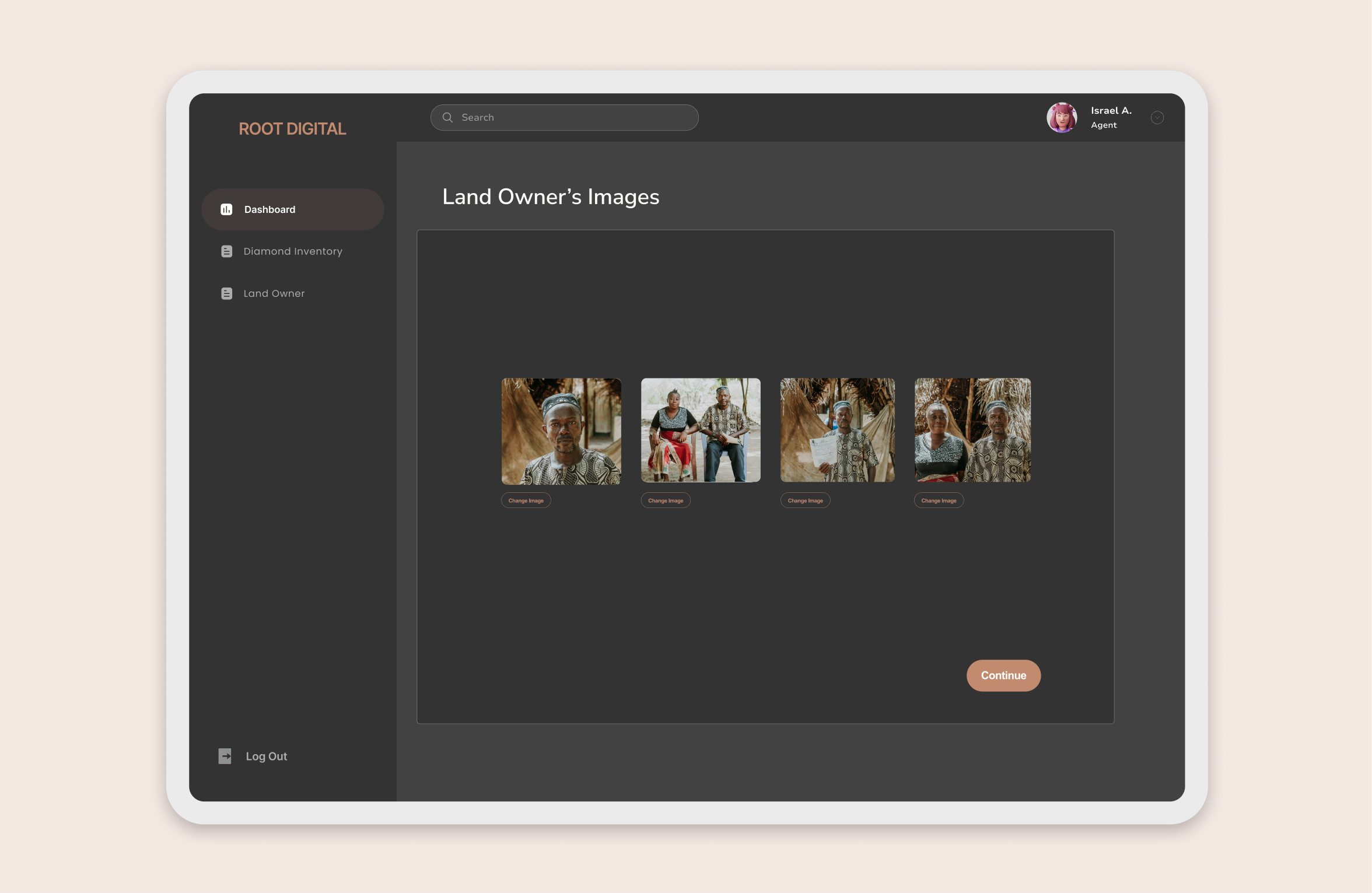
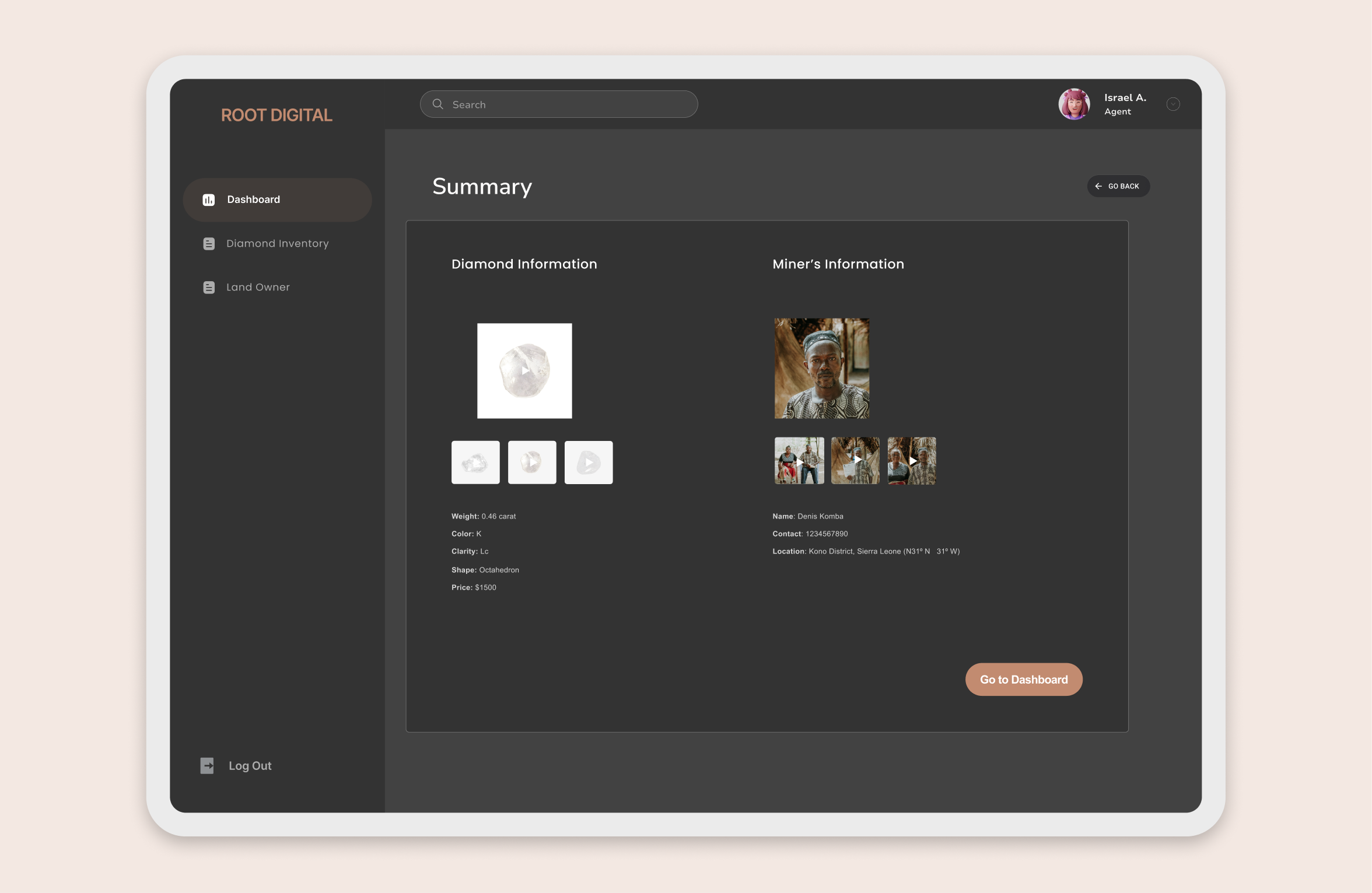

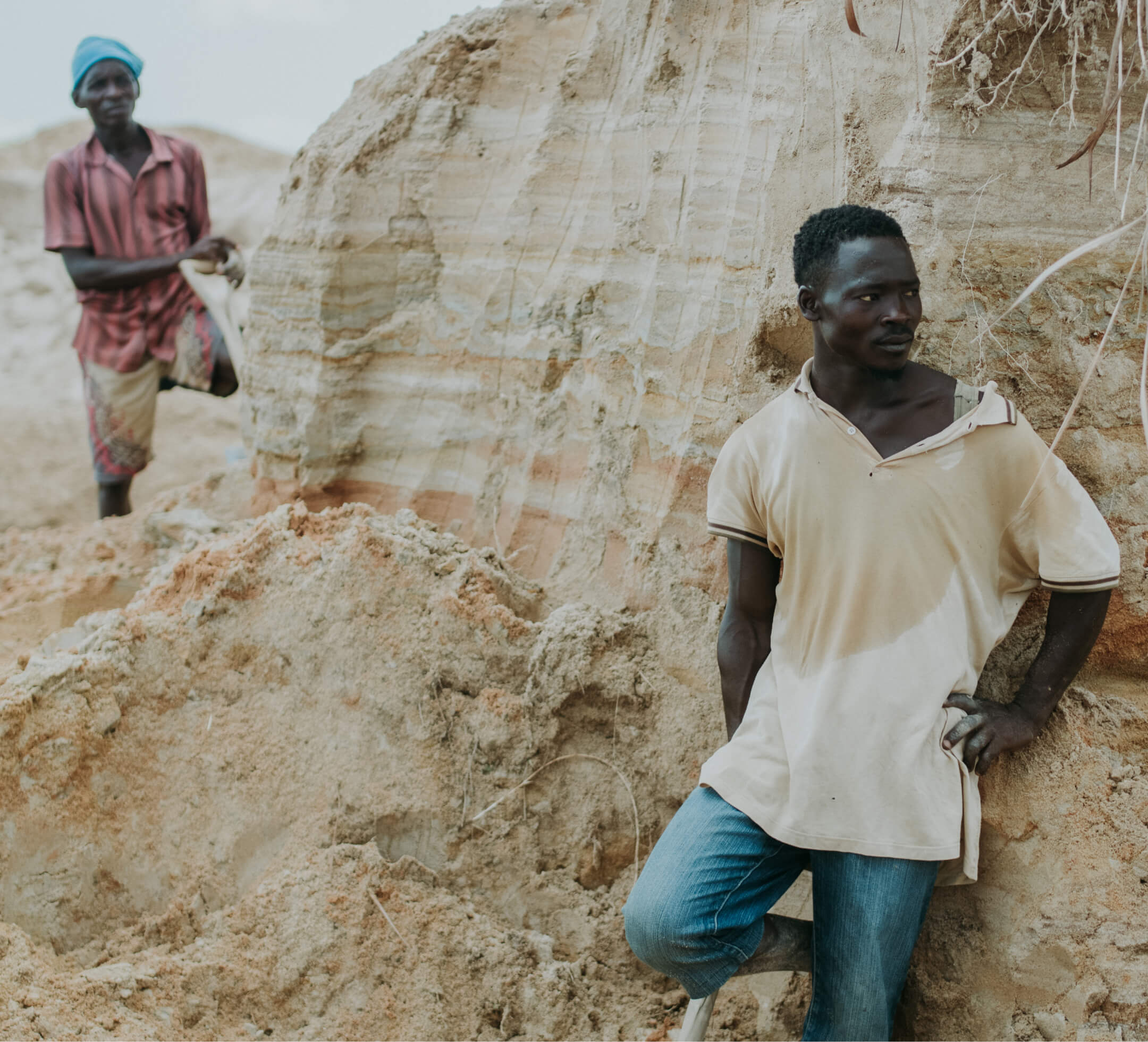
Surrounded by dust and silence, miners endure harsh conditions—trapped in systems built to keep them down.
Toolkit, Methods & Frameworks
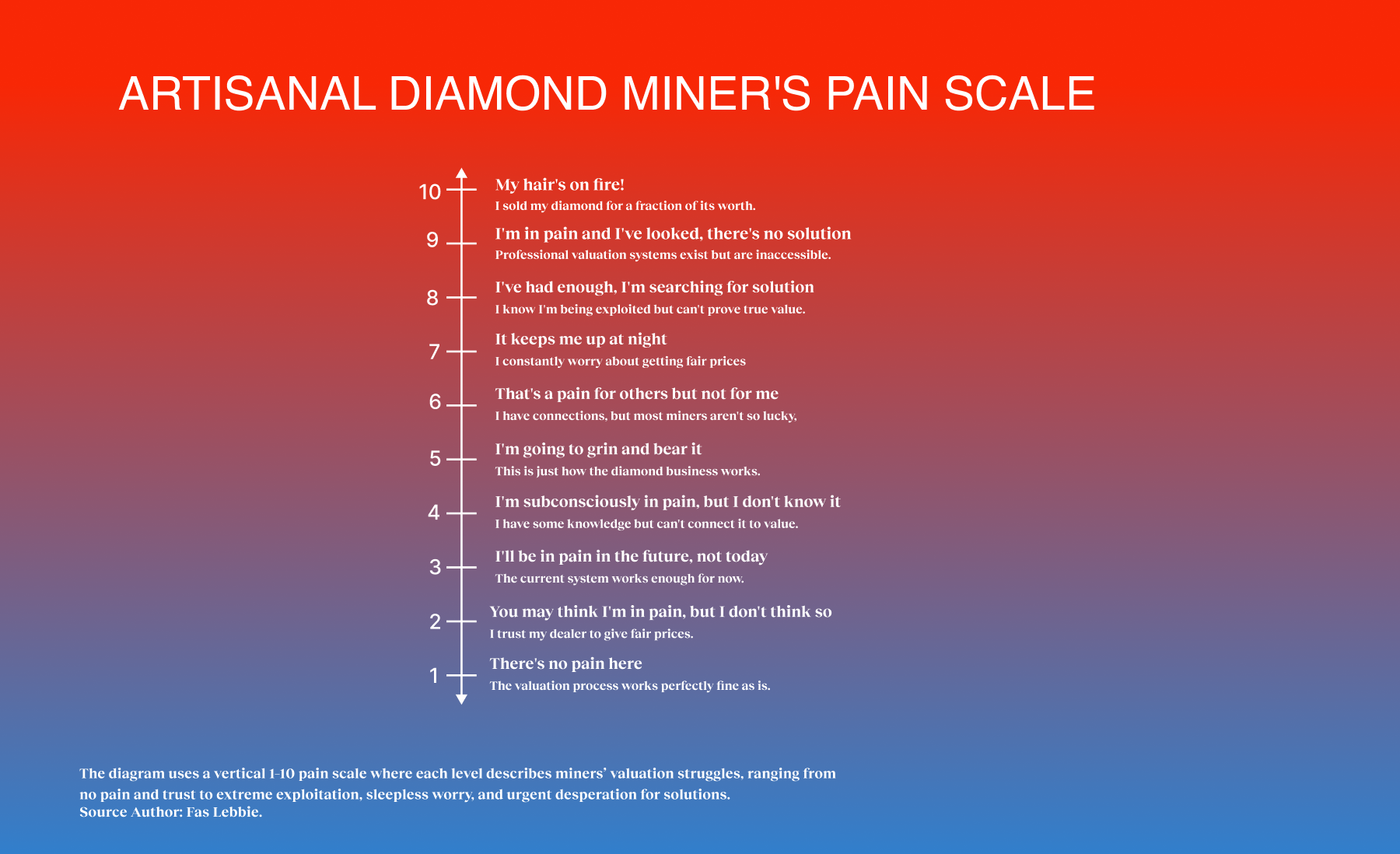
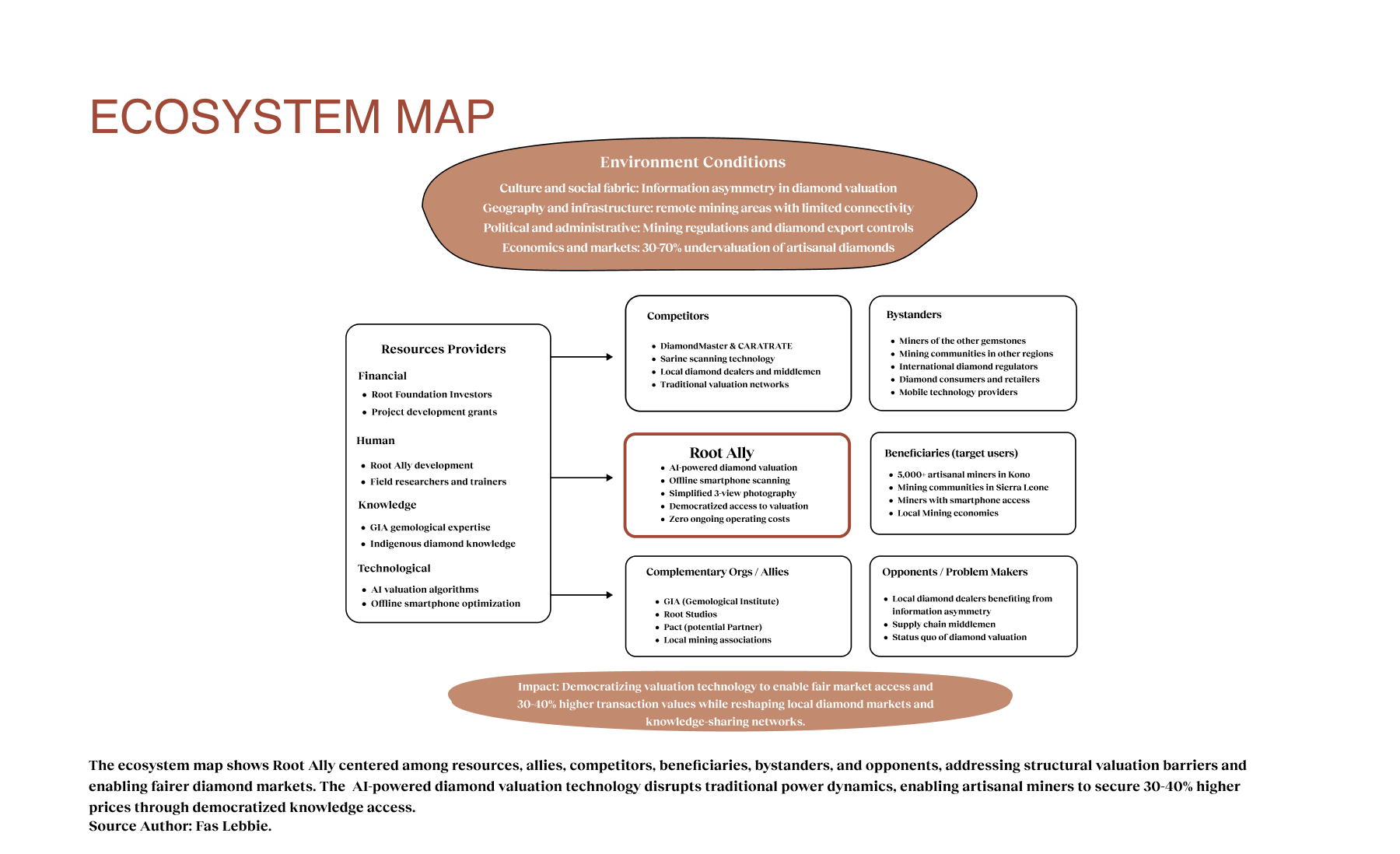
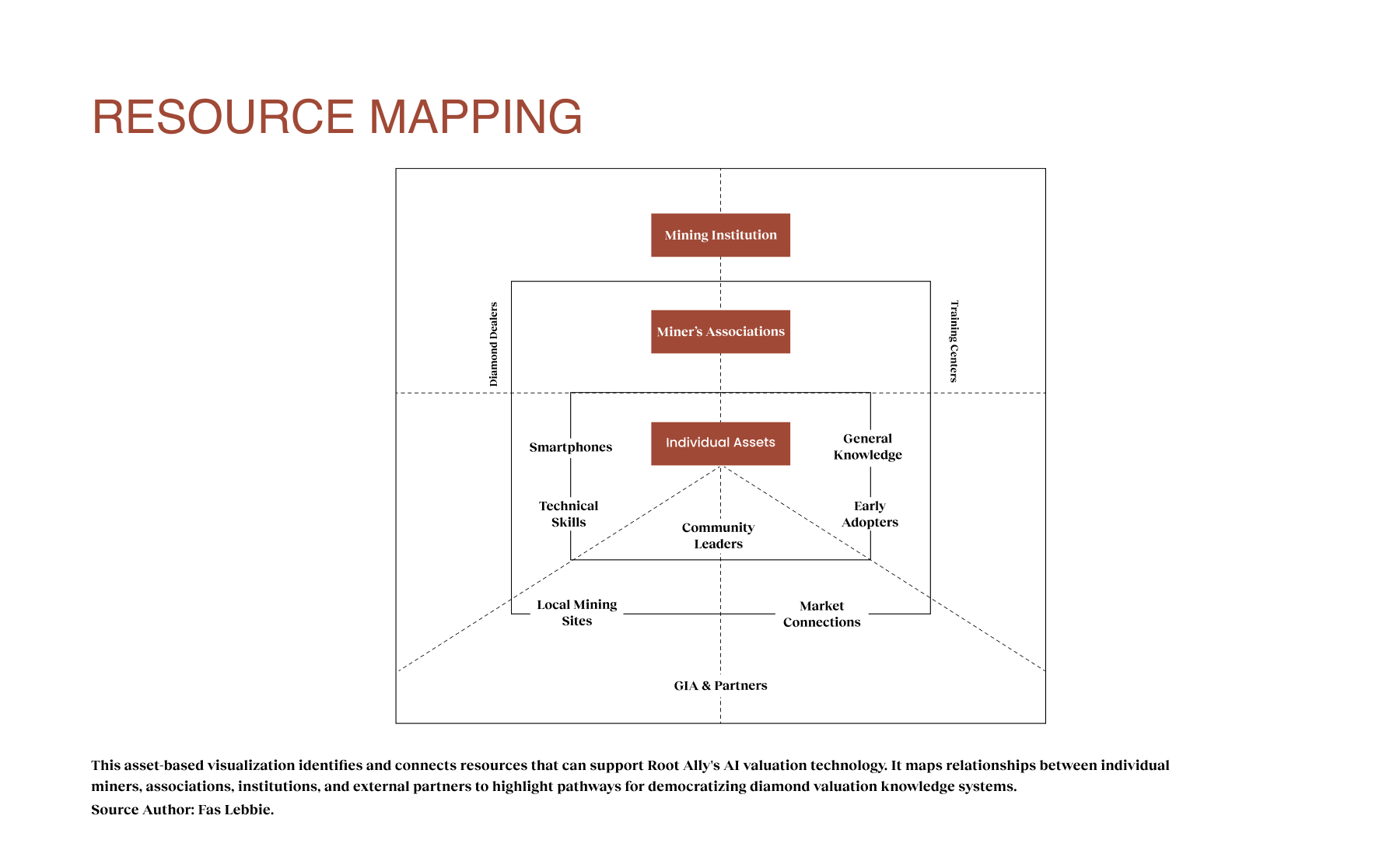
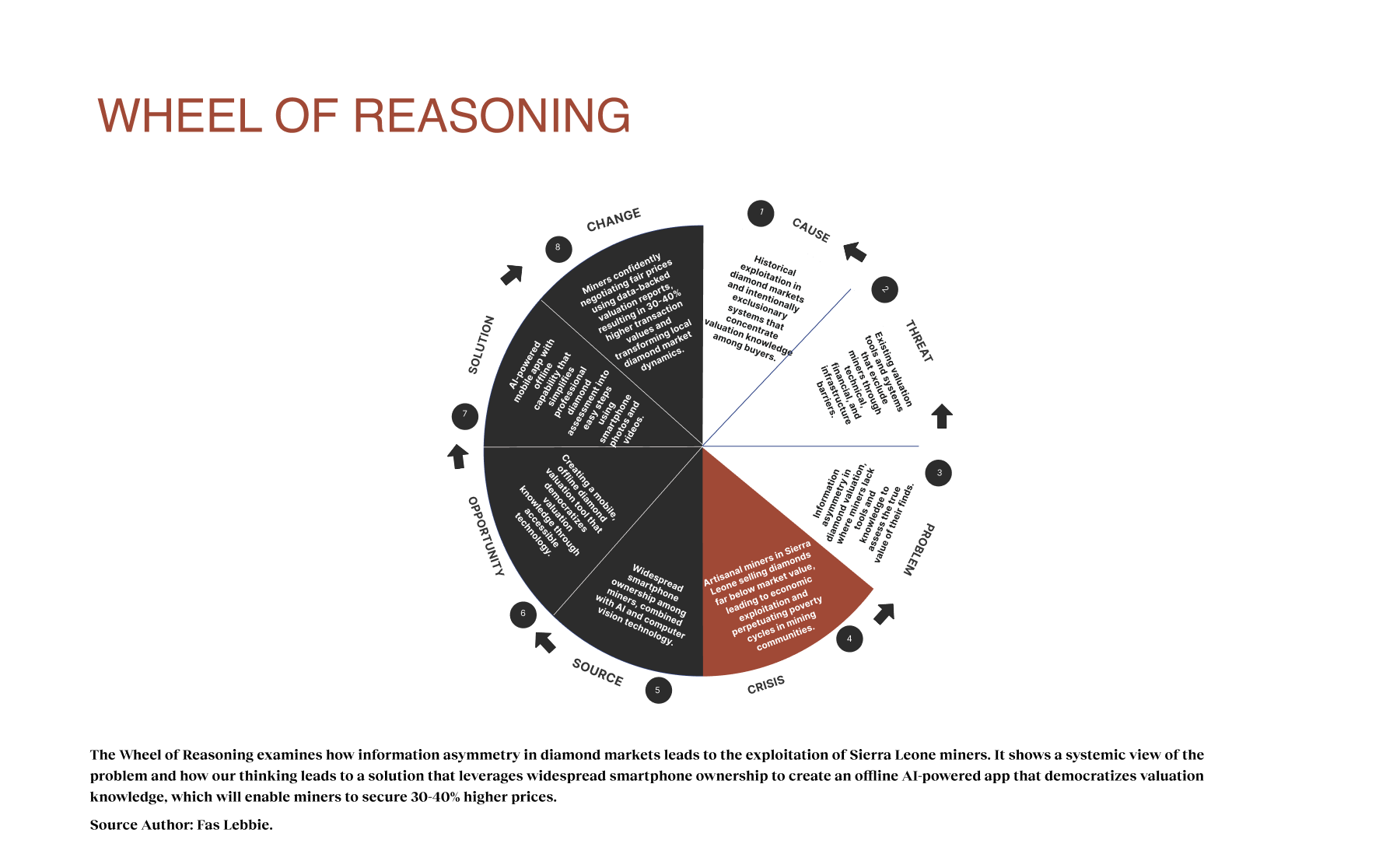
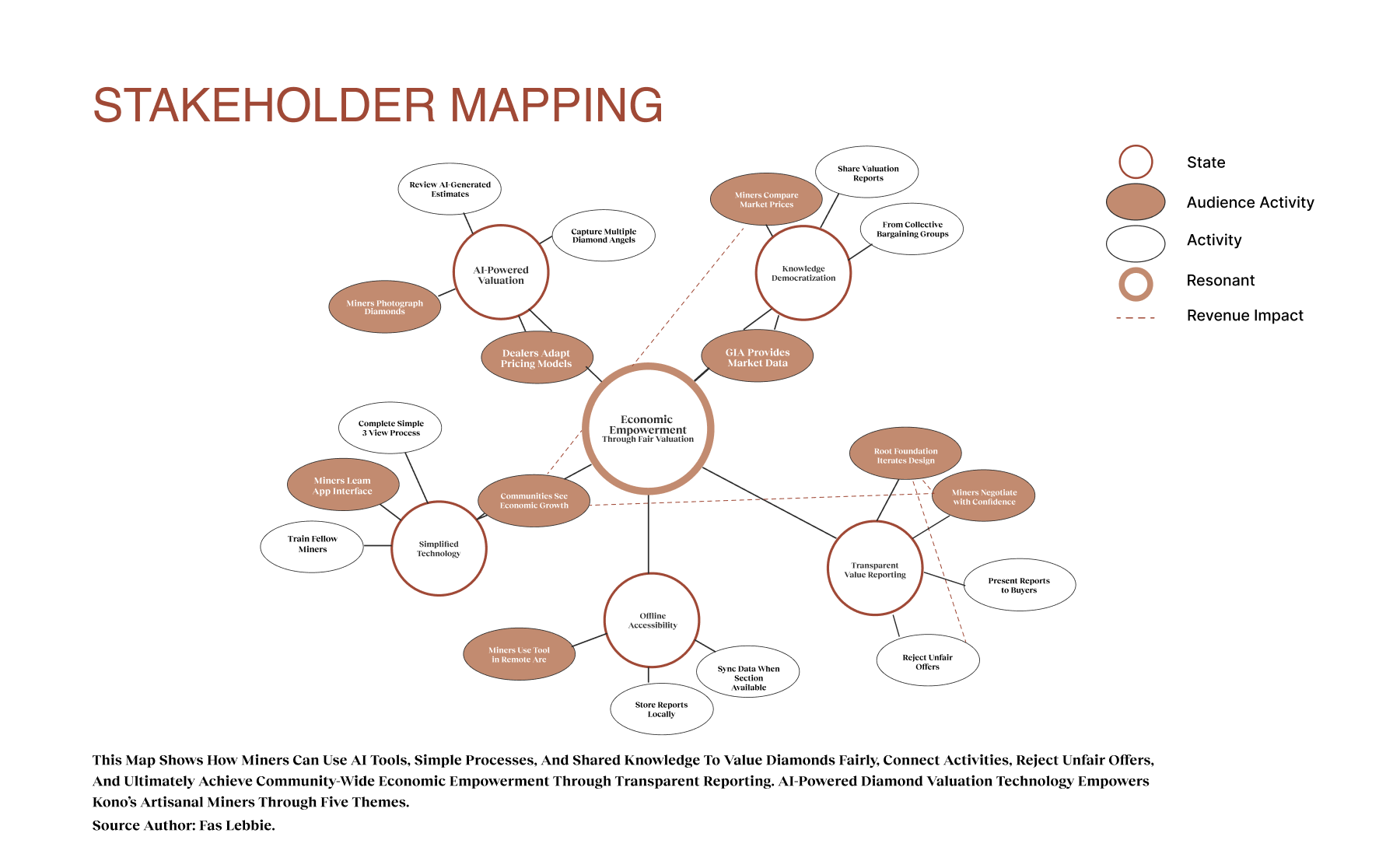
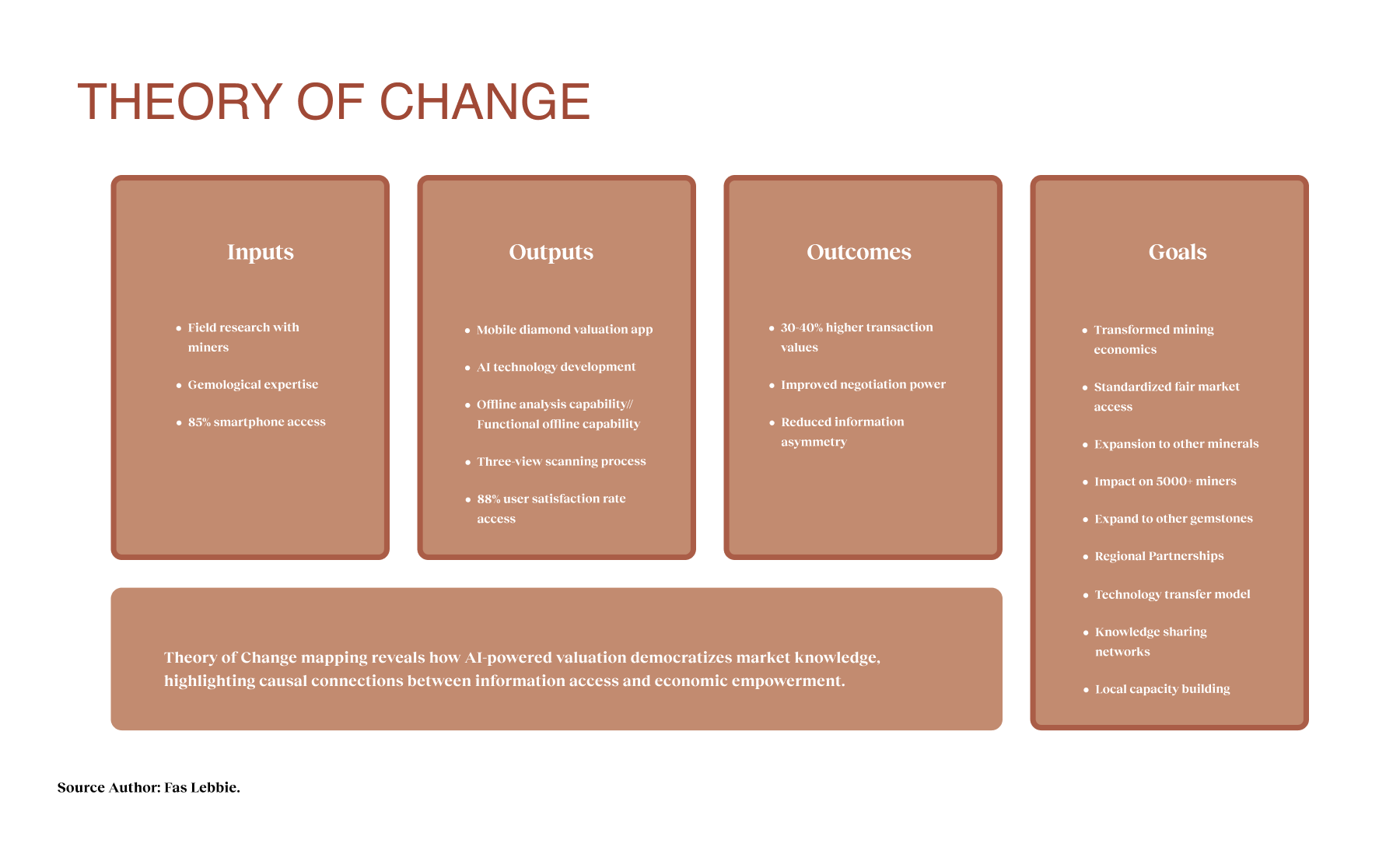
Root Ally’s development utilized six strategic design frameworks to ensure a thorough solution development process. The Theory of Change outlined pathways connecting technological intervention to economic empowerment. Stakeholder and Ecosystem Mapping pinpointed essential participants and market dynamics. Resource Mapping disclosed available resources and limitations. Pain Scale Analysis emphasized critical challenges faced by miners that required prompt action. The Wheel of Reasoning confirmed the logical relationships between issues and suggested solutions. This structured approach ensured that Root Ally met the authentic needs of miners while anticipating market resistance and enhancing transformative impact.
Miners Empowered
500 artisanal miners accessing fair market valuation tools
Fair-value Increase
Miners are capturing more value through pricing insights
Reflections & Impact
Our ethnographic research uncovered a systemic gap: miners consistently sold diamonds below value due to limited market literacy and centralized pricing control. Through participatory design and leveraging widespread smartphone access, we translated complex gemological knowledge into intuitive, visual-first mobile tools. By making professional valuations accessible in miners’ hands, the app empowers over 5,000 artisanal miners to negotiate fairer prices, shifting local trade dynamics and promoting equitable revenue distribution. Beyond the immediate goal of pricing transparency, the intervention supports more informed participation in the diamond trade, strengthens knowledge-sharing networks, and addresses entrenched inequities in market access. In the long term, this decentralized valuation model not only influences buyer and dealer behavior but also lays the foundation for systemic change across artisanal mineral sectors. As the framework expands to other gemstones and regions, it holds the potential to empower millions of miners globally. With every redistribution of valuation power, design reveals its true nature as a force that reshapes systems by shifting burdens and benefits among its participants.
Next Steps
- Deploy pilot with 100–200 miners to field-test the app’s offline AI valuation in real mining conditions and refine usability.
- Establish a local valuation hub through Root Foundation to support adoption, build trust, and assist miners with low digital literacy.
- Create visual-first training programs that boost miners’ valuation skills, negotiation confidence, and long-term app engagement.
- Explore expansion to gold and coltan by assessing miner needs, tech feasibility, and opportunities for cross-mineral adaptation.