Overview
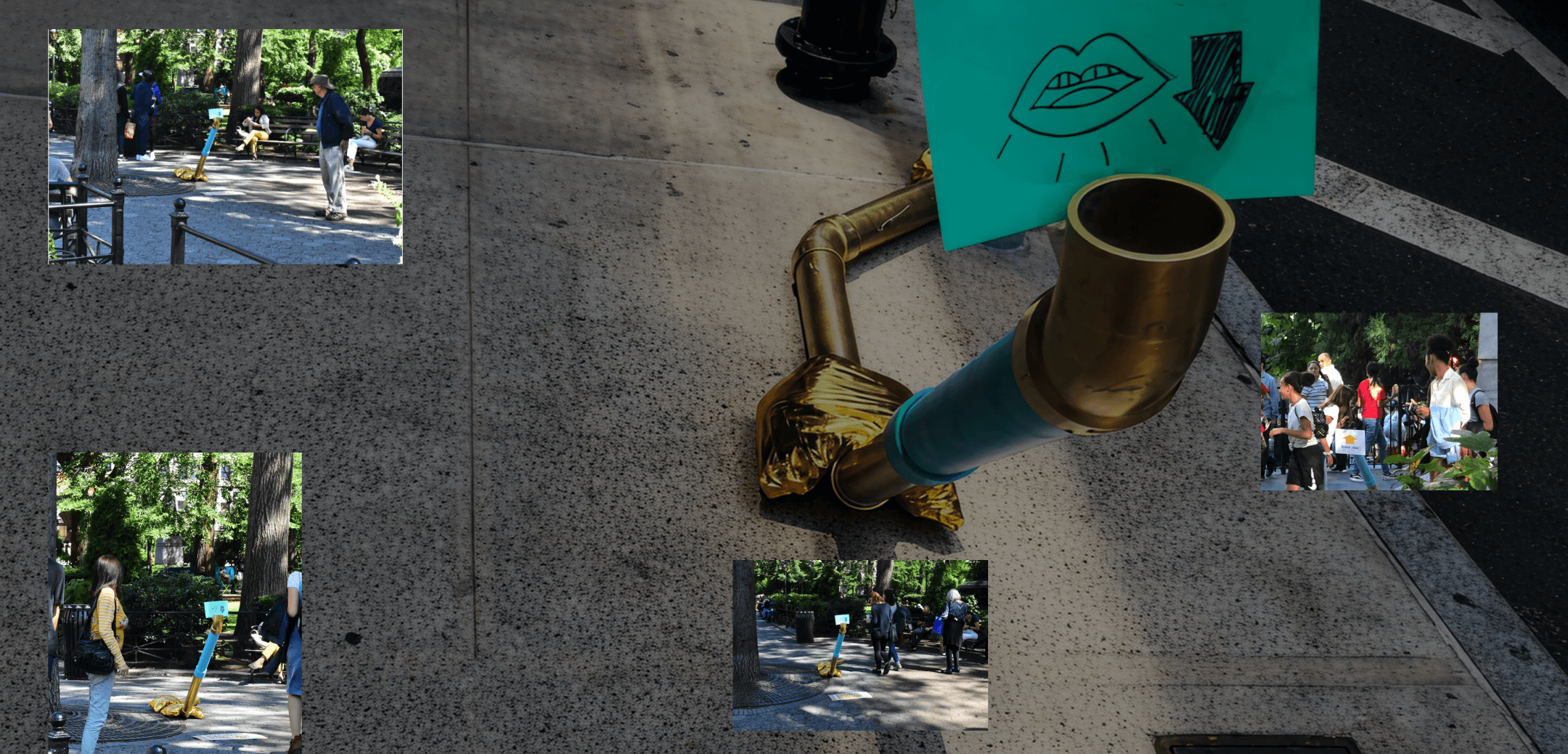
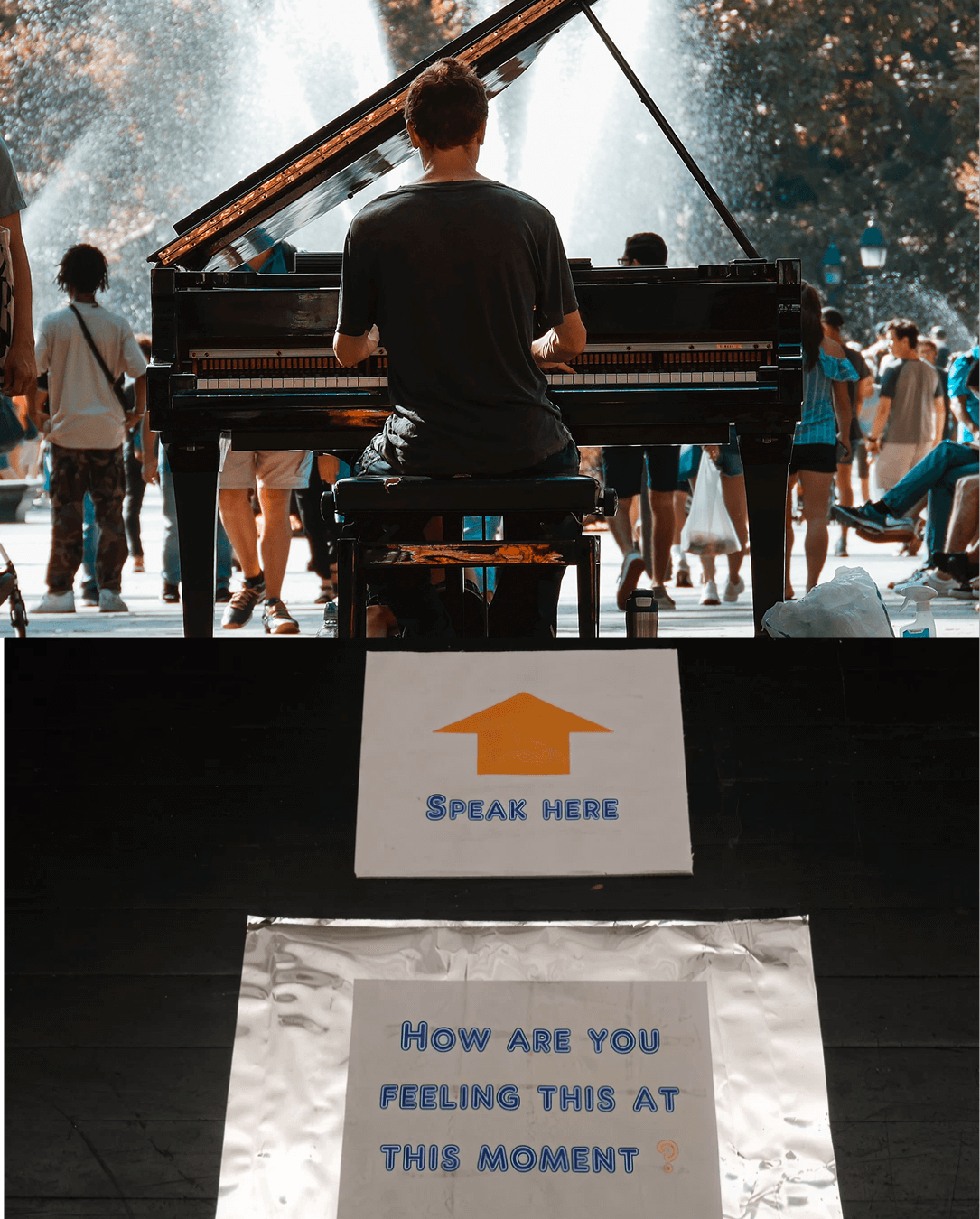
Employing research through design, we built memory tubes that created provocative interventions, disrupting New York City’s typical movement patterns and encouraging spontaneous interactions between strangers. These artifacts (golden tube) turn hundreds of strangers into storytellers in the middle of New York City. By strategically placing interactive installations in high-traffic urban areas, we created opportunities for New Yorkers and visitors to pause, reflect, and connect with others through shared expressions. Our interventions evolved from memory-based prompts to present-moment reflections, resulting in increased participation and revealing profound insights about designing for collective joy in urban environments. This research documented patterns of human interaction while demonstrating how thoughtful design interventions can temporarily transform anonymous public spaces into sites of meaningful connection.
Research & Design
Design ethnography · Provotypes · Public installation deployment · Interactive prompt · Research through design methodology
- Duration: December 2019 - March 2020
- Team: Fas Lebbie, Theo Walcot
Confidentiality: All participants remained anonymous, and public interactions were conducted in accordance with required permissions and research documentation guidelines.
My Role
Conducted field research with team members, mapping movement patterns and analyzing behaviors to inform interactive urban interventions.
Co-created and deployed Memory Tube installations, iterating prompts and designs to increase participation and engagement.
Partnered with cross-disciplinary peers to refine interventions, capturing and synthesizing stories, observations, and behavioral insights.
Problem Context
Urban environments, especially dense metropolises like New York City, present a paradox: residents often feel isolated despite being near millions of people. Research shows that 52% of New Yorkers regularly feel lonely. This phenomenon, termed urban anonymity, appears in avoidance behaviors — headphones in, eyes down, minimal acknowledgment — that are normal for city life. The challenge is evident in transitional spaces like street corners, subway platforms, and park benches, representing untapped opportunities for connection. Traditional methods to foster urban community rely on formal events or infrastructure changes, which overlook the spontaneous nature of urban movement. The gap between physical proximity and social connection in urban areas created an opportunity for design interventions. By identifying moments when people are open to interruption, my team and I could create meaningful shared experiences that encouraged people to acknowledge their common humanity without disrupting urban navigation. Our research aimed to understand how thoughtful interventions might temporarily transform anonymous public spaces into sites of collective joy and connection.
My Approach
A key philosophy guiding this project was embracing ambiguity as a design strength rather than a weakness. As we observed in our field notes: “A provotype is as much about the provocateur as the ones they intend to provoke. What kicks up dust in the designer?” This perspective aligns with Frayling’s concept of “research through design,” where the design process itself becomes the primary method of investigation, and insights emerge through the creation and deployment of artifacts in context.
We approached the challenge with an aim to probe and reveal underlying patterns of human behavior in public spaces. This goal meant resisting the urge to immediately fix aspects of our intervention that didn’t perform as expected. Instead, we treated those moments as valuable data points that revealed deeper insights into urban social dynamics. As we noted in our research: “How do you sit with discomfort when the thing you have made defies your hopes for it? How do you let it be what it is?”
Design Process
Our research began with extensive mapping of movement patterns and social interactions across multiple New York City locations. We conducted systematic observations at Washington Square Park, Union Square, the Parsons School of Design campus, and subway stations, documenting how people moved through space and when/how they interacted with each other and their environment. We were guided by a series of initial questions. What causes people to pause rather than continue with their day? How do street performers build trust with audiences? What role does anticipation play in creating engaging moments? These observations revealed that urban spaces are characterized by highly ritualized movement patterns that people rarely deviate from without significant provocation. We documented how successful street performers created permission spaces where normal social rules were temporarily suspended, allowing for different interactions.
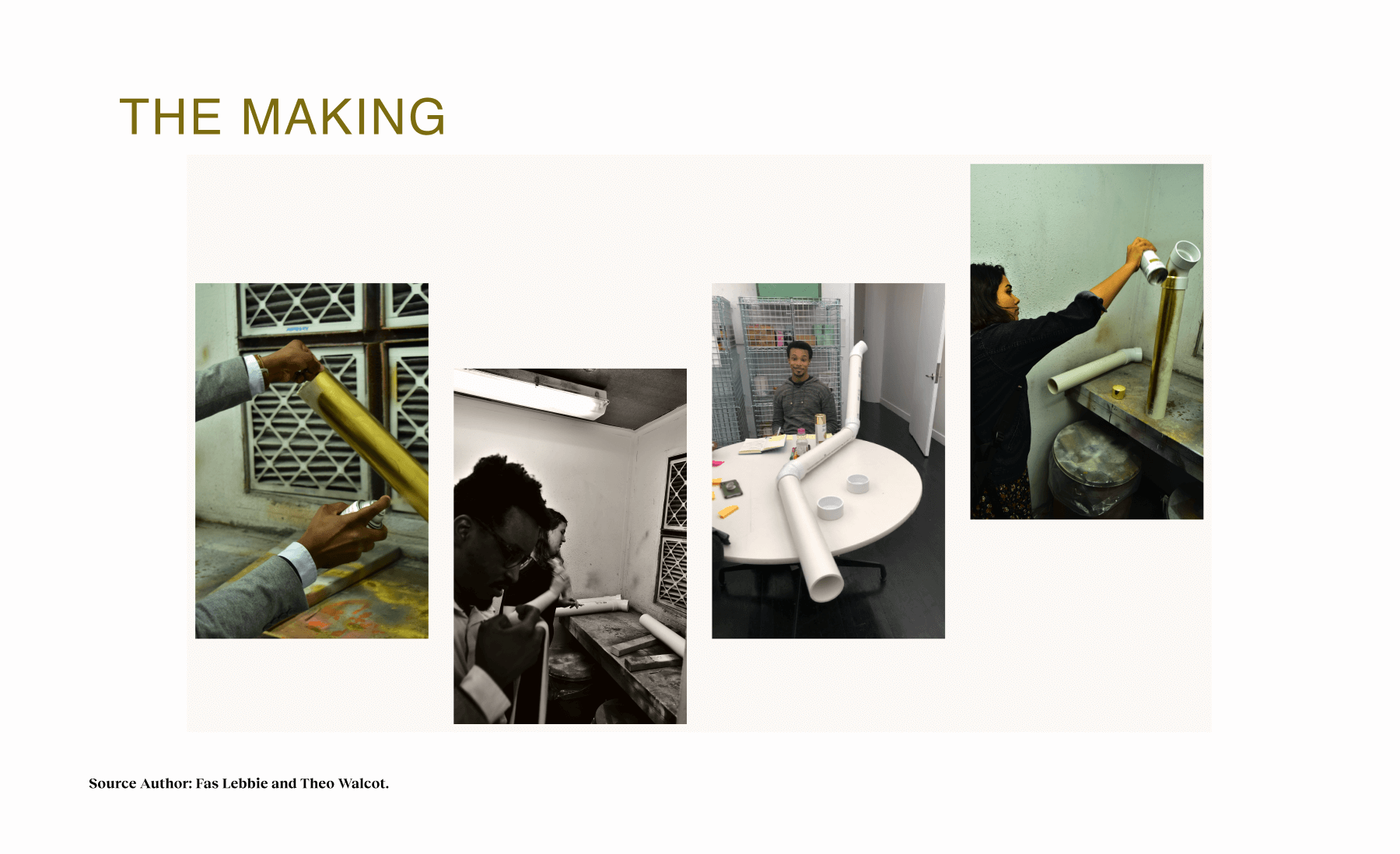
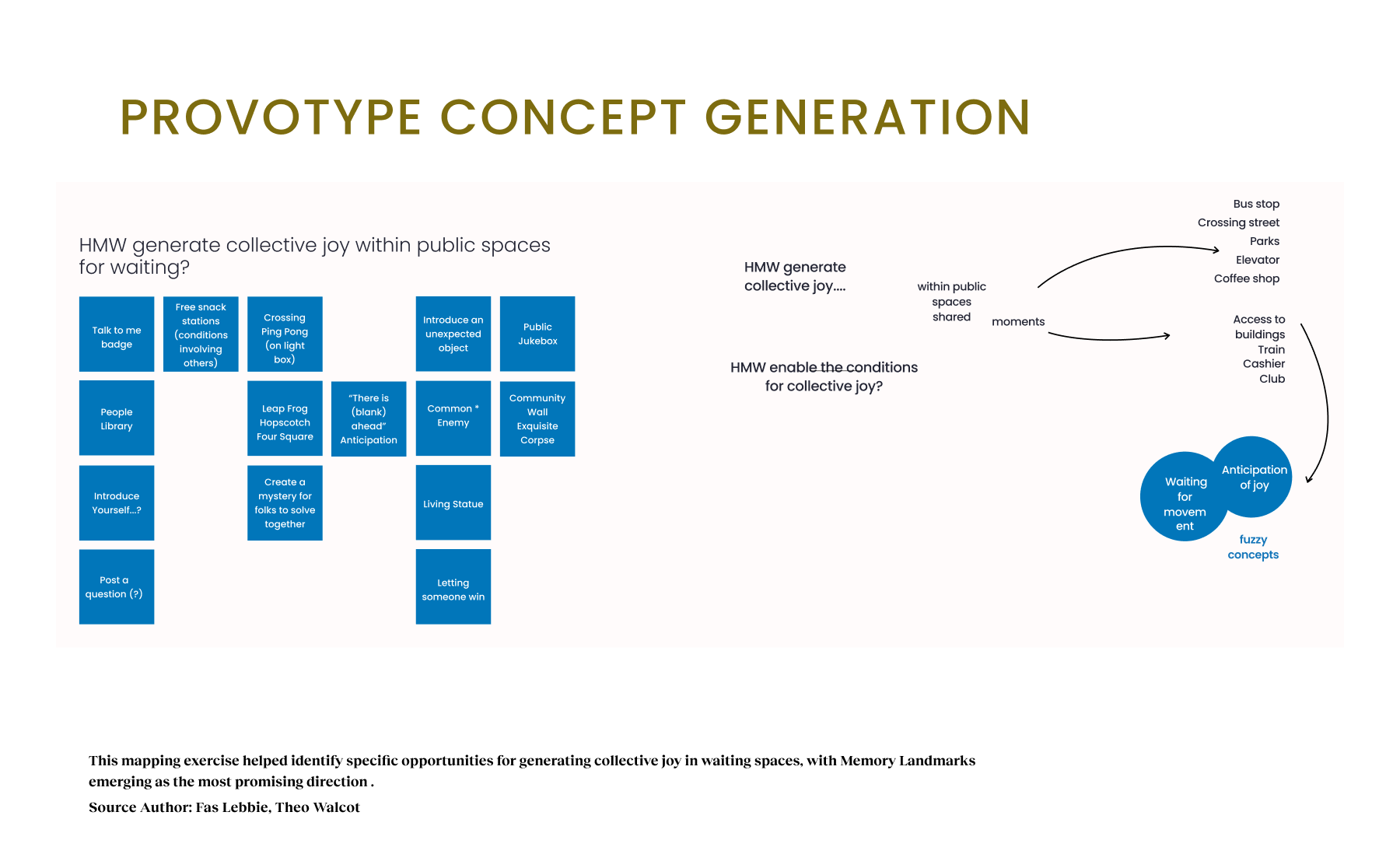
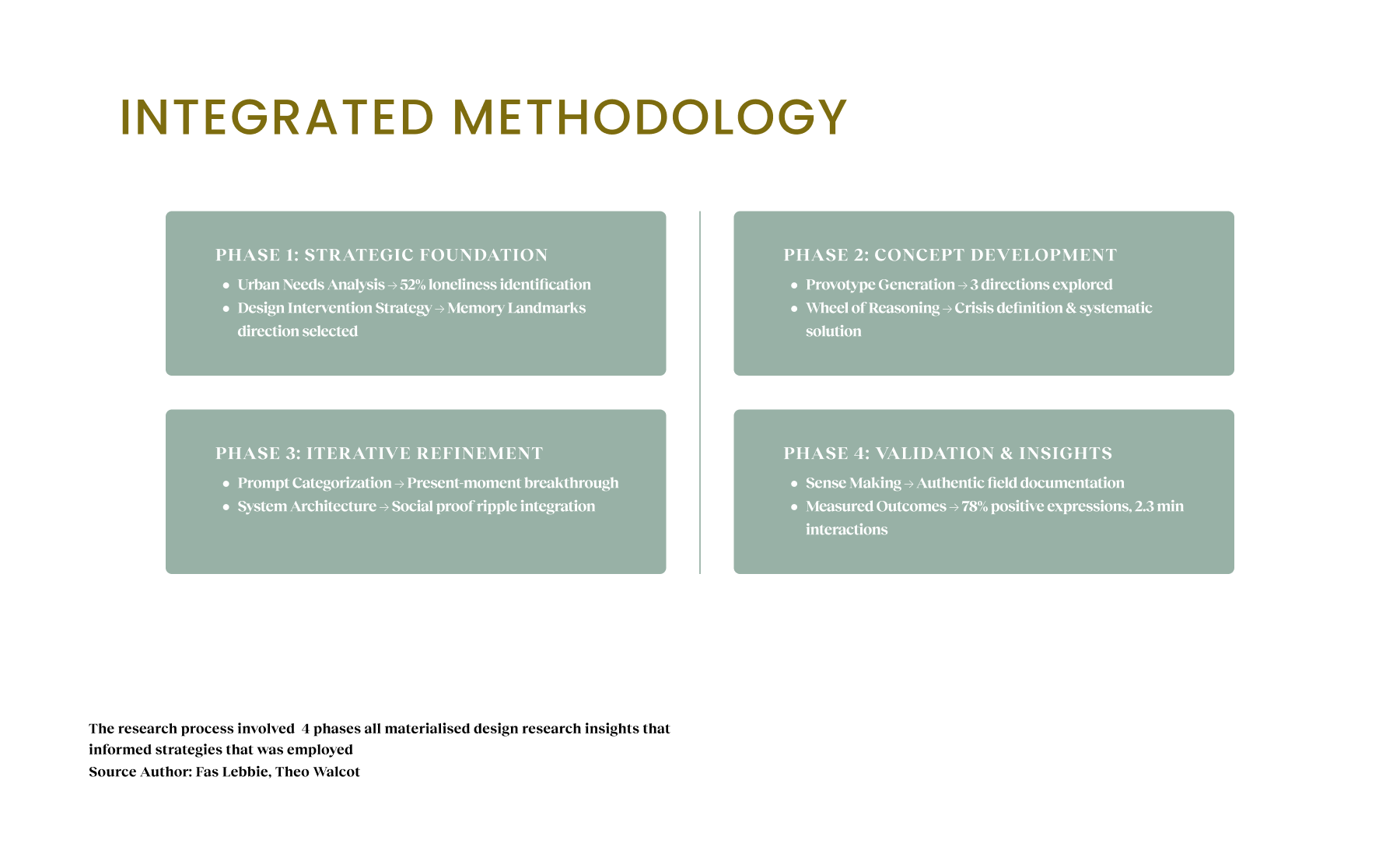
Our methodology centered on Frayling’s “research through design” approach, where the design process served as our investigative method. Rather than merely gathering information to inform a final design (research for design) or analyzing existing design approaches (research into the design), we used the creation and iteration of provocative prototypes — provotypes — as our primary means of generating knowledge. The Memory Tube served as a research instrument that evolved through multiple iterations. Each deployment generated new insights that informed subsequent design decisions, creating a cyclical process of making, observing, analyzing, and remaking. This approach allowed us to document the design process as a form of action research, with each iteration revealing new dimensions of urban social behavior. By treating our artifacts as both the means and subject of investigation, we found data that would have been inaccessible through traditional observational research. The Memory Tube became a boundary object that mediated interactions between researchers and participants, creating a space for spontaneous and authentic expressions that revealed underlying patterns of urban social dynamics. We developed three potential provotype directions: Wait + Play (interactive games at crosswalks), Memory Landmarks (storytelling around everyday urban objects), and Common Enemy (using shared mild discomfort to unite strangers). After evaluating each concept for feasibility, impact potential, and ethical considerations, we selected Memory Landmarks as our primary direction. Our research strategy employed a provotyping approach, where we created deliberately ambiguous artifacts designed to create a reaction rather than solve clearly defined problems. We developed a distinctive golden tube installation with carefully crafted prompts to encourage sharing and reflection. The visual design was intentionally intriguing but ambiguous enough to invite curiosity and investigation. We deployed these installations across multiple locations and documented interactions through photography, video ethnography, audio recording, field notes, and artifact responses. This multi-modal documentation allowed us to capture what people said and how they approached the installation as well as their hesitations and the social dynamics that emerged around the artifact.
Our research revealed several key insights about designing for collective joy in urban spaces:
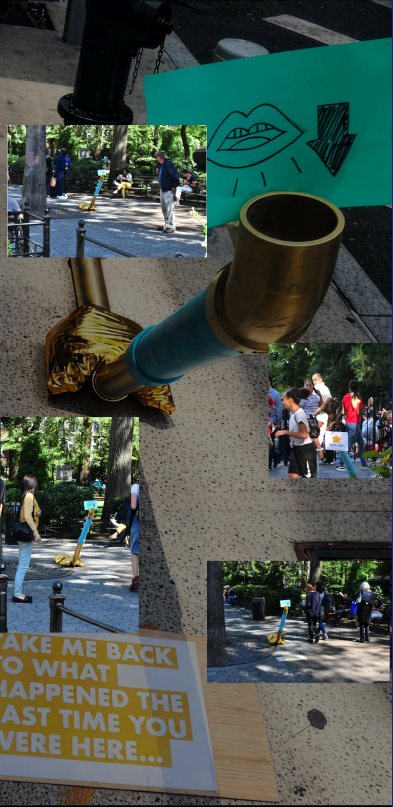
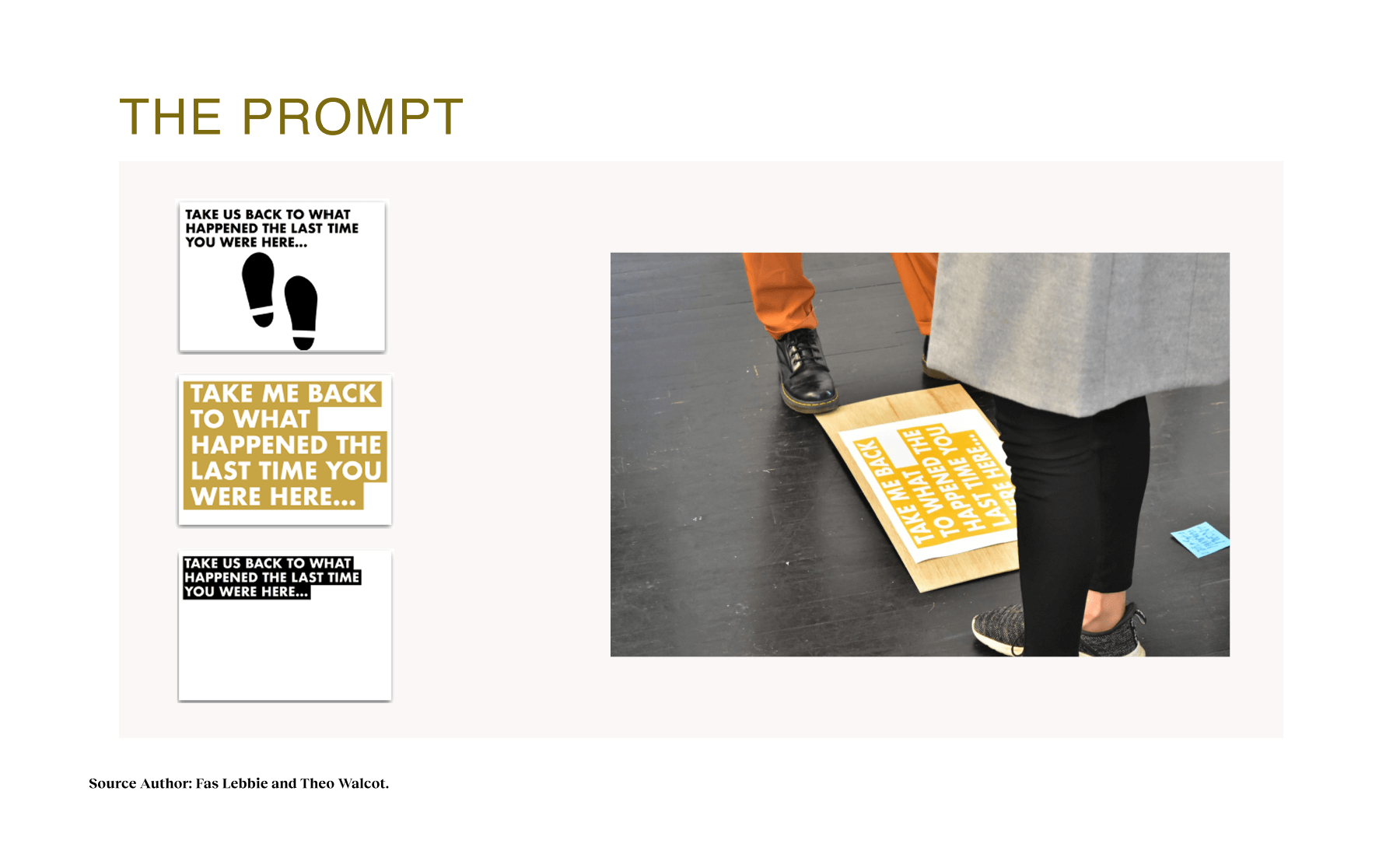
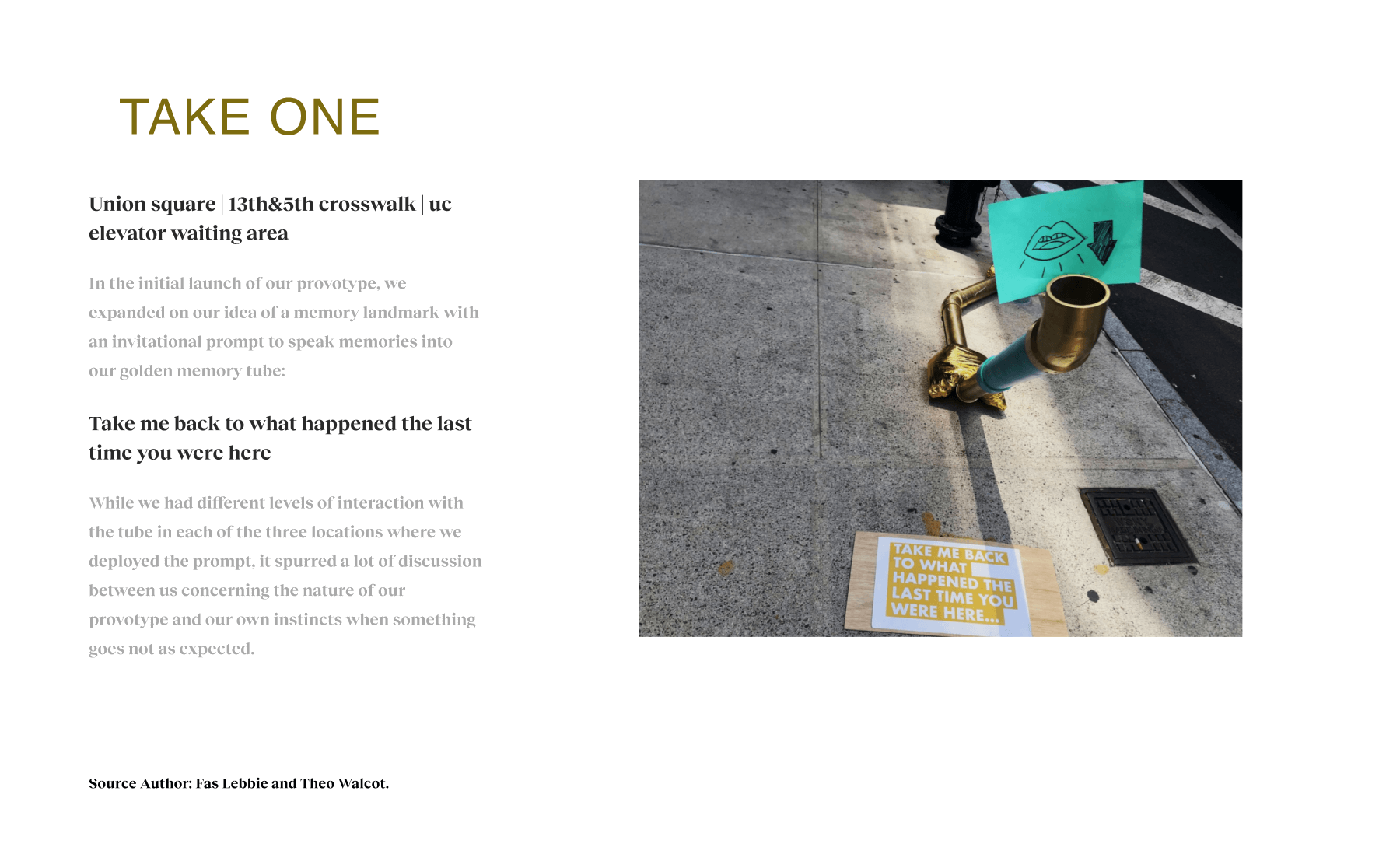
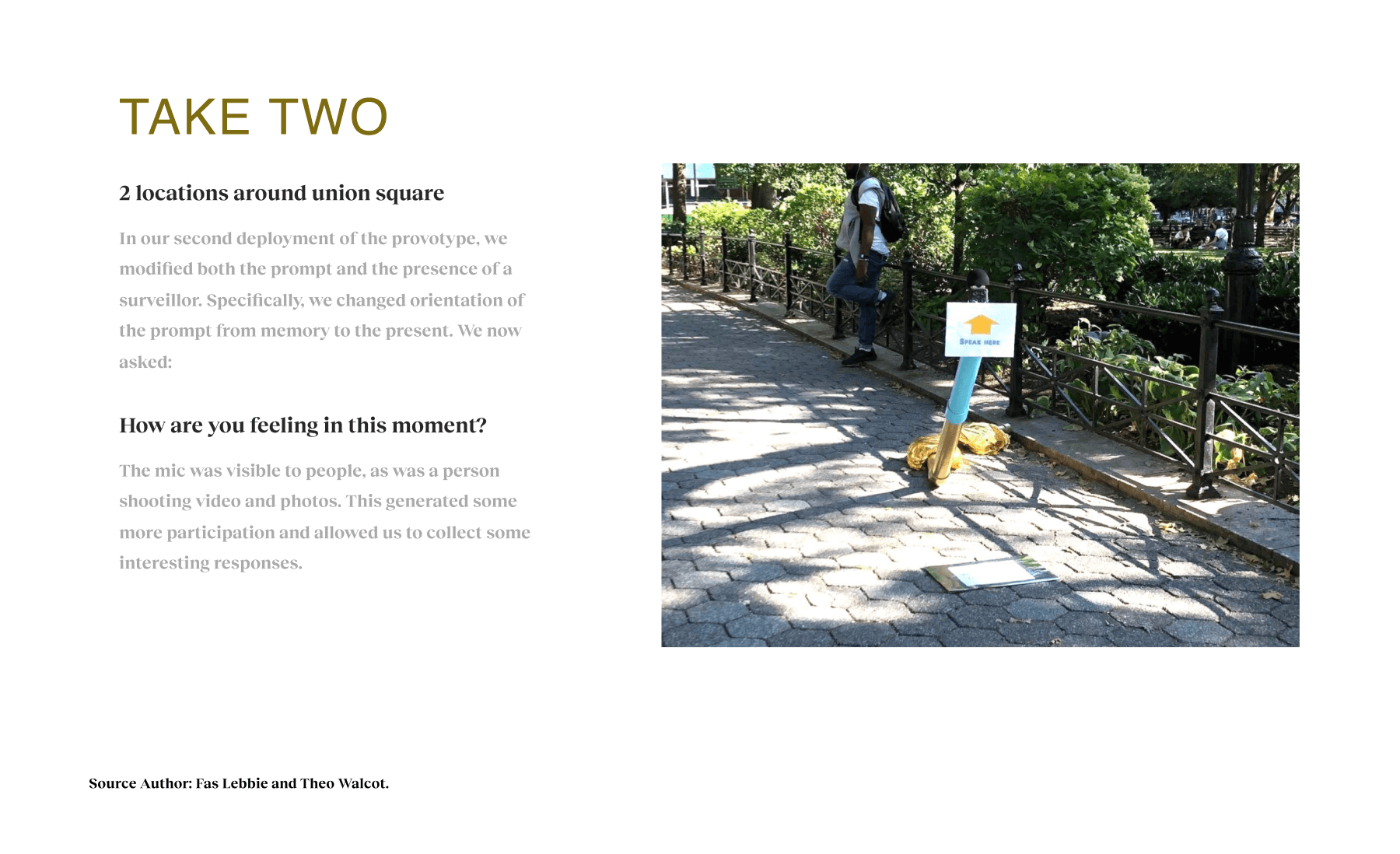
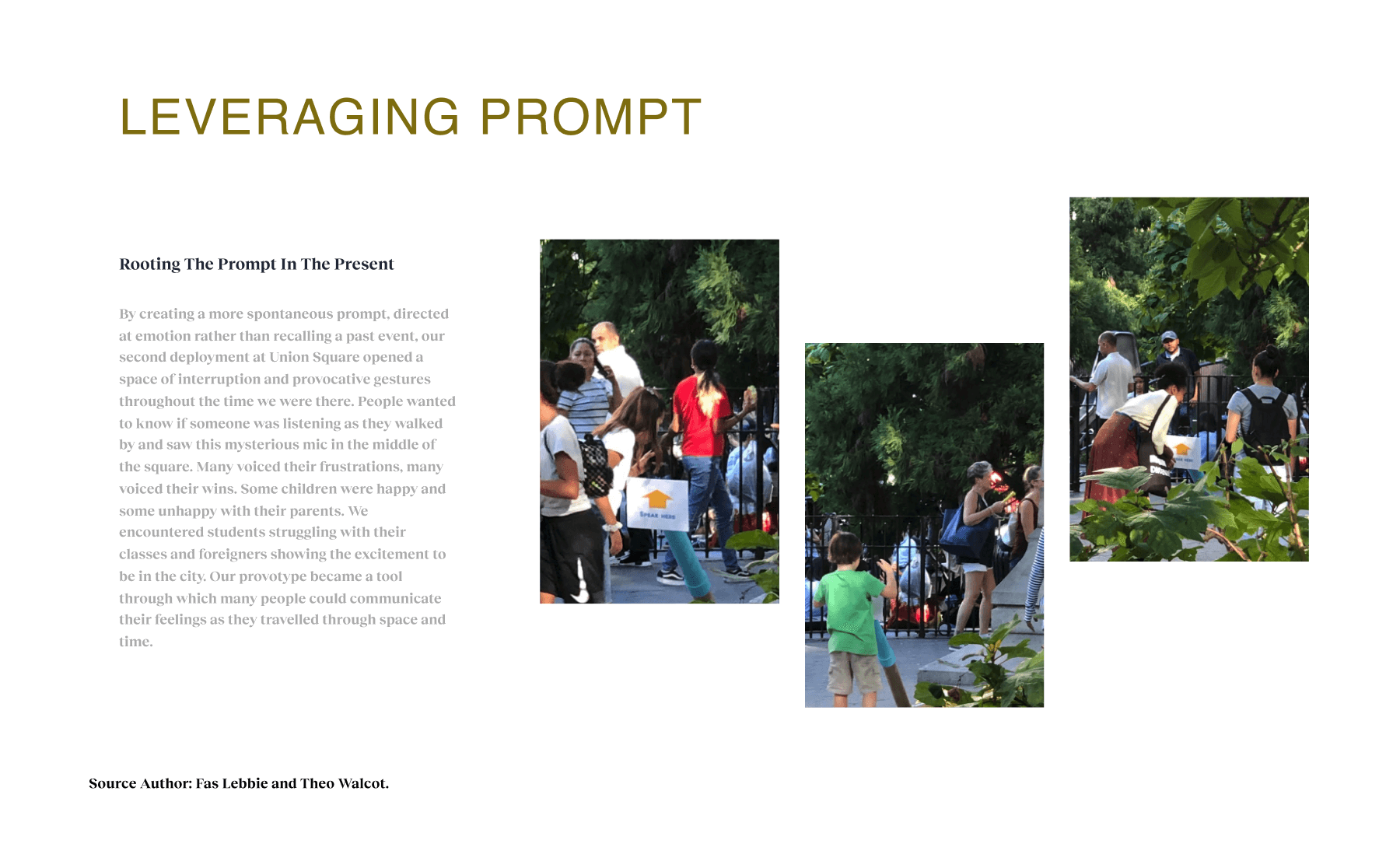
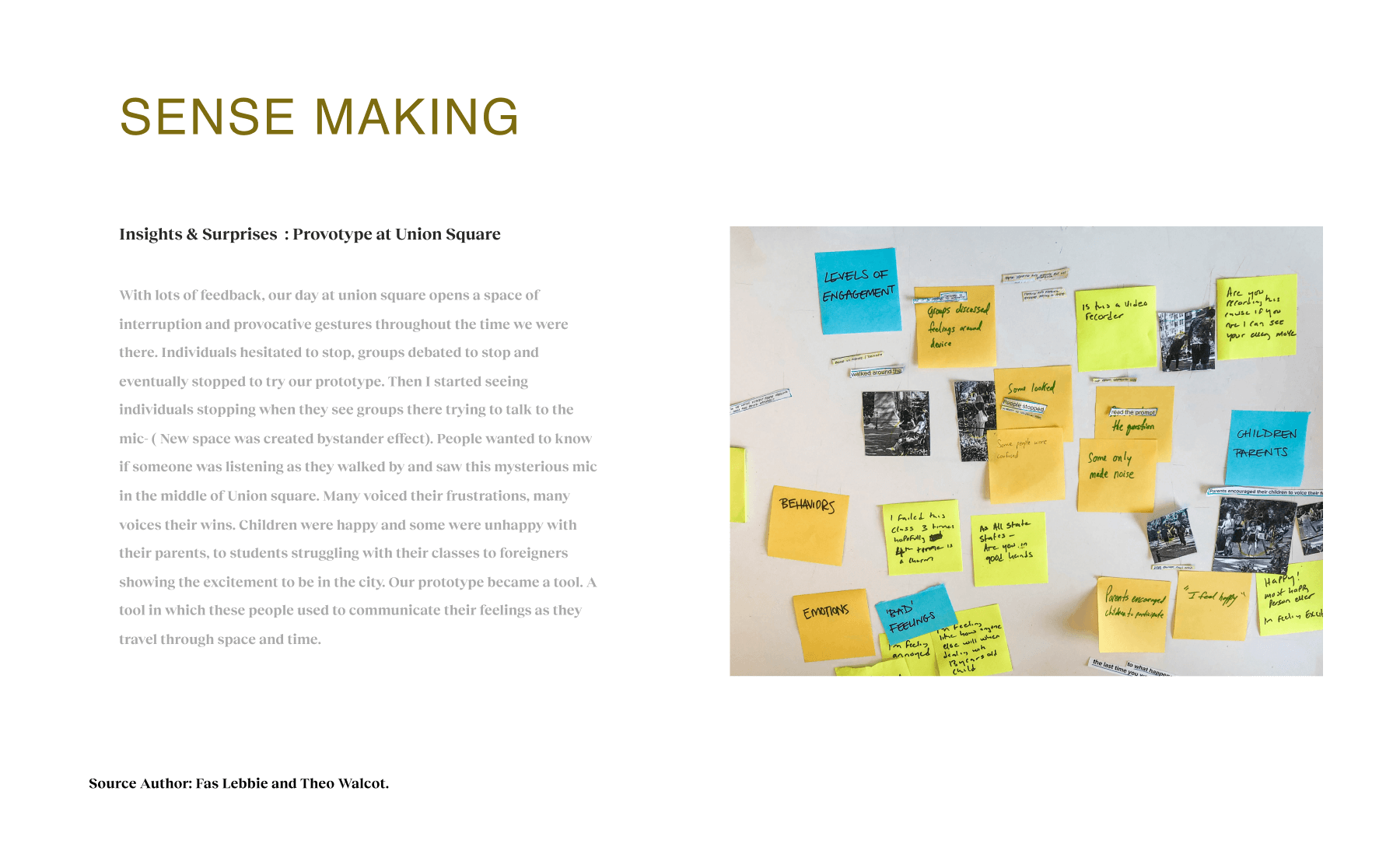
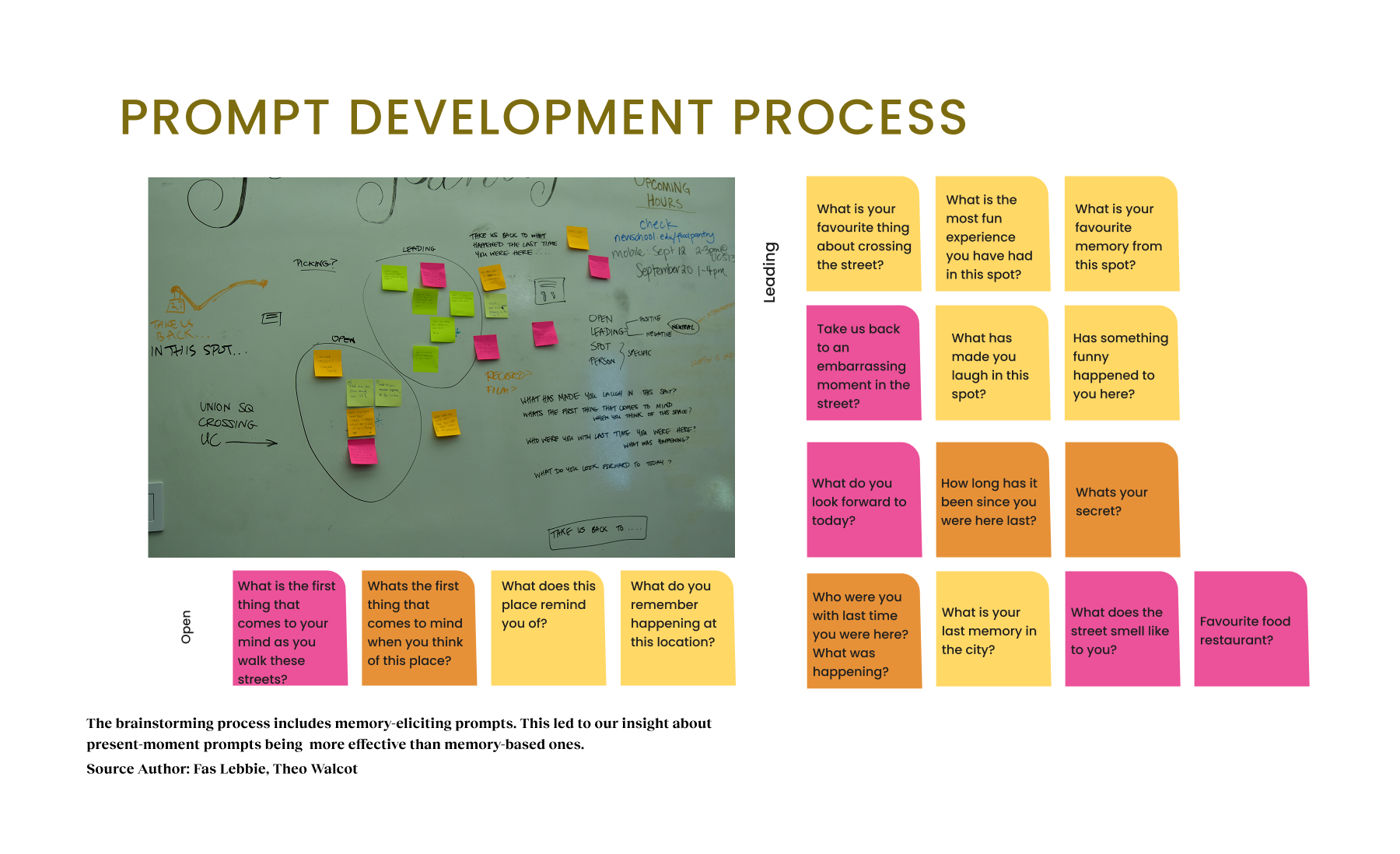
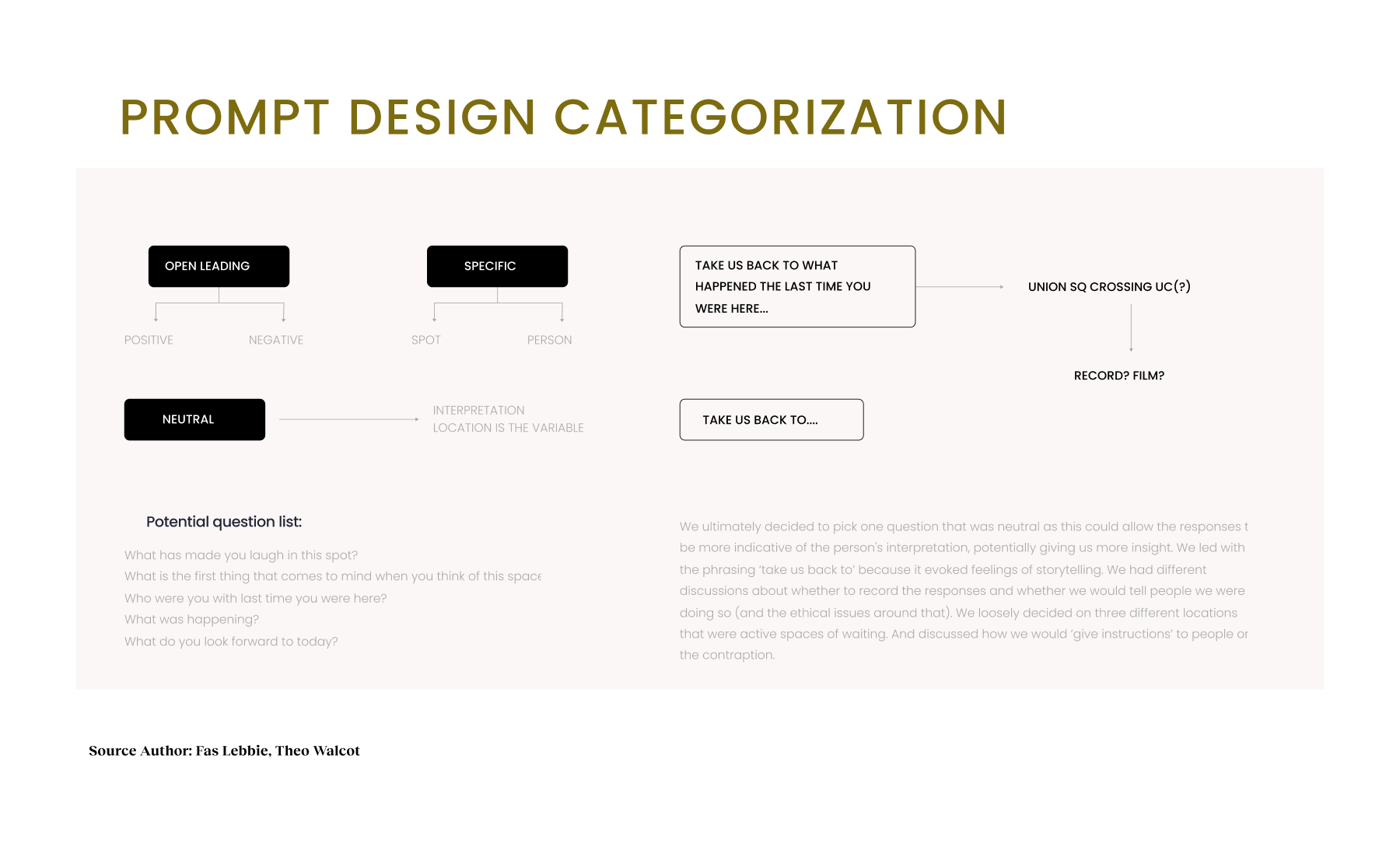
- The Present-Moment Advantage: When we shifted our prompt from memory-based (“Take me back to what happened the last time you were here.”) to present-focused (“How are you feeling at this moment?”), participation increased dramatically. This finding revealed that in busy urban contexts, people are more willing to share immediate emotions than recall past experiences.
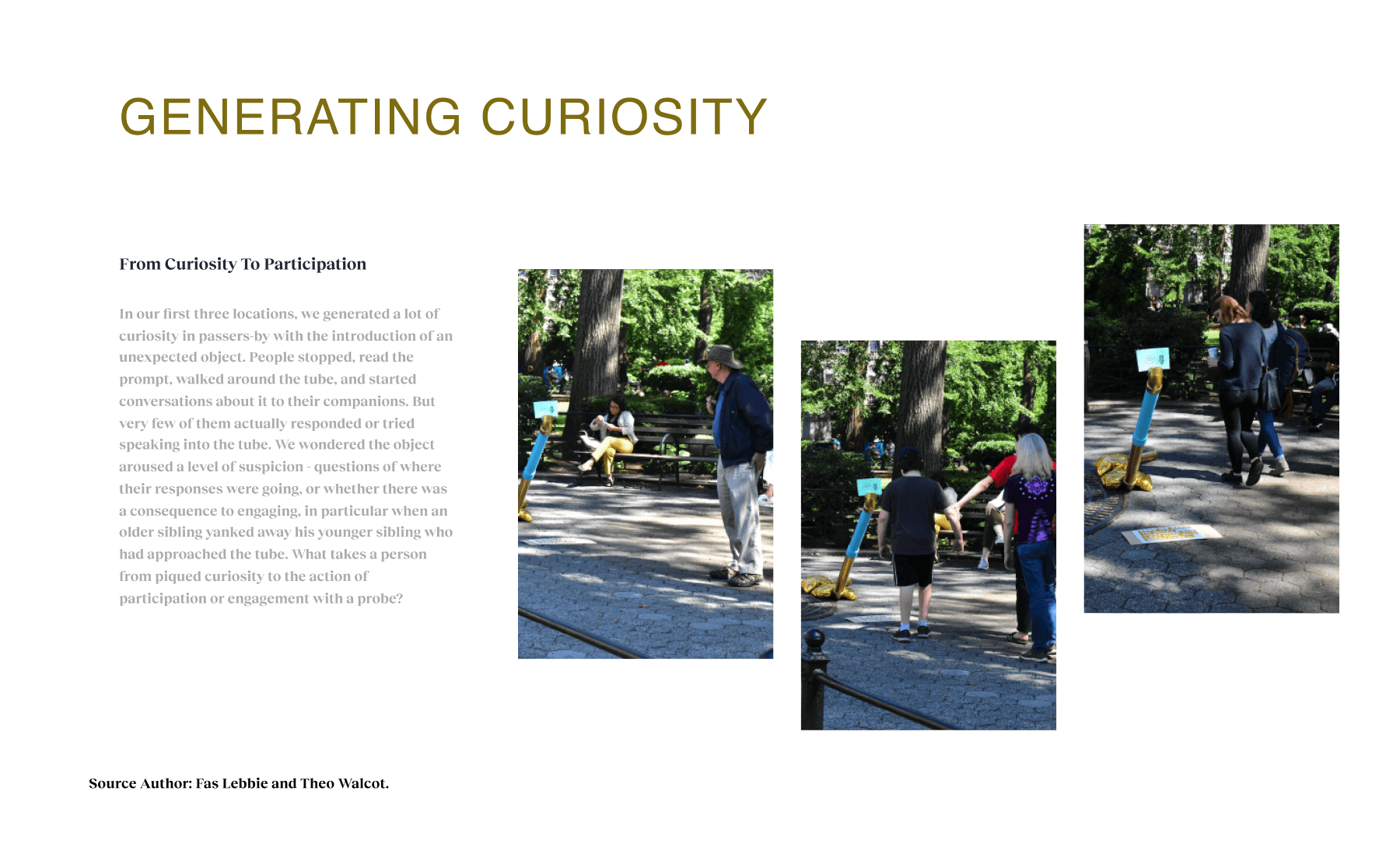
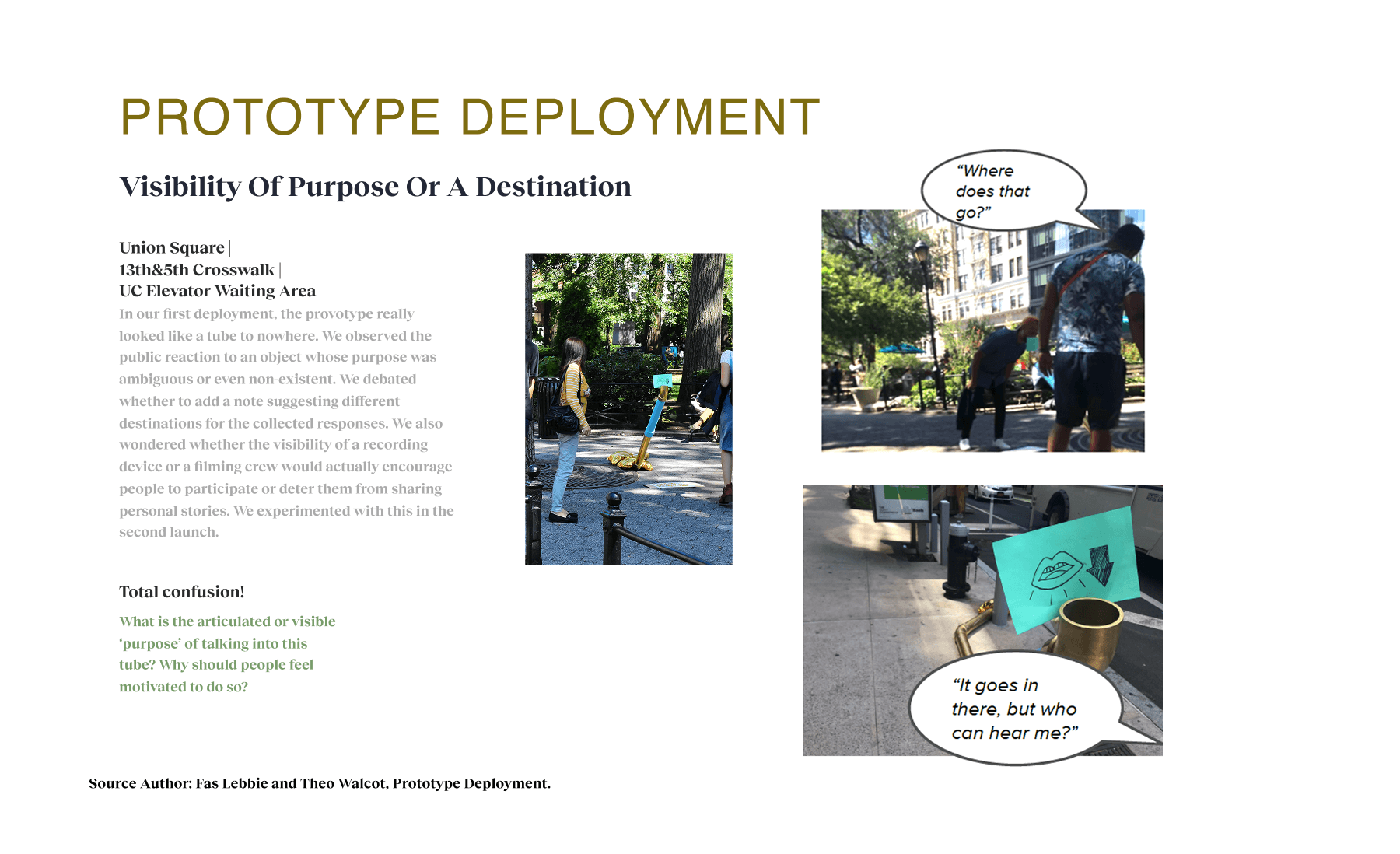
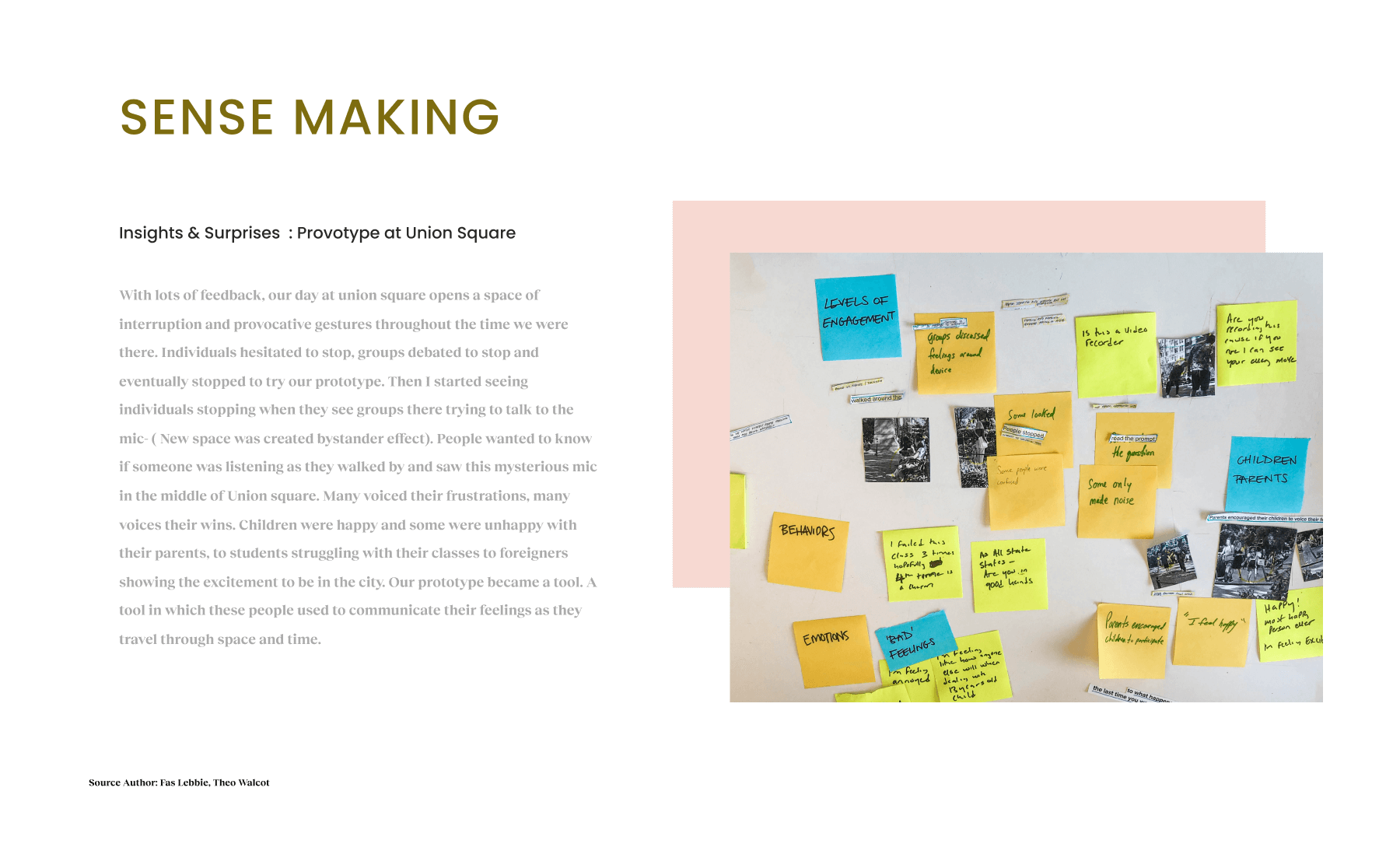
- The Curiosity-Participation Gap: Many people showed interest in our installation — stopping, reading the prompt, circling the tube, discussing it with companions — but fewer took the step to actively engage. This gap between curiosity and participation highlighted the importance of clear invitations and low-barrier entry points for urban interventions.
- The Social Proof Effect: Once a few people engaged with the installation, others were significantly more likely to participate. We observed that each active participant inspired 2 to 3 others to engage, creating waves of interaction throughout our deployment periods.
- The Transparency Paradox: Contrary to our expectations, making our recording equipment visible actually increased participation in some contexts. This suggested that transparency about the purpose and documentation of public interventions can build trust rather than deter engagement.
- The Discomfort-Insight Connection: The moments when our provotype failed to engage people as expected often yielded the most valuable insights about urban social dynamics. This reinforced the value of maintaining ambiguity and resisting the urge to immediately fix interventions that don’t perform as anticipated.
Our implementation strategy evolved through two primary phases:
Phase 1: Initial deployment of the Memory Tube with the prompt, “Take me back to what happened the last time you were here,” at three locations (Union Square, 13th & 5th crosswalk, and Parsons School of Design main lobby elevator waiting area). This phase yielded limited direct engagement but rich observations about curiosity behaviors and the gap between interest and participation.
Phase 2: Refined deployment with the modified prompt “How are you feeling at this moment?” at Union Square Park. This iteration produced significantly higher engagement and a wider range of emotional expressions, from frustration to excitement. We experimented with the visibility of recording equipment, finding that transparency about documentation affected both the quantity and quality of interactions. Throughout both phases, we maintained rigorous documentation of interactions, continuously refining our observation framework to capture direct engagements and the broader social dynamics surrounding our installation. This iterative approach allowed us to respond to emerging patterns.
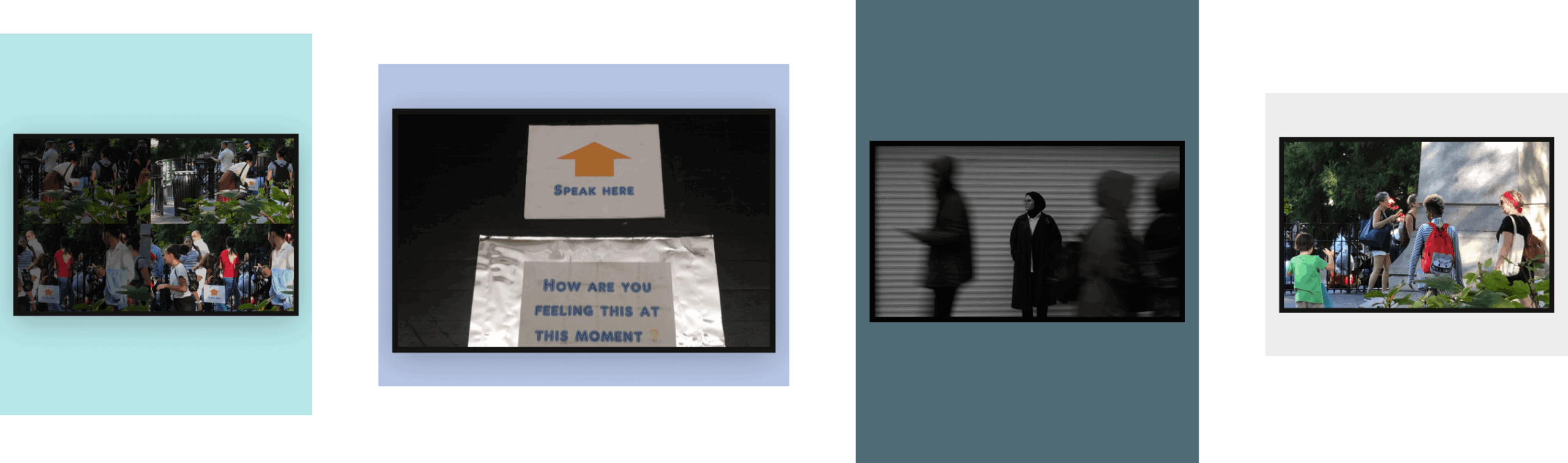
Speak Here Prompt
Our installations had a 'speak here' prompt, which increases participation in anonymous city spaces, activating anonymous city spaces into shared, joyful interactions.
Design Interventions
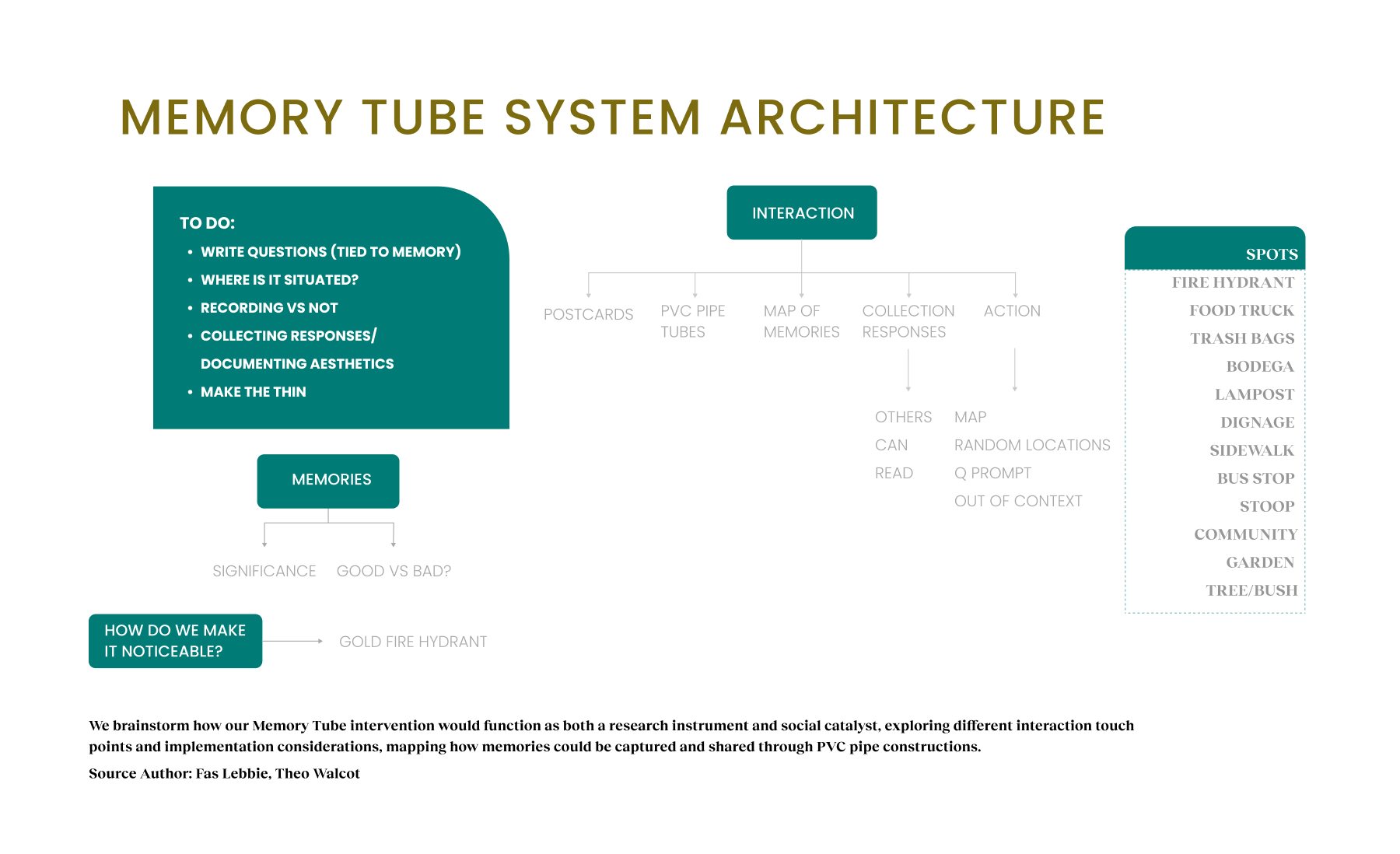
Our design intervention focused on creating a provocative object — the Memory, developed as a golden tube installation with carefully crafted prompts to encourage sharing and reflection, serving as both a research instrument and a catalyst for social interaction. This was displayed at Washington Square Park, Union Square, and NYC subway stations, as part of an ethnographic study. We leveraged the research through probing and provotyping, a form of prototyping designed to create a reaction in an audience.
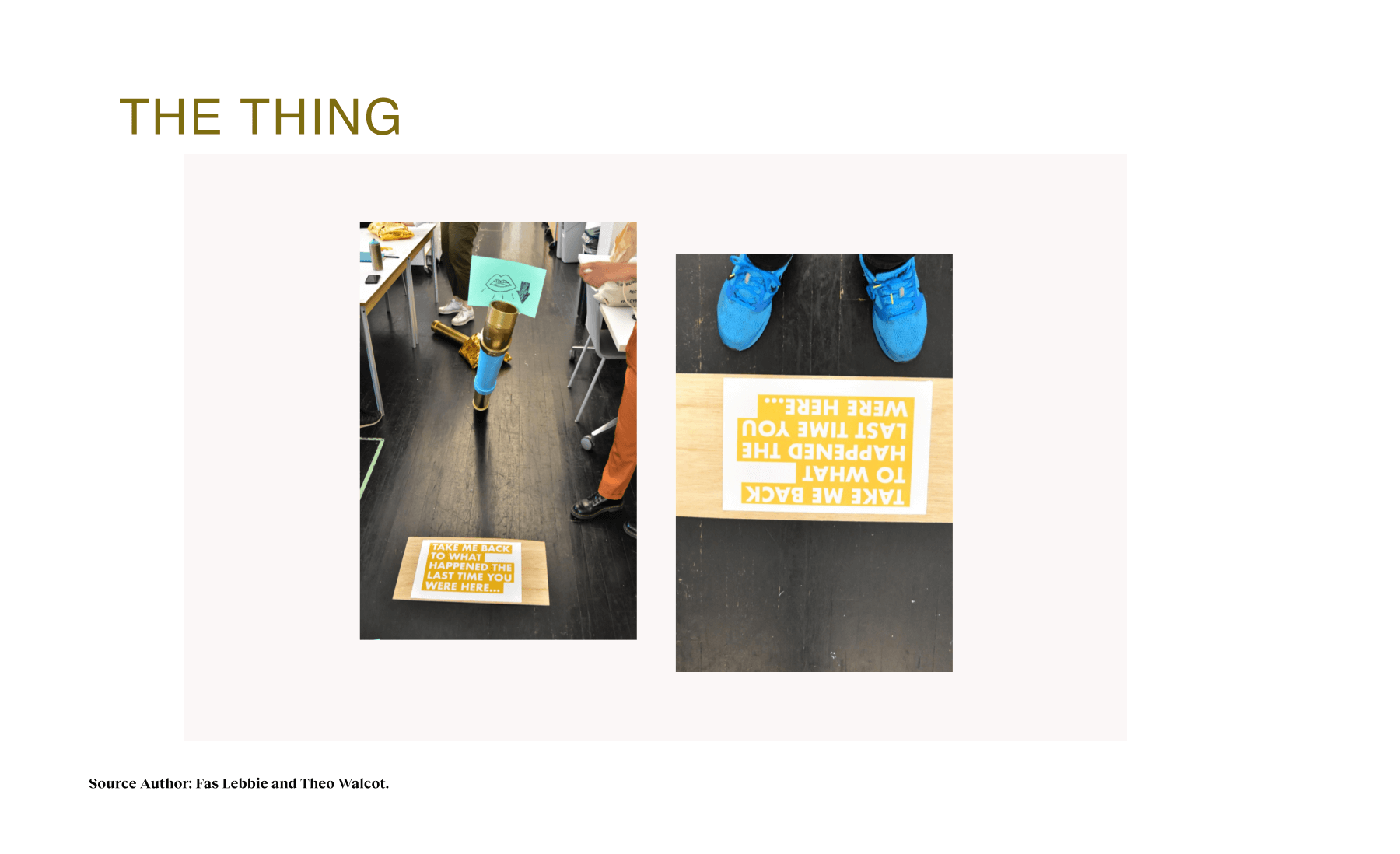
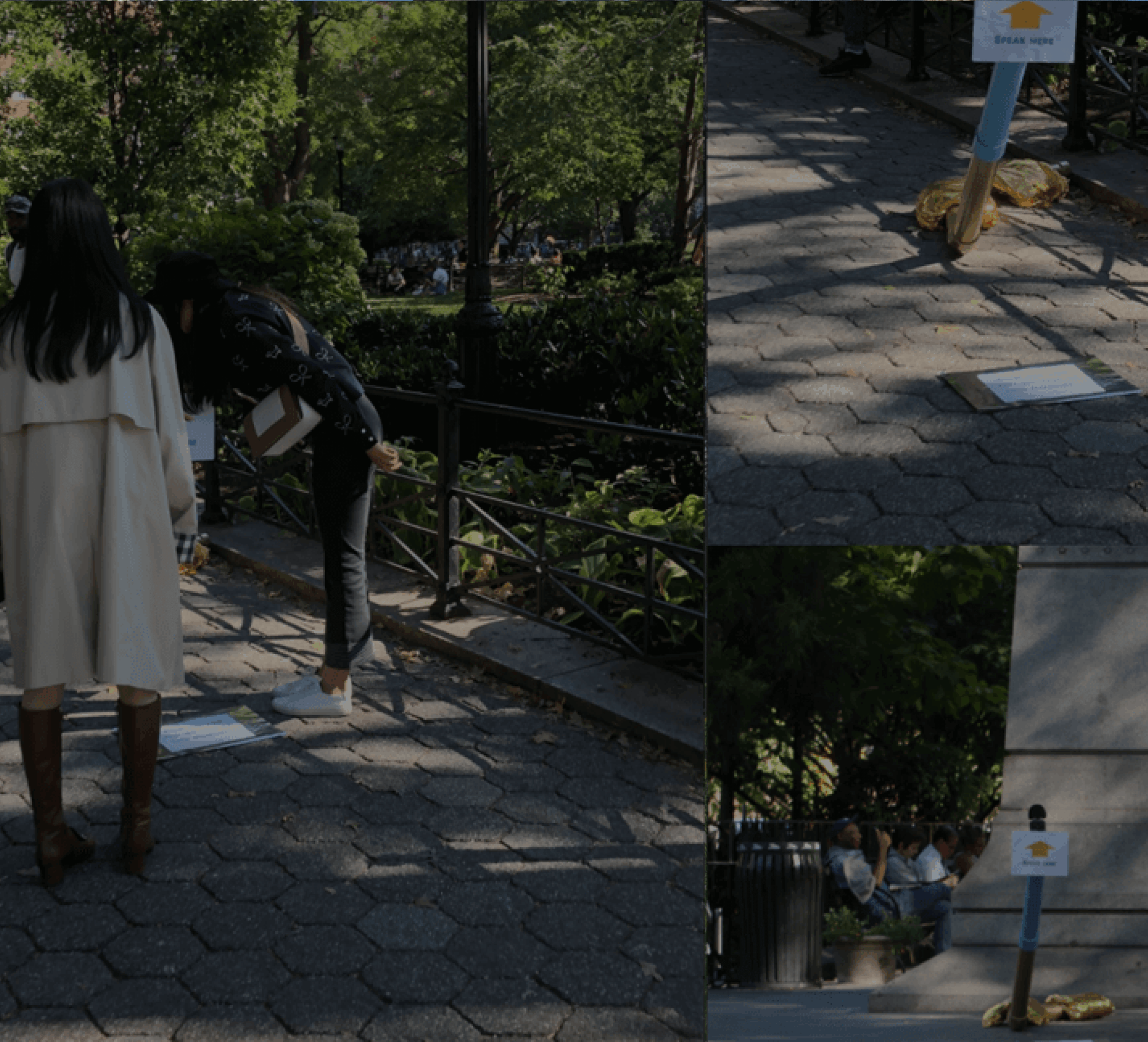
Our installations had a 'speak here' prompt, which increases participation in anonymous city spaces, activating anonymous city spaces into shared, joyful interactions.
Toolkit, Methods & Frameworks
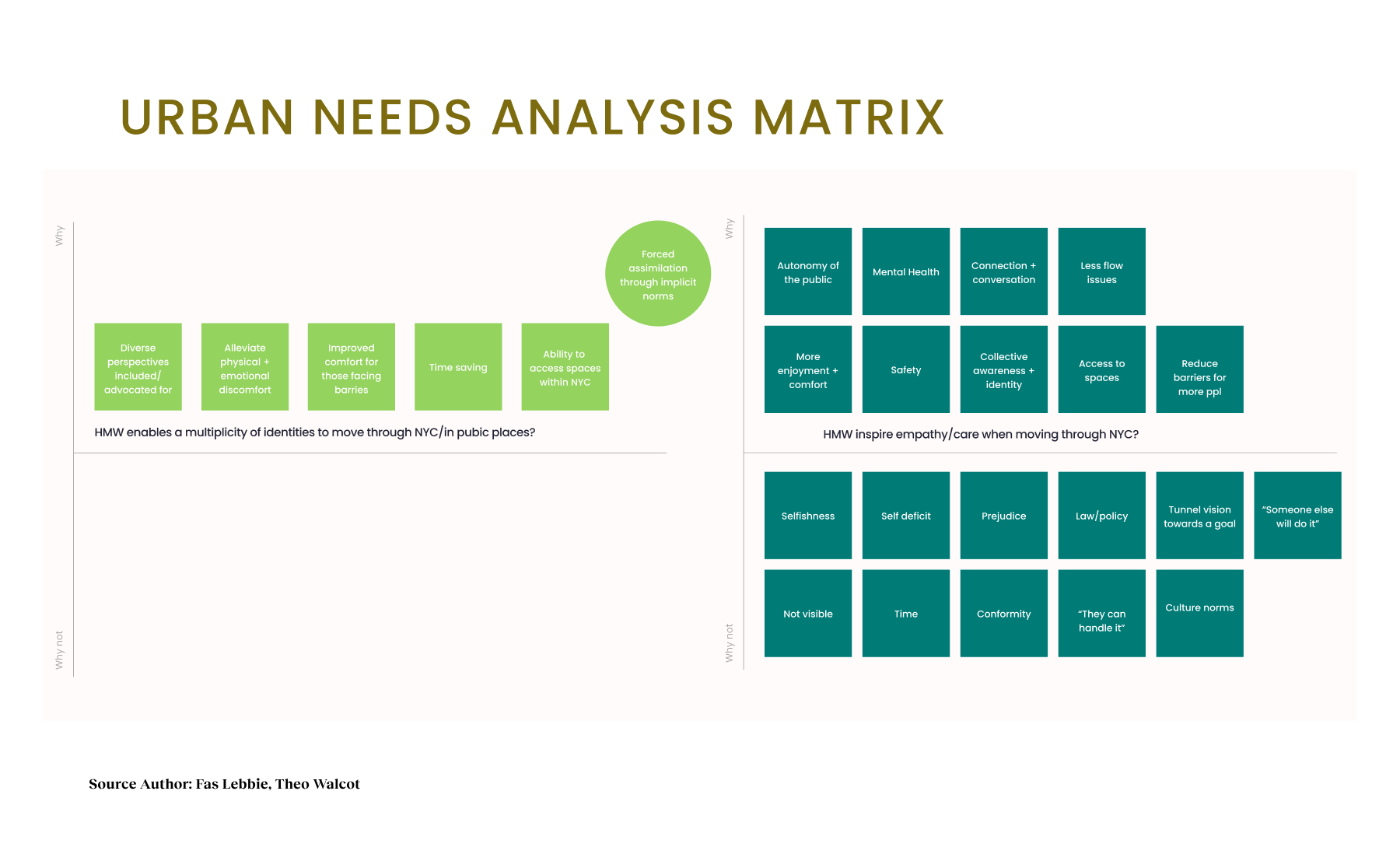
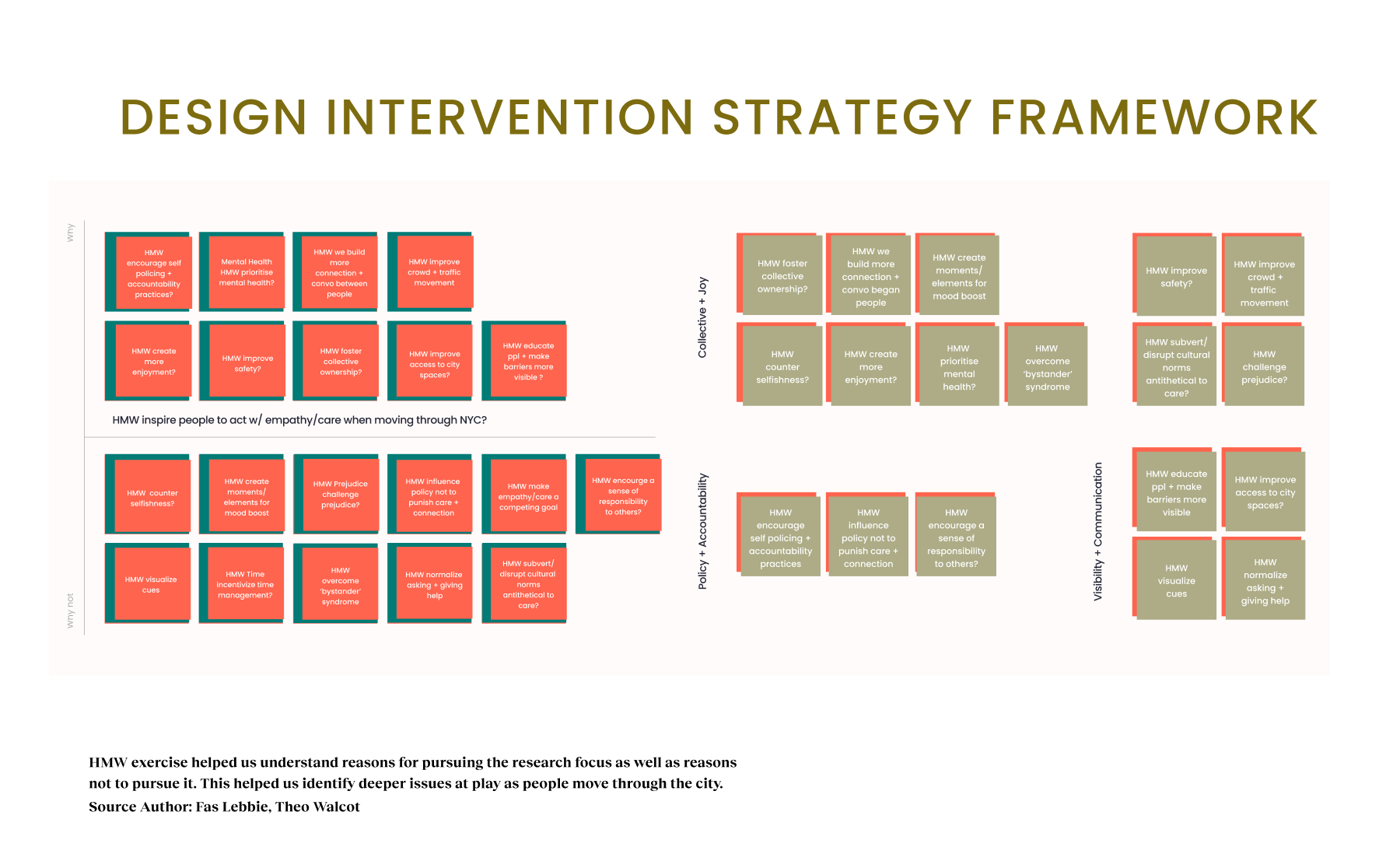
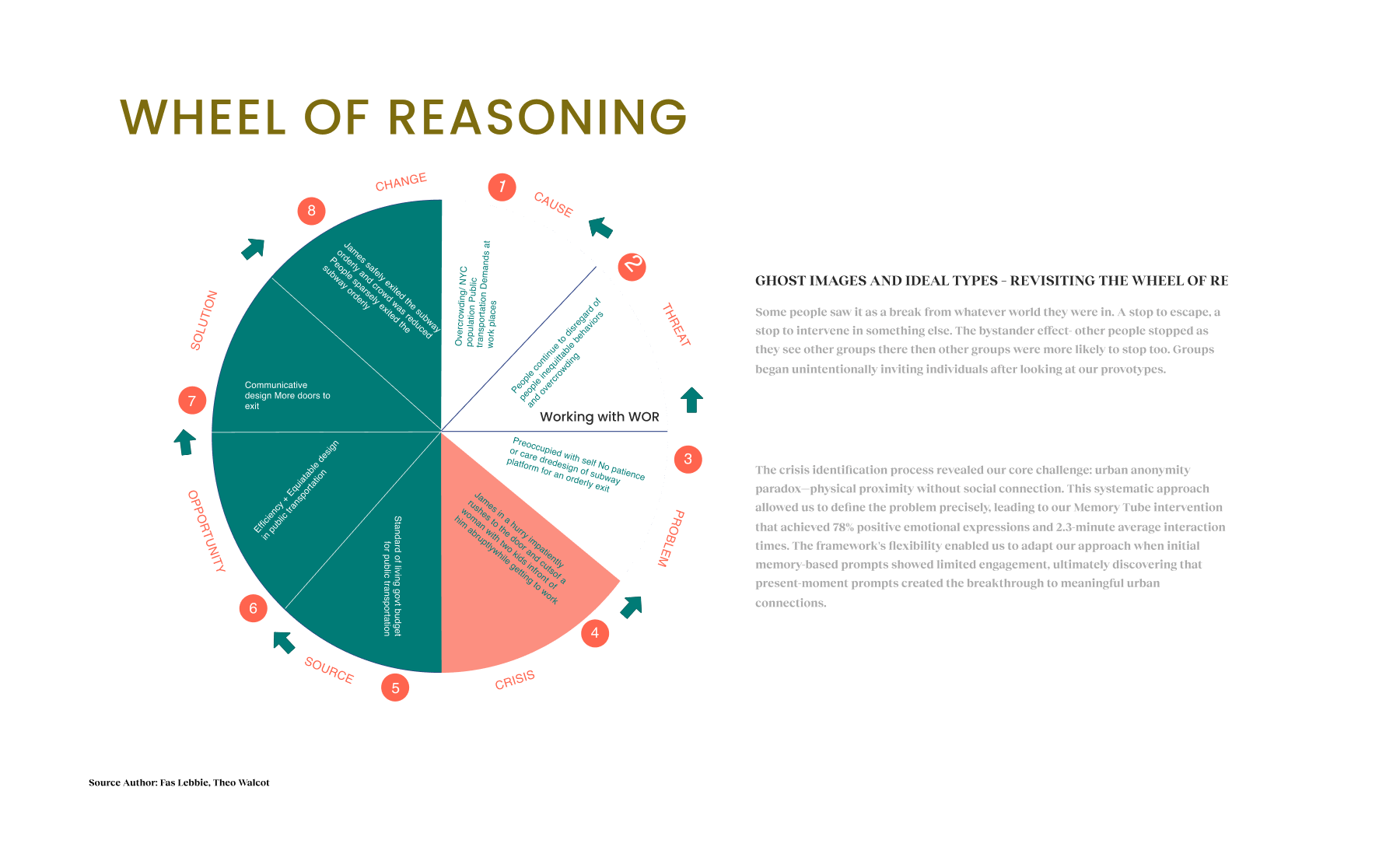
My approach leverages design-led research methods and frameworks to sense-making through HMW, wheel of reasons, and more to deliver research insights and generate provotypes to activate next steps for further research work, some of which are presented here.
Engagement Jump
Present-moment prompts tripled participation vs memory-based.
Positive Responses
Participants shared authentic, positive emotional reactions.
Interaction Time
3 minutes median engagement duration with urban installation.
Next Steps
- Collaborate with NYC Parks and transit authorities to expand Memory Tube installations across boroughs and high-traffic spaces.
- Partner with community groups to co-create a simple open-source toolkit for replicating urban interventions.
- Launch a digital archive to document and share participant stories, audio clips, and engagement data.
- Work with city planners and public art programs to embed provotyping insights into future public space designs.