Design · 5 min read
Design Pulse: Org Design Health Monitor
How systematic diagnosis of design team capabilities across five organizational levels can become a management tool for navigating shifting priorities.
Design leadership often falls into the trap of confusing activity with real impact. You might see teams that look functional on the surface but struggle to align with evolving organizational demands. This issue hit home as a design manager at Meta, where quick shifts in priorities led to constant context switching and noticeable burnout among the team.
I created the Design Pulse framework to regularly assess how design capabilities align with the organization’s current needs. This became a key tool for guiding leadership decisions, from building skills to allocating resources and spotting deeper issues.
Zooming out a bit, it reshapes how teams respond to change, turning diagnosis into a practice that sustains long-term organizational health.
How it Works
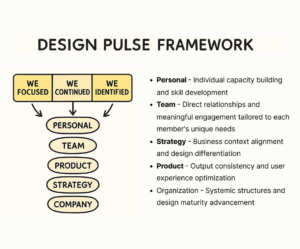
The Design Pulse relies on a straightforward, real-time assessment across three categories. This setup helps you see where your team’s energy is going and where problems might be bubbling up.
“We focused” highlights areas that are getting active investment, such as time and resources poured into building new strengths. Think of this as the growth zone, where you’re pushing boundaries.
“We continued” covers the steady stuff, capabilities kept at their current level to avoid slipping backward. These are reliable practices that work fine for now, freeing up space for other priorities.
“We identified” points out the trouble spots, such as misalignments or resource drains that aren’t paying off. Here, you uncover gaps that could widen if ignored, prompting necessary adjustments.
Apply these categories across five layers: Personal, Team, Strategy, Product, and Company.
I’ll break them down with examples, drawing from my experience in leading design teams.
Personal Level: Leadership Development Health
At this layer, you assess how individual growth supports broader capacity. “We focused” might involve targeted leadership training to tackle new challenges, or building cross-team relationships that boost design’s reach. “We continued” could mean sticking with routine one-on-ones and feedback loops that keep progress steady. “We identified” often reveals skills being honed that no longer align with the org’s direction, or generic development that doesn’t create real impact.
Team Level: Team Infrastructure Health
Here, check if your team acts as a cohesive unit rather than just individuals. For “we focused,” consider strategic hires to fill knowledge gaps or initiatives that clarify career paths while meeting org needs. “We continued” includes norms that support day-to-day functioning without major tweaks. In “we identified,” you might spot behaviors drifting from org priorities, growing skill gaps, or cultures favoring personal wins over collective value, perhaps leading to bandwidth strains.
Product Level: Design Operations Effectiveness
Focus on how ops enable product wins and prove design’s business value. “We focused” could mean evolving quality systems or encouraging experiments with new collaboration models, such as closer ties with engineering to accelerate delivery. “We continued” covers rhythms that handle the current scale adequately. “We identified” might suggest over-reliance on outdated processes, isolated ops, or imbalanced ratios that prevent designers from shipping due to engineering shortages.
Strategy Level: Vision-Reality Alignment
This layer examines whether strategies create real value internally and externally. In “we focused,” aim for visions that drive decisions or change efforts that get implemented. “We continued” maintains basic strategic visibility. “We identified” often refers to isolated planning or visions too detached from execution, which consume energy without producing results.
Company Level: Organizational Design Alignment
Assess design’s fit with business strategy and politics. “We focused” involves active alignment, like joining business planning or measuring impact on key metrics. “We continued” keeps the dialogue ongoing to stay in sync. “We identified” could highlight independence from strategy, unclear value to leaders, or stagnant positioning amid business shifts.
How to Integrate Design Pulse into Your Team’s Workflow
To make this more than a checklist, weave it into your routines as an intervention tool. Here’s how I do it at Meta, with adaptations you can try.
Weekly Pulse Cycles
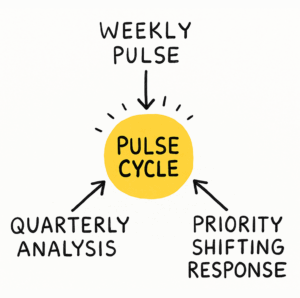
Each week, map capabilities across the layers into the categories. This creates an ongoing record of health, showing not just status, but also if your focus aligns strategically. It helped me spot imbalances early.
Quarterly Pulse Analysis
Every three months, review patterns over time. Ask: Have long-focused areas outlived their usefulness? Are continued items turning into routines that sap energy? Do persistently identified issues signal deeper structural problems needing broader fixes?
Priority Shifting Response
Use insights to act, prioritizing key challenges while accepting some trade-offs. This shifts from reactive fixes to thoughtful systemic changes.
What I Learned From Implementation at Meta
Right away, it showed that 20% of our effort went to non-strategic maintenance. I emphasized that “identified” items weren’t personal failings but team-wide disconnects. It also highlighted the worth of routine tasks. During layoffs, with fewer people and shifting goals, Design Pulse guided us to drop non-essentials. We moved from “do everything with less” to accepting certain gaps, revealing what was truly busywork.
What Matters
Ultimately, Design Pulse succeeds by linking capabilities to current needs. As leaders, you balance this with team growth.
It needs buy-in and flexibility, but offers a way to lead responsively. This practice not only navigates change but also influences how organizations evolve their design behaviors for the future.
References
- Nielsen Norman Group — UX Maturity Models and Organizational UX
- Cameron Tonkinwise — Designing for Transitions
- Ezio Manzini — Design, When Everybody Designs
- IDEO — Designing Organizations for Change
- Gartner — Design Leadership and Organizational Change
- Accenture — The Business Value of Design