Design · 5 min read
My Commitments to a Design Team
How systematic leadership across five organizational levels creates conditions for teams to thrive, from individual wellbeing to company-wide influence.
You might think leadership means having all the answers, but in my experience, it’s more about shaping the relationships and conditions that let others shine in their work. Over years leading design teams, I’ve found that strong leadership often comes down to setting clear commitments and sticking to them. These aren’t just words; they appear to guide daily actions that influence how teams operate. Let me share five that have worked for me, blending practical steps with a touch of systems thinking.
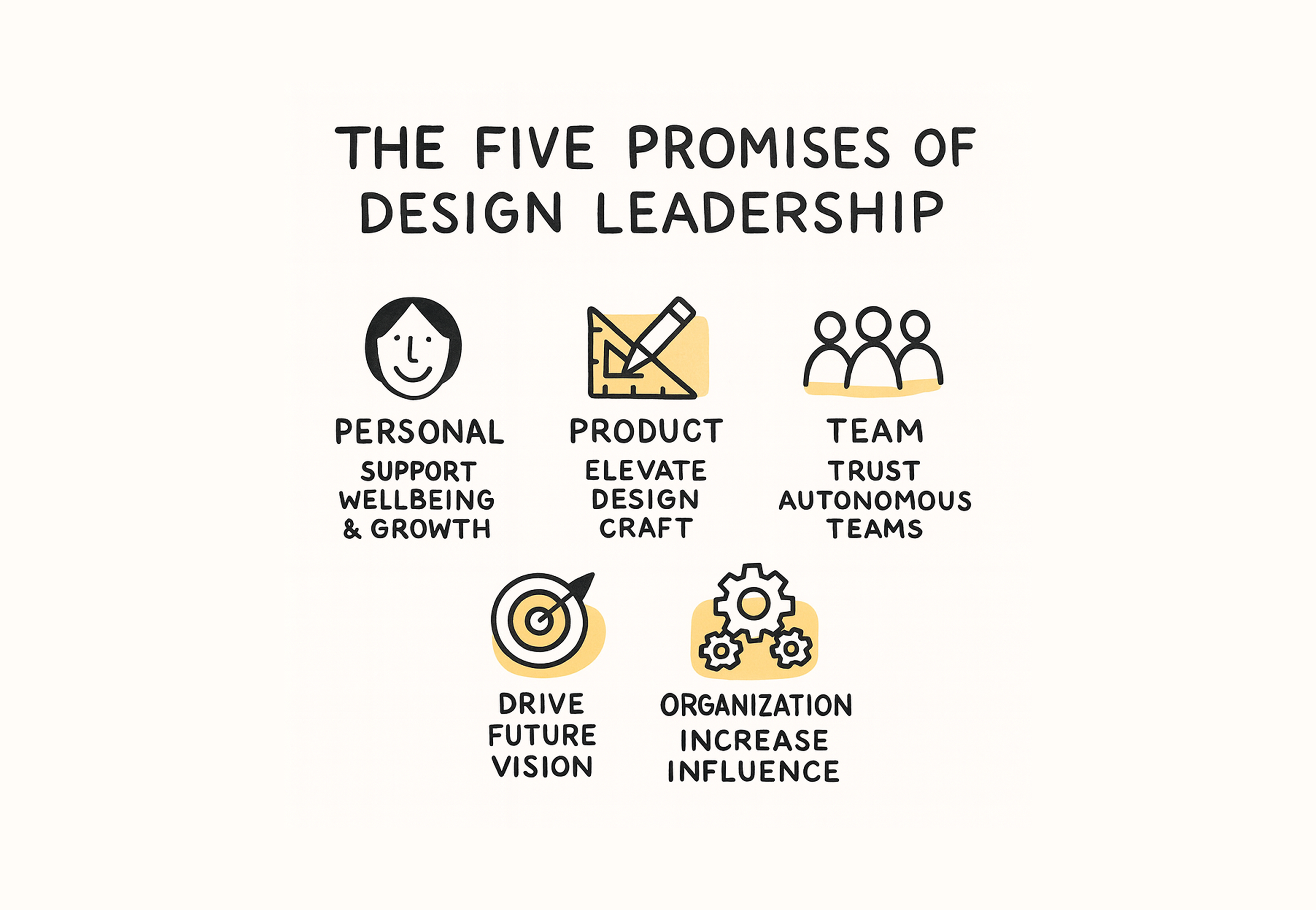
Personal: Prioritizing Team Members’ Wellbeing and Growth
Start by checking in weekly with each team member through one-on-ones. I use these to cover project updates, tackle roadblocks, discuss career paths, and build real connections. It’s key to leave room for whatever’s weighing on them, and I make sure I’m available beyond scheduled times too.
Team health sets the foundation for everything else.
You should watch for signs of stress or overload, encouraging honest talks about workload to avoid burnout. When people feel hesitant to voice issues, their creativity suffers. I model this by admitting when I’m unsure or learning right there with the team, much like how Figma’s approach suggests fostering psychological safety for better ideas.
I also focus on resources and opportunities that build belonging. Diverse views often lead to stronger designs, though it takes effort to create fair conditions for everyone.
Product: Elevating Design Craft
Give designers real ownership over their work’s quality, as it ties directly to accountability for outcomes. I group teams around products based on their skills, background, and goals, keeping these groups intact even after projects end. Breaking them up too soon can waste the shared knowledge they’ve built, and maintaining that continuity feels like a smart way to design ongoing collaboration.
Trust them with clear metrics for success, offering tools while honoring their unique styles. I work to link design quality to business results, considering impacts on users, teams, and even broader stakeholders who might not be obvious at first.
Above all, push for trimming scope instead of skimping on quality. A focused, polished release usually beats a rushed, sprawling one, in my view.
Team: Building Intimate, Autonomous, and Continuously Learning Teams
Teams don’t gel through quick exercises alone. I kick things off with workshops drawing from group formation ideas, like those from Schutz, to foster genuine bonds. This isn’t about forced fun; it’s about creating the social setup for effective work together.
Use process sparingly, trusting folks to decide and flag problems. Too many rules can stifle ideas, turning things mechanical. Coach them to sharpen their own judgment on work, so they lead more on their own.
Carve out time for trying new things, learning from the field, and honing skills. Set up channels for input that suit different styles, syncing up in real time or async.
In our weekly syncs, we zero in on results over just showing off. Keep feedback personal and private, as public critiques can erode trust fast. I seek monthly input on my leading style too, keeping accountability two-way.
Strategy: Design as a Driver of Future Vision
Strategy thrives on shared input. Those carrying it out need to believe in it, not just follow orders. I set up solid research systems to guide choices and check designs, treating it as core to thinking ahead rather than an add-on.
Run workshops where everyone helps shape what excellent design looks like for us. This recognizes strategy as a group design challenge, pulling in varied angles. Empower your team to influence roadmaps with user data, showing design’s worth through solid evidence and tracked results.
Hold regular sessions for feedback from the team and partners in product or engineering. We review goals and adjust, folding insights into how I lead and our plans.
Organization: Building Design’s Influence
Design’s strength grows from ties with engineering and product. As it succeeds, that effect spreads. I see design as woven into their efforts, defining the full experience.
Build those links by showing how design fits their goals. Share the why behind ideas, not just finals, via open talks and joint sessions. Craft processes where teams co-create visions, earning commitment through involvement.
Grow the team thoughtfully, targeting specific skill needs. Each new hire should fill a gap with a plan for quick contributions, avoiding growth just for growth’s sake.
The Way Forward
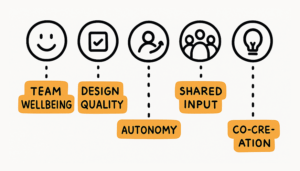
These commitments across Personal, Product, Team, Strategy, and Organization form the everyday habits that have shaped my teams. They link personal growth to group wins and keep design central in the business. But remember, commitments only matter if you follow through, especially under pressure.
When things get tough, deadlines press, or tensions rise, that’s when they count most, though it’s tempting to let them slide. How we structure work is design in action, with lasting effects on the behaviors and futures we enable in our organizations.
References
- Figma — Building Resilient Design Teams
- Don Norman — The Design of Everyday Things
- William Schutz — FIRO: A Three-Dimensional Theory of Interpersonal Behavior
- IDEO — Designing Teams and Cultures for Creativity
- Nielsen Norman Group — Psychological Safety and UX Team Performance
- Cameron Tonkinwise — Designing for Transitions