
Design · 4 min read
Building Trust Through Five Clear Expectations
How to build trust and clarity with your team across all levels of design work
After eight years leading design teams, I’ve learned good intentions only get you so far. Hiring sharp people, handing them interesting problems, and mostly staying out of their way was enough. Some designers bloom in that space. Most quietly drift, feeling their work exists in a vacuum, disconnected from strategy, impact, or even recognition.
Over time, I’ve distilled this into five explicit expectations I now share on day one with every designer I lead. They’re less about rules and more about creating the conditions for shared understanding, so we can do our best work together while connecting individual efforts to larger goals.
-
Know How You Work Best (and Tell Me)
Start with the person, not the process.
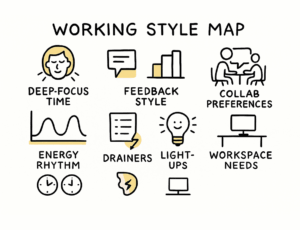
I hand new team members a simple Working Style sheet: nothing fancy, just questions about when you think deepest, how you like feedback, what drains you, and what lights you up. One designer told me weekly syncs were killing her momentum; she needed long, uninterrupted mornings. We shifted her cadence, and six weeks later, she was shipping the strongest work of her career. When you’re honest about your superpowers and blind spots, I can build balanced pairs and squads where everyone actually learns from each other.
This single practice has saved more careers than any performance review I’ve ever run.
-
Own the Full Wake of Your Decisions
Your work keeps living in the world long after you ship it. Stay awake to what it’s doing.
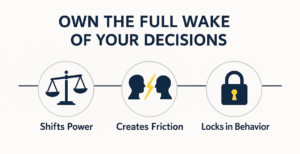
Notice when a pattern quietly shifts power, creates friction for certain users, or locks in a behavior we’ll regret later. Bring it forward. Those observations are where real strategic thinking begins. I’ve watched mid-level designers spot second-order effects that completely changed roadmap priorities. That only happens when people feel safe saying, “This thing we built is starting to feel off.” Zooming out, this isn’t just about accountability; it reshapes the behaviors that sustain ethical design practices over time.
-
Protect Deep Work While Staying in the Conversation
Great design needs both solitude and collision. Guard the first, show up fully for the second.
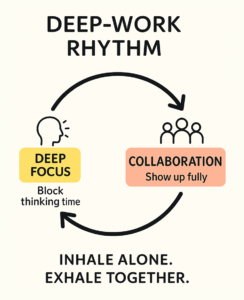
Block real thinking time without guilt: turn off Slack, close the door, whatever it takes. Breakthroughs rarely survive constant pinging. At the same time, when it’s time for crit, sync, or helping a teammate unblock, be there, prepared, and generous.
The teams that last find this balance instinctively.
They treat deep work as non-negotiable and collective intelligence as sacred. The rhythm feels almost biological: inhale alone, exhale together.
-
Always Know How Your Work Moves the Company
Never let your designs be the best-kept secret in the building.
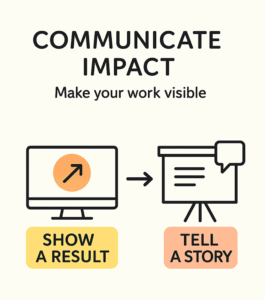
Once a month, surface one clear example, like adoption lift, support deflection, or revenue impact, and turn it into a short story you can tell upward or sideways. I’ve seen a single slide from a senior designer swing an entire quarterly plan.
This habit gives leadership undeniable proof of design’s leverage and keeps you from waking up one day to realize you’ve been decorating someone else’s strategy.
-
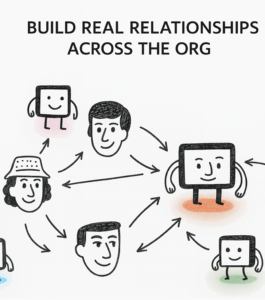
Build Real Relationships Across the Org
Design is always a collaboration within complicated systems.
Schedule recurring coffee or 20-minute syncs with your key product, eng, research, and marketing partners. Learn with genuine curiosity what keeps them up at night. Show early work, ask dumb questions, give them context before they need it. Over time, those relationships become the hidden rails that let good design actually ship.
I’ve watched designers who used to complain about being treated like a service flip the script entirely once they invested in these human bridges. Suddenly, stakeholders were fighting for their ideas.
Laying Foundations for Great Design Work
These five expectations only work when the company already values creativity at least a little. In my experience mentoring teams, holding them loosely as a foundation quietly rewires the daily practices that keep a team healthy, strategic, and resilient for years.
Start with whichever feels most missing right now. Tweak, abandon, or reinvent anything that doesn’t fit your context. The point isn’t compliance; it’s shared clarity about how we work together to do work that lasts. As a leader, you may need to adapt these ideas, providing tools while respecting different approaches, to ensure processes serve creativity rather than constrain it.
References
- Teresa Amabile & Steven Kramer — The Progress Principle
- Don Norman — Design, Design Thinking, and Ethical Responsibility
- Nielsen Norman Group — Psychological Safety and UX Team Performance
- Cal Newport — Deep Work
- IDEO — Designing Collaboration and Trust Across Teams
- Cameron Tonkinwise — Designing for Transitions